
Finding great real estate deals is challenging, but distressed properties—from foreclosures to bank-owned homes—often represent a powerful opportunity to build equity and cash flow. The problem is knowing where to look. Gone are the days of exclusively relying on courthouse steps or insider connections; a multitude of online platforms now provides direct access to these opportunities. For any investor asking, "Where can I find online platforms for distressed property investments?" this guide delivers the answer.
This resource will serve as your roadmap, exploring the top online marketplaces, auction sites, and government portals where motivated sellers list properties below market value. You will discover platforms suited for different investment strategies, whether you're a wholesaler sourcing your next deal, a fix-and-flipper seeking high-margin projects, or a buy-and-hold investor building a rental portfolio.
Instead of generic descriptions, this article provides a practical breakdown of each platform, complete with direct links and screenshots to give you a clear view of the user experience. We will analyze the specific types of distressed assets each site specializes in, from REOs and short sales to tax liens and foreclosures. Our goal is to help you cut through the noise, identify the most promising deals for your criteria, and build a reliable, scalable pipeline for distressed property acquisition. We’ll show you how to move from aimlessly searching to strategically sourcing deals that match your exact investment goals.
1. Investor Deal Exchange
For investors seeking a direct path to actionable opportunities, Investor Deal Exchange stands out as a purpose-built marketplace and networking platform. It’s engineered to eliminate the noise common on larger, general-purpose listing sites, connecting serious buyers directly with relevant off-market and on-market deals. This platform is a strong contender when looking for where to find online platforms for distressed property investments because it prioritizes efficiency and data-driven decision-making.
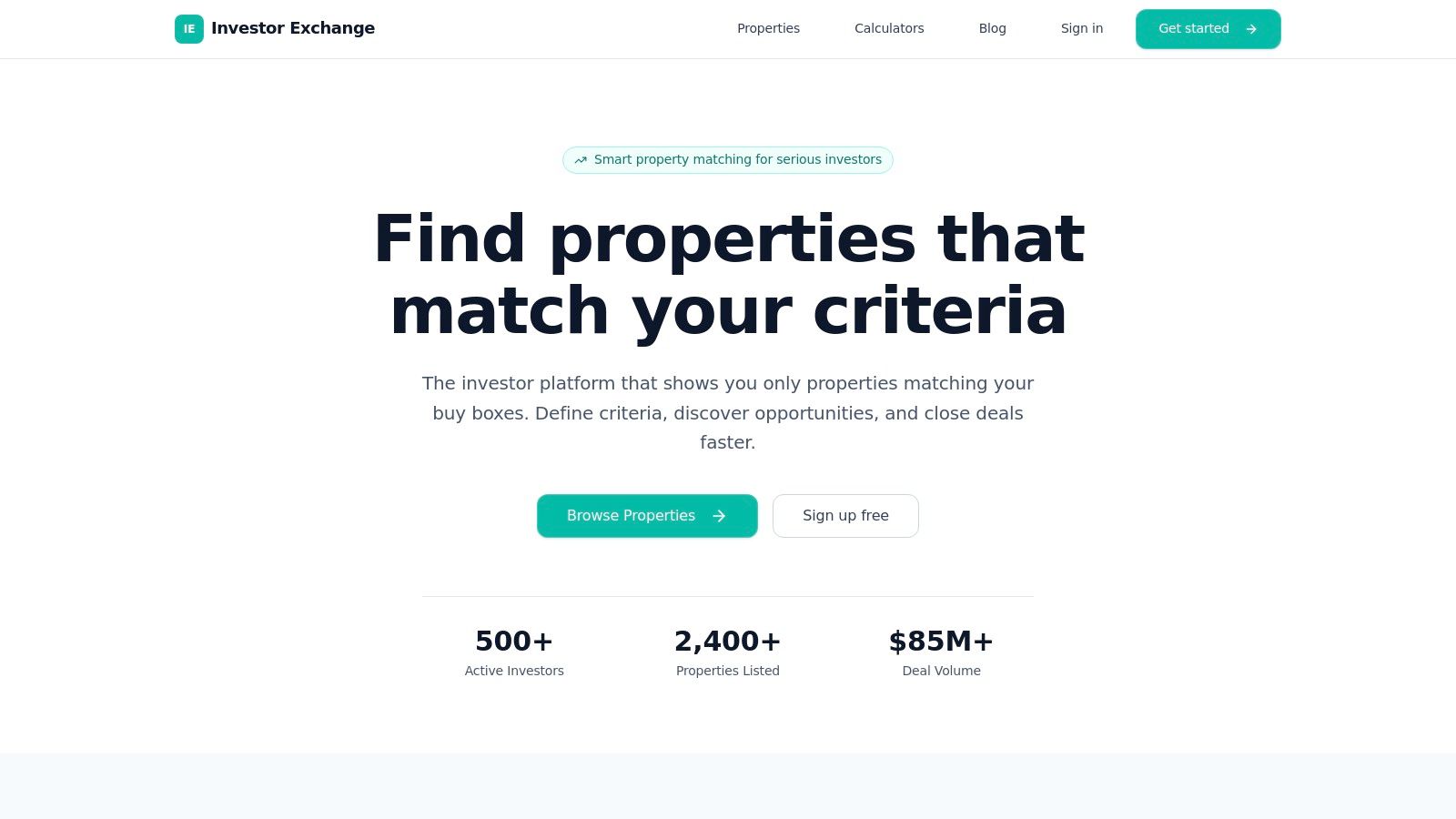
The platform’s core strength is its "Smart Buy Box" feature. Instead of manually sifting through thousands of listings, an investor defines their specific investment criteria once. You can set detailed parameters for single-family, multifamily, and land assets, including price, location, cap rate, and even zoning or development potential. The system then acts as a continuous filter, only showing you properties that align with your strategy. This precision saves considerable time in the sourcing phase.
Key Features and Workflow
Beyond just matching, Investor Deal Exchange integrates the next steps of the deal-making process. Every listing includes built-in calculators for essential metrics like ROI, Cap Rate, and Cash-on-Cash Return. This allows for immediate, on-the-spot underwriting without needing to export data to a separate spreadsheet.
Once you identify a promising property, you can save it to your "Deal Pipeline," an internal management tool. This feature lets you track opportunities from initial interest to closing, message property owners directly, and keep your workflow organized within a single dashboard. This end-to-end functionality is particularly useful for active investors managing multiple potential acquisitions simultaneously. The platform’s design supports a variety of investors, from fix-and-flippers and wholesalers to multifamily syndicators and land developers.
Pros:
- Targeted Deal Flow: The "Smart Buy Box" system shows only properties that fit your exact criteria, significantly reducing screening time.
- Instant Analysis: Built-in investment calculators allow for quick underwriting directly on the listing page.
- Integrated Deal Management: The Deal Pipeline feature helps you track progress from sourcing to closing in one place.
- Multi-Asset Support: You can create separate buy boxes for different property types (Single Family, Multifamily, Land), enabling parallel investment strategies.
Cons:
- Niche Scale: With 500+ active investors, its user base and geographic coverage may be smaller than national MLS portals.
- Pricing Transparency: Information on premium tiers or associated fees is not clearly published on the website.
2. Auction.com
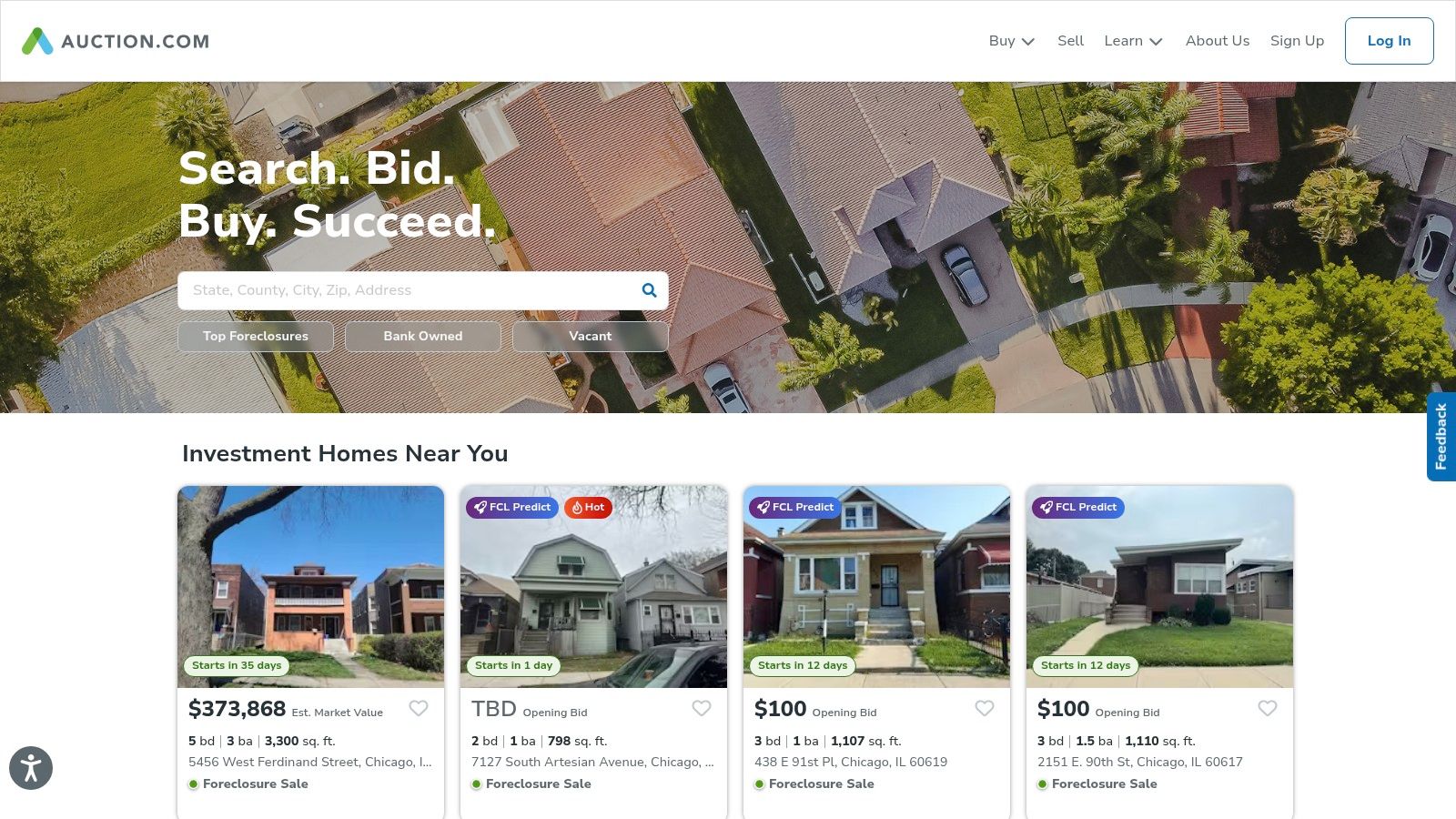
As a large online marketplace for residential foreclosures and bank-owned (REO) properties in the United States, Auction.com is a primary destination for investors seeking a high volume of distressed assets. It provides a structured, centralized auction environment with a consistent workflow from bidding to closing, making it one of the more accessible online platforms for distressed property investments. The platform features frequent auction events across most states, complete with detailed property information, due diligence documents, and clear event calendars.
Key Considerations
Investors should be prepared for the financial requirements. Bidding typically requires a refundable bidder deposit. Winning a property involves a non-refundable Buyer’s Premium (usually 5% of the winning bid or a $2,500 minimum) and a substantial Earnest Money Deposit (EMD) (often 5% or $2,500) due shortly after the auction ends.
- Pros: The sheer volume of inventory and frequent events offer continuous deal flow. The platform also provides transparent timelines and step-by-step guidance for contracting, which is helpful for navigating post-auction procedures.
- Cons: The added cost of the Buyer’s Premium can significantly impact your numbers and must be factored into your analysis. The fast deposit and closing timelines can be demanding and require having financing lined up well in advance. Accurately underwriting these deals is critical.
Website: https://www.auction.com
3. Hubzu
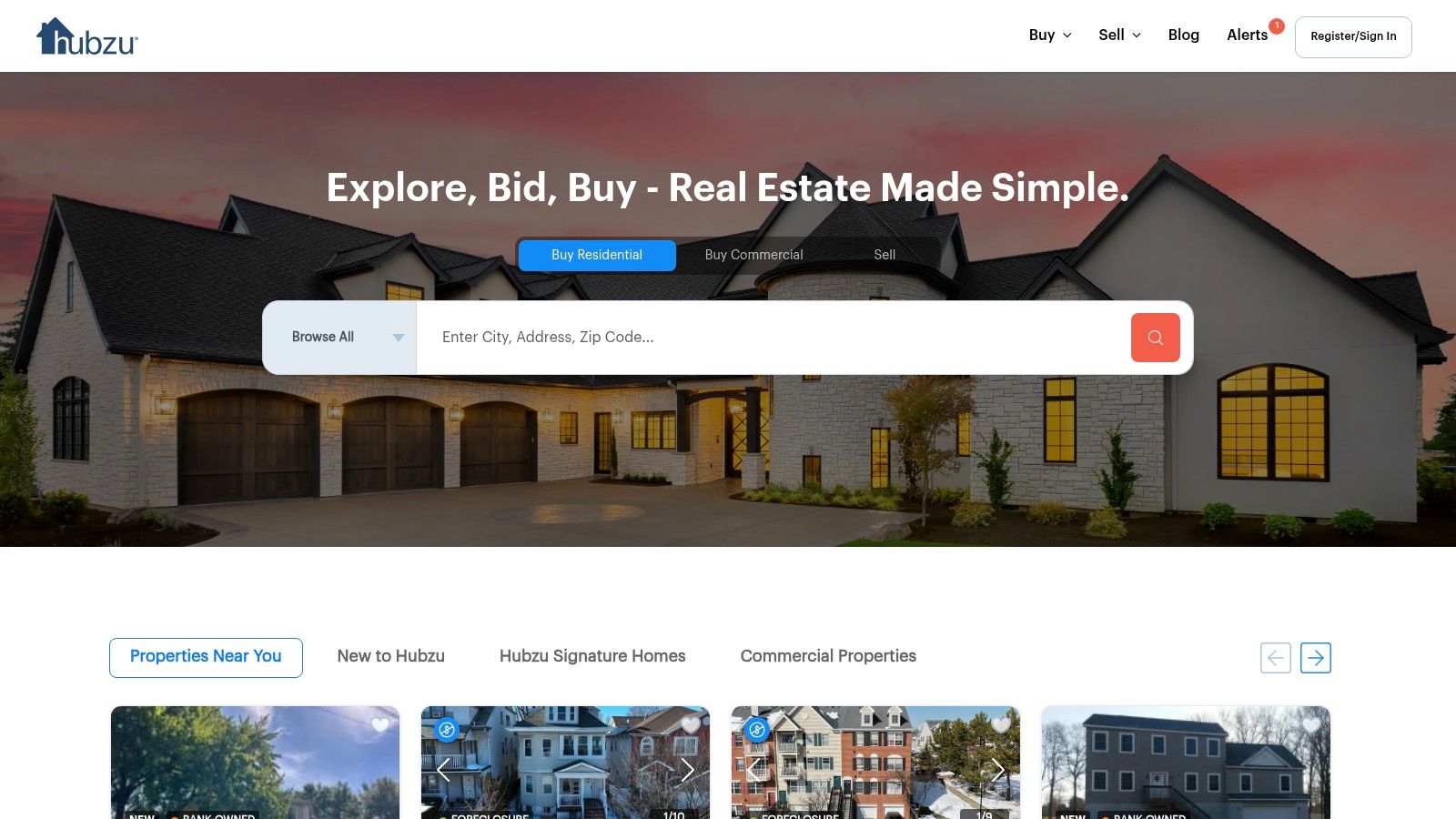
Hubzu serves as a national online marketplace offering a variety of residential distressed properties, including foreclosures, REOs, short sales, and as-is investor deals. Its model is unique because it provides both traditional timed auctions and "no time-limit" marketed listings. This hybrid approach gives investors flexibility, catering both to those who thrive in a competitive auction setting and those who prefer a more traditional purchase process. This makes it another key destination when asking, "Where can I find online platforms for distressed property investments?"
Key Considerations
Before bidding, investors must create an account and meet clear expectations for proof of funds. Most sales on Hubzu include a Buyer’s Premium or transaction fee, which varies by asset and is a critical line item for your underwriting. The platform sometimes offers seller-credited cash incentives on specific occupied properties, but these often require closing within a very tight timeframe, demanding a pre-arranged and reliable funding source.
- Pros: The mix of auction and fixed-timeline listings provides diverse acquisition opportunities. The platform is also transparent about its fee structure and proof-of-funds requirements, which helps in preparing your offer.
- Cons: The variable Buyer’s Premium means you must carefully analyze each deal's specific fee before bidding. Some properties are occupied, which can introduce significant challenges for property access, inspections, and securing possession after closing.
Website: https://www.hubzu.com
4. Xome Auctions
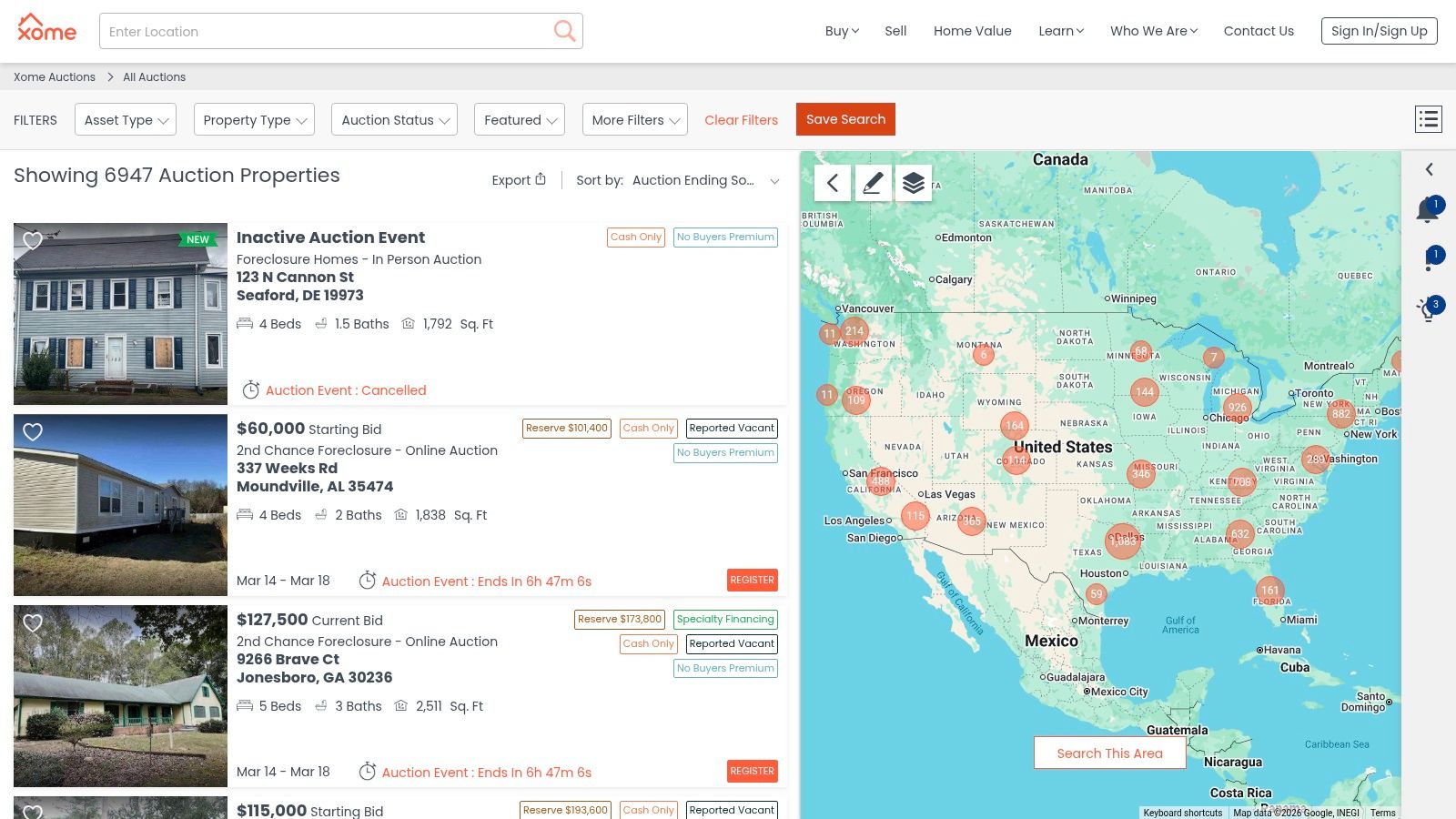
Xome Auctions is a nationwide residential auction platform focused on REO, short sale, and foreclosure events. It distinguishes itself by offering investors structured pre-auction materials and a clear bidding process, making it a reliable resource for those who value organized due diligence. The platform provides detailed property pages with specific cash requirements, timelines, and terms, which helps investors prepare their bids accurately.
Key Considerations
Investors must be prepared for the financial commitments associated with winning a bid. Similar to other auction sites, Xome typically requires a Buyer’s Premium, commonly 5% of the final bid or a $2,500 minimum. After winning, you will need to submit an Earnest Money Deposit (EMD), which is often around 3% of the purchase price or a $3,000 minimum, depending on the specific asset.
- Pros: The frequent REO and motivated seller events provide consistent opportunities. A major benefit is the availability of downloadable prep and due-diligence checklists, which support a more thorough pre-bidding analysis.
- Cons: The Buyer’s Premium and EMD add significantly to your purchase basis and must be carefully modeled in your financial calculations. Be aware that some listings have restrictive terms, such as requiring all-cash purchases or having occupancy constraints that can complicate a deal.
Website: https://www.xome.com/auctions
5. ServiceLink Auction
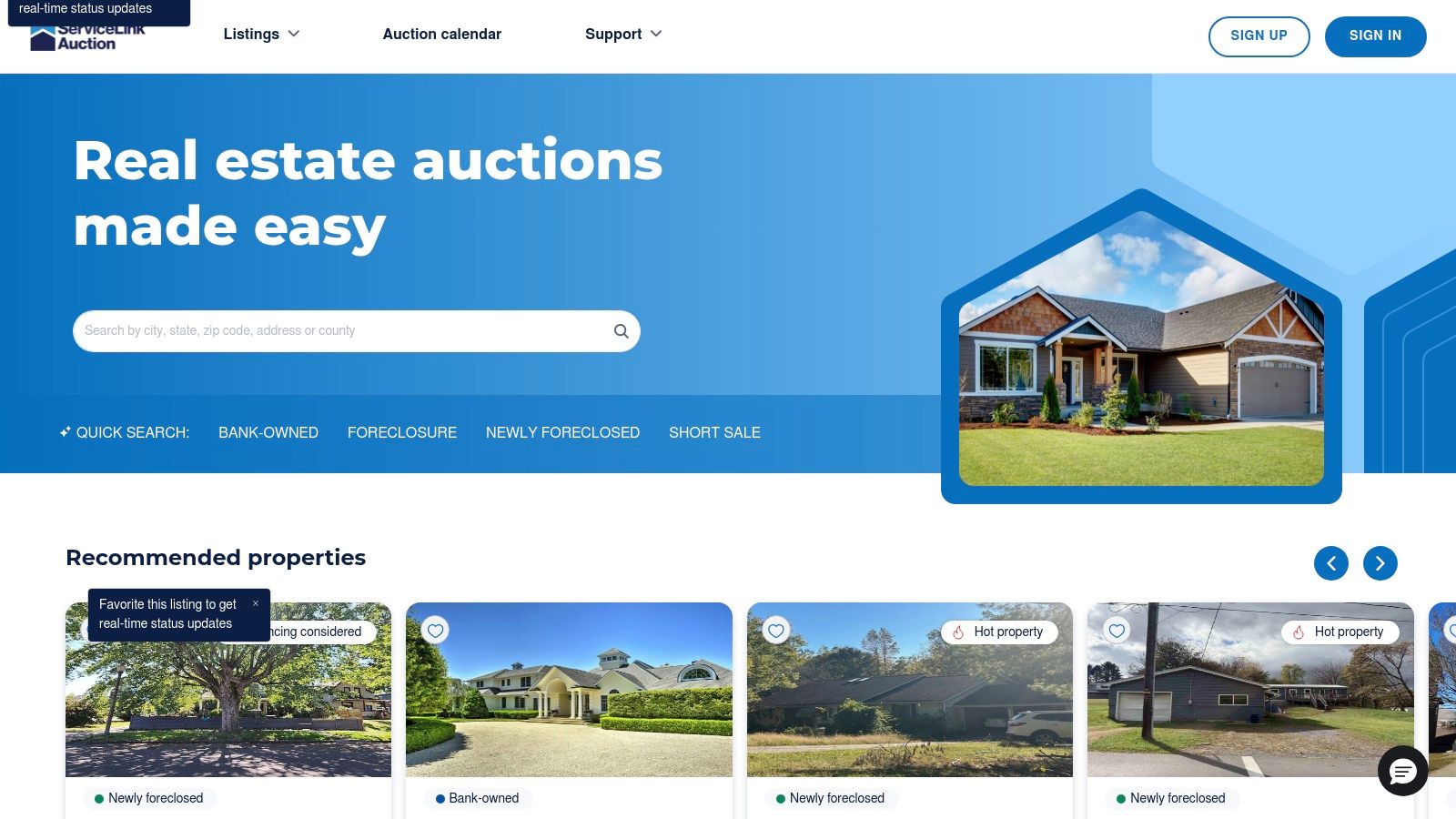
As a major servicer-run auction marketplace, ServiceLink Auction provides a direct pipeline for foreclosure, newly foreclosed, REO, and short-sale assets. It is a solid choice for investors looking for a consistent flow of deals coming straight from servicers and lenders. The platform organizes its inventory with searchable event calendars for different auction programs, giving investors a clear view of upcoming opportunities and timelines.
Key Considerations
A unique feature of ServiceLink Auction is its “Buyer Exclusive” windows. These periods give owner-occupants, nonprofits, and government agencies priority access to certain properties. While this supports community initiatives, it means investors must pay close attention to eligibility and may need to wait for the exclusive window to close before they can bid on some assets. Fees, deposits, and closing terms can also differ from one event to another, so reviewing the specific rules for each property is essential.
- Pros: The direct relationship with servicers means a steady supply of REO and foreclosure properties. The platform also offers a robust help center with clear guidance on bidding, contracts, and auction processes.
- Cons: The owner-occupant exclusive periods can limit investor access to desirable properties, creating a delay or complete restriction. Terms and fees are not standardized across all listings, requiring careful, asset-by-asset due diligence.
Website: https://www.servicelinkauction.com
6. Williams & Williams
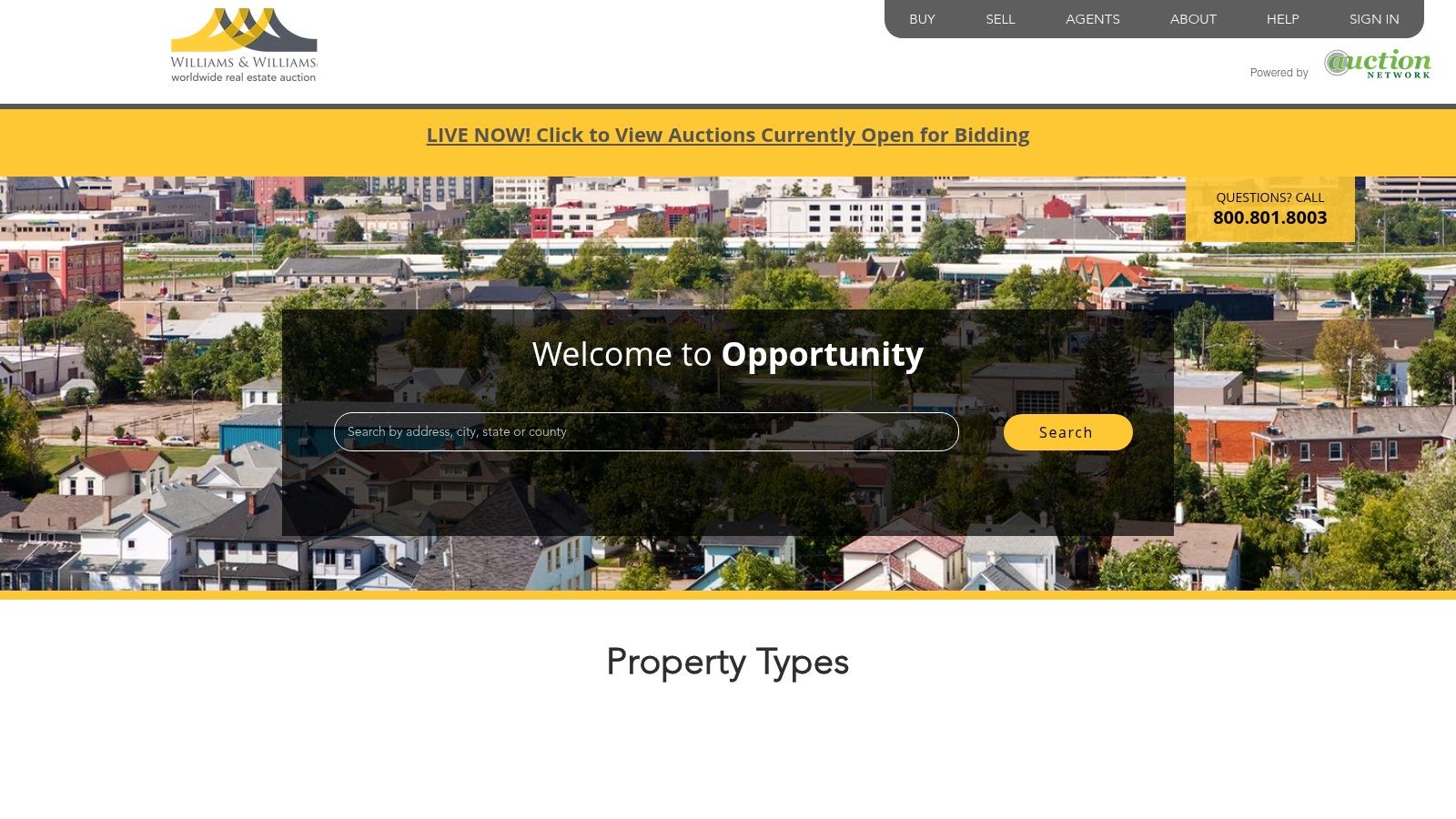
Williams & Williams operates as a hybrid auctioneer, managing both live on-site and simultaneous online auctions for a wide range of properties. Their nationwide presence covers residential, commercial, land, and a significant portfolio of government and bank-owned sales. For investors specifically looking for distressed assets, Williams & Williams is a notable entry on this list of online platforms for distressed property investments due to its deep experience with institutional sellers and default-related auctions, offering access to a unique inventory stream.
Key Considerations
Investors should note that a Buyer’s Premium applies to winning bids and the exact percentage varies by auction. The platform is known for its relationships with government-sponsored enterprises (GSEs) like Fannie Mae and Freddie Mac, as well as its work with the Department of Housing and Urban Development (HUD), which often results in multi-property auction events. Due diligence materials are provided, but as with many foreclosure sales, property access for inspections can be restricted, requiring investors to perform thorough off-site analysis.
- Pros: The firm's established relationships with institutional and government sellers provide a consistent source of distressed inventory. Their operational experience with large, multi-property auctions ensures a professionally managed process from bidding to closing.
- Cons: The Buyer’s Premium is a critical cost that must be factored into your return calculations. Limited physical access to some foreclosed properties increases the risk and demands a higher level of remote due diligence from the investor.
Website: https://www.williamsauction.com
7. RealtyTrac
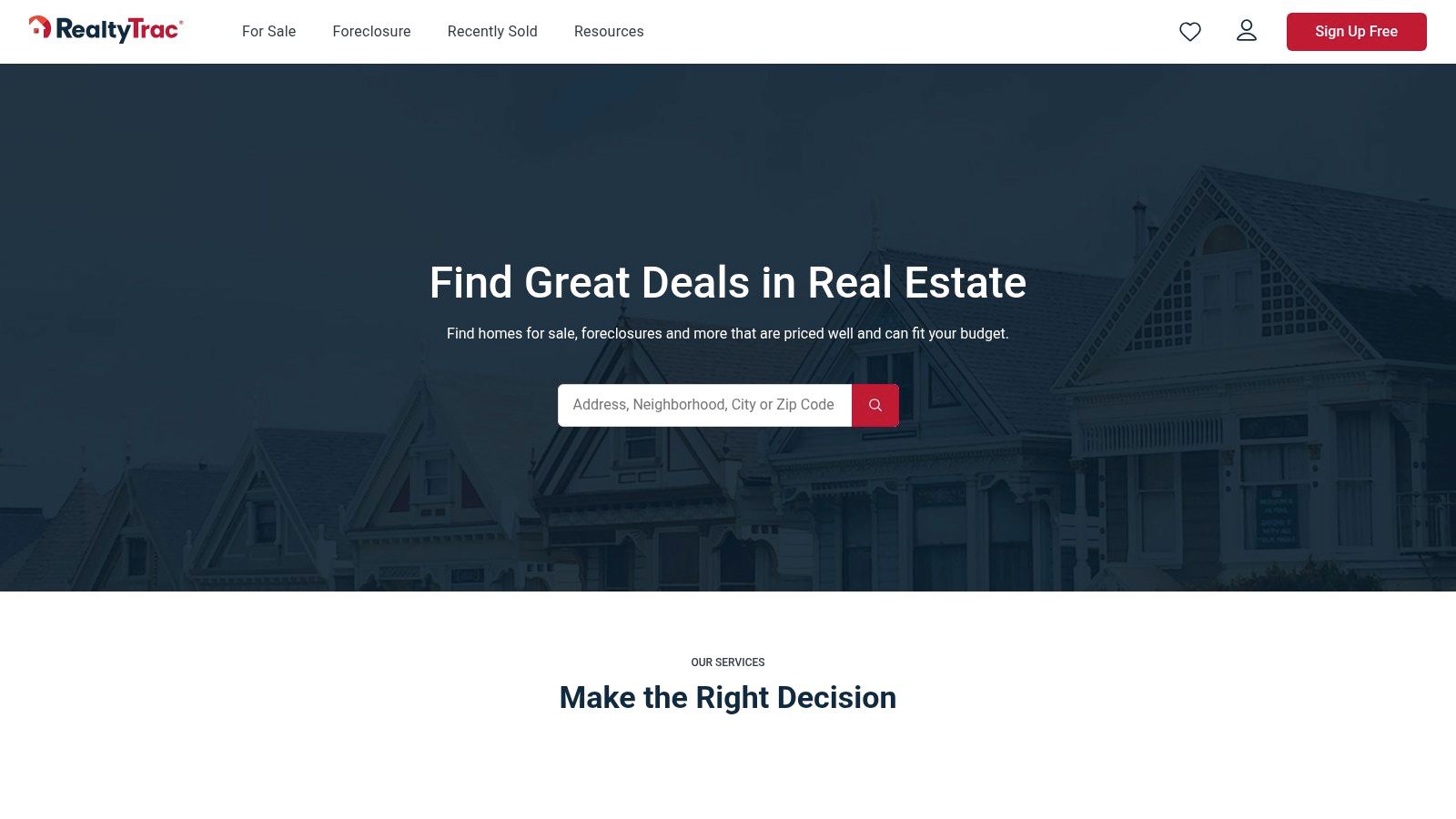
RealtyTrac operates as a comprehensive data provider, offering a deep well of information on foreclosure, pre-foreclosure, and bank-owned properties across the United States. Unlike transactional marketplaces, its primary function is lead generation. Investors use its extensive datasets to get ahead of the competition, identifying distressed homeowners before their properties officially hit the MLS or auction blocks, making it a key tool for those building a direct-to-seller pipeline.
Key Considerations
Access to RealtyTrac's database is managed through a subscription model, which typically includes a trial period. This makes it an accessible starting point for investors who want to test out data-driven marketing campaigns, like running targeted mailers or skip tracing to find owner contact information. The value here is in the early-stage data, not in facilitating the final purchase, which must be handled off-platform.
- Pros: The platform’s broad, national database is excellent for sourcing and identifying potential leads early in the distress cycle. A straightforward monthly subscription after the trial period makes budgeting for lead-sourcing predictable.
- Cons: RealtyTrac is a data source, not a deal-closing platform. All transactions must be negotiated and executed independently. Data recency and accuracy can vary by county, requiring you to cross-reference information to confirm a property's status before taking action. For investors seeking deals that are already packaged, exploring different types of off-market properties on other platforms may be more direct.
Website: https://www.realtytrac.com
8. Foreclosure.com
As a national subscription-based aggregator, Foreclosure.com provides a centralized database for investors who want to track multiple types of distressed properties in one place. It compiles pre-foreclosure, auction, bank-owned (REO), short sale, and tax lien listings from various sources, making it a strong tool for early-stage lead generation. The platform stands out by giving investors a broad view of the distressed property market, complete with a mobile app for monitoring new matches and properties on the go. This makes it a useful resource for finding online platforms for distressed property investments, especially for those who prioritize wide coverage.
Key Considerations
The platform functions purely as a data aggregator and lead source; it is not a transactional marketplace. After an initial 7-day preview, access requires a monthly subscription. This model is best suited for investors who are actively sourcing deals and need a consistent flow of new leads to fill their pipeline. You will be responsible for contacting the appropriate parties, such as homeowners, attorneys, or listing agents, to pursue any deals you find.
- Pros: Its key advantage is the sheer breadth of distress types available in a single interface, saving significant time compared to checking individual county or bank sites. The site also includes useful FAQs that explain the procedural norms and deposit expectations for different programs, which is valuable for newer investors.
- Cons: Because Foreclosure.com is not a closing platform, users must conduct all transactions off-site. The quality and update frequency of listings can also vary by location, sometimes lagging behind direct sources. This means due diligence is even more critical to confirm a property’s current status.
Website: https://www.foreclosure.com
9. HUD Home Store (HUD Homes)
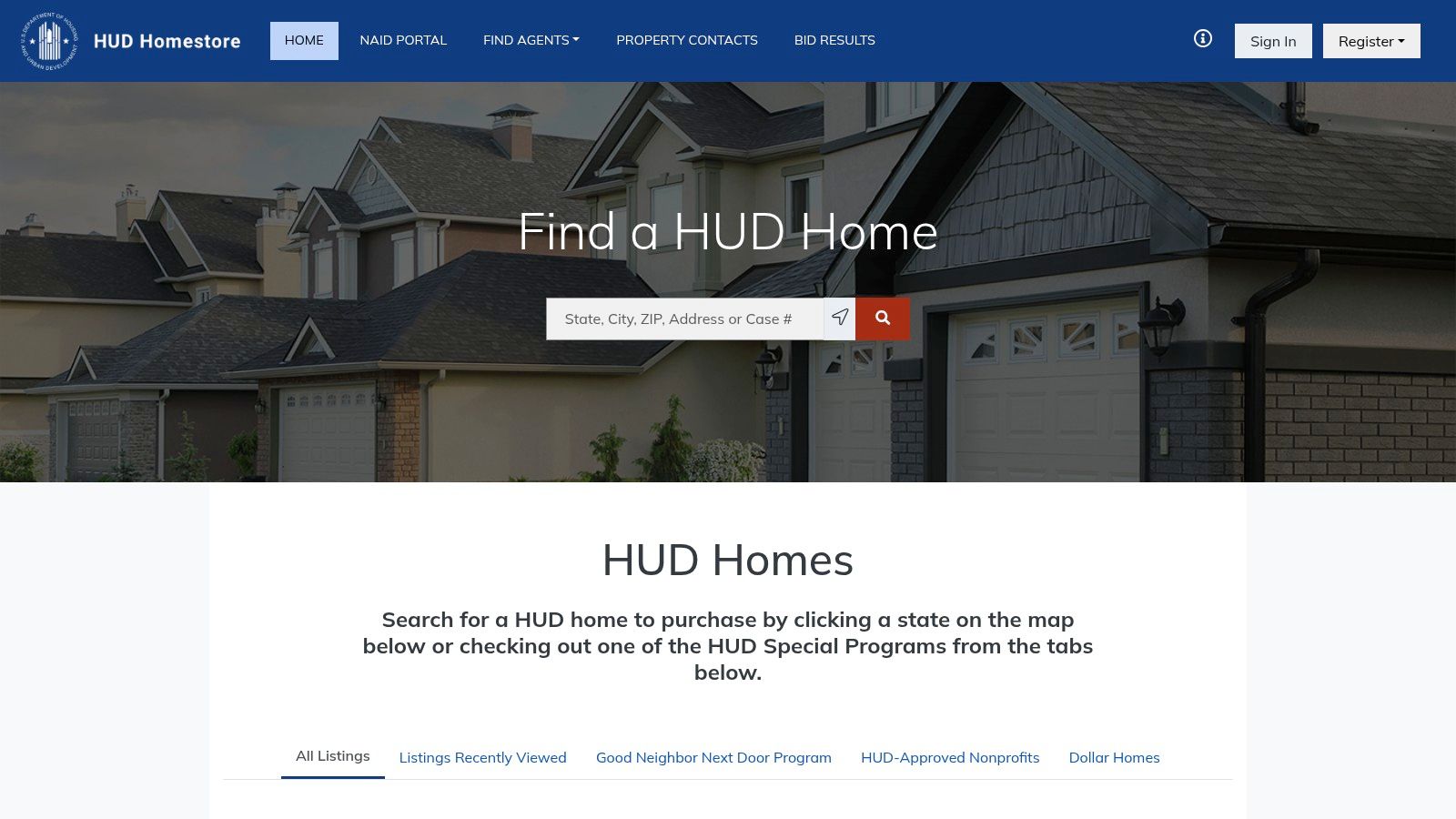
The HUD Home Store is the federal government’s official listing site for single-family homes acquired by the Department of Housing and Urban Development through foreclosure. As a direct-from-the-source platform, it offers investors a standardized process for bidding on HUD-owned real estate owned (REO) properties. It stands out by providing clear bidding windows and public program guidelines, making it a transparent, though highly regulated, option for finding distressed property investments.
Key Considerations
A critical aspect of the HUD Home Store is its priority system. Properties are first offered exclusively to owner-occupants and approved nonprofits for a set period. Investors must wait for this exclusive period to end before they can submit a bid. Additionally, all bids must be placed through a HUD-registered real estate broker, so you cannot bid directly as an individual. All properties are sold strictly as-is, meaning the buyer is responsible for all repairs, due diligence, and financing arrangements.
- Pros: The direct government source means fewer intermediaries and a standardized, transparent bidding process. The website clearly flags each property’s status and bidding eligibility, removing guesswork.
- Cons: The primary drawback for investors is the mandatory waiting period, during which the best deals may be claimed by owner-occupants. The requirement to use a specific type of broker adds a layer to the acquisition process, and the "as-is" nature demands a thorough inspection and repair budget.
Website: https://www.hudhomestore.gov
10. Fannie Mae HomePath
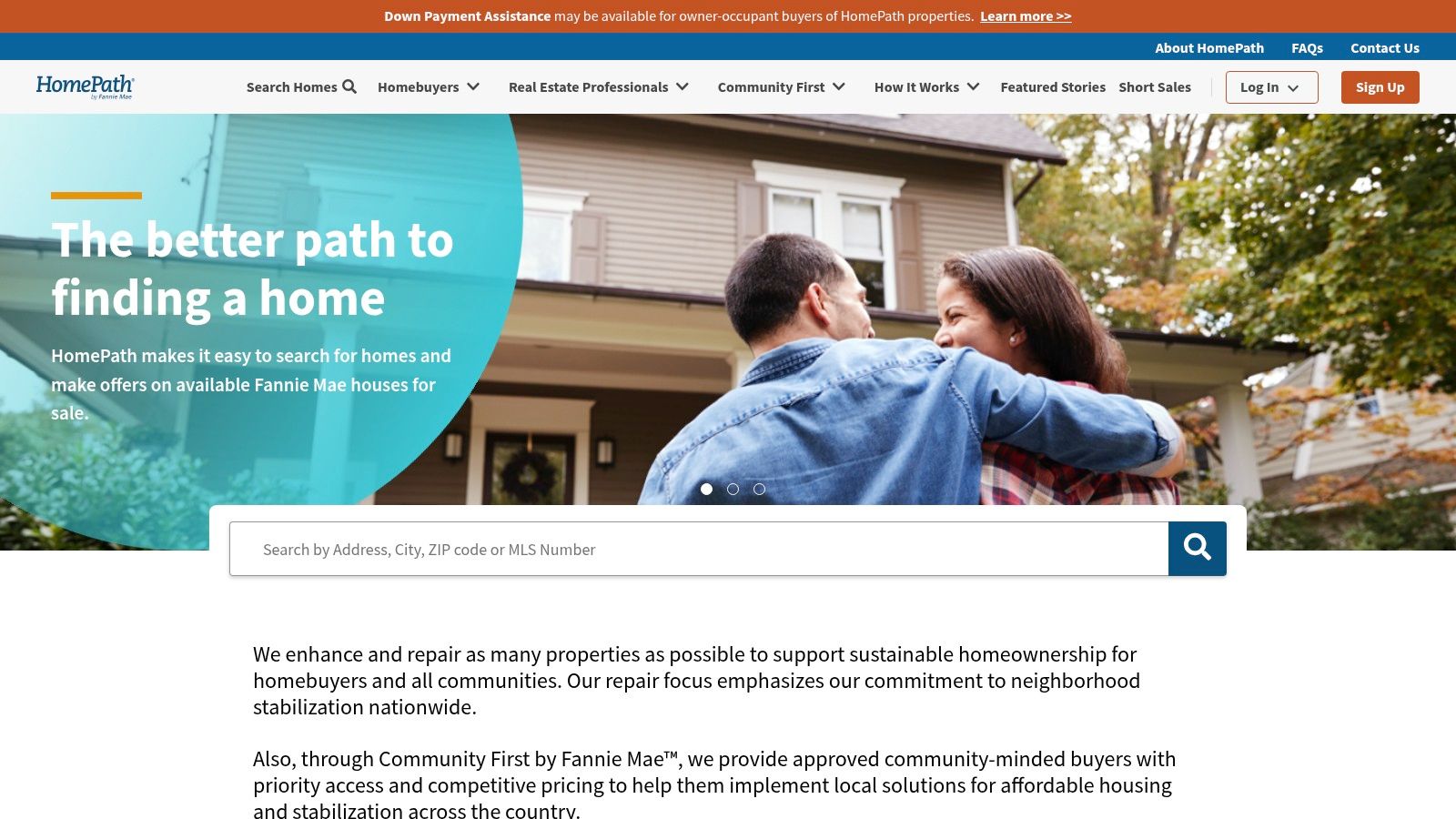
Fannie Mae HomePath is the official portal for properties owned by the Federal National Mortgage Association after foreclosure. This platform serves as a direct-from-source marketplace for real estate owned (REO) homes, offering a standardized online offer system and consistent documentation. For investors looking for single-family or 1-4 unit residential properties, HomePath is a key destination to find REOs once they become available to the general public, making it a reliable resource in the search for online platforms for distressed property investments.
Key Considerations
A defining feature of HomePath is the First Look period. This is an initial marketing window, typically 30 days, during which only offers from owner-occupants, public entities, and certain non-profits will be considered. Investors must wait until this period expires to submit offers, which means competition can be lower but the best-priced properties may already be under contract. The offer process is managed online directly through the site, requiring you to work with a real estate agent who can submit the offer on your behalf.
- Pros: As a direct Government-Sponsored Enterprise (GSE) source, the platform provides a steady flow of nationwide inventory with standardized disclosures and contracts. Properties are often reasonably priced for their condition, presenting good opportunities for fix-and-flip or rental investors.
- Cons: The main limitation is the investor restriction during the First Look period. Additionally, the inventory is almost exclusively single-family homes or small multi-family units, so it is not a source for commercial properties, land, or other specialty assets.
Website: https://homepath.fanniemae.com
11. Freddie Mac HomeSteps
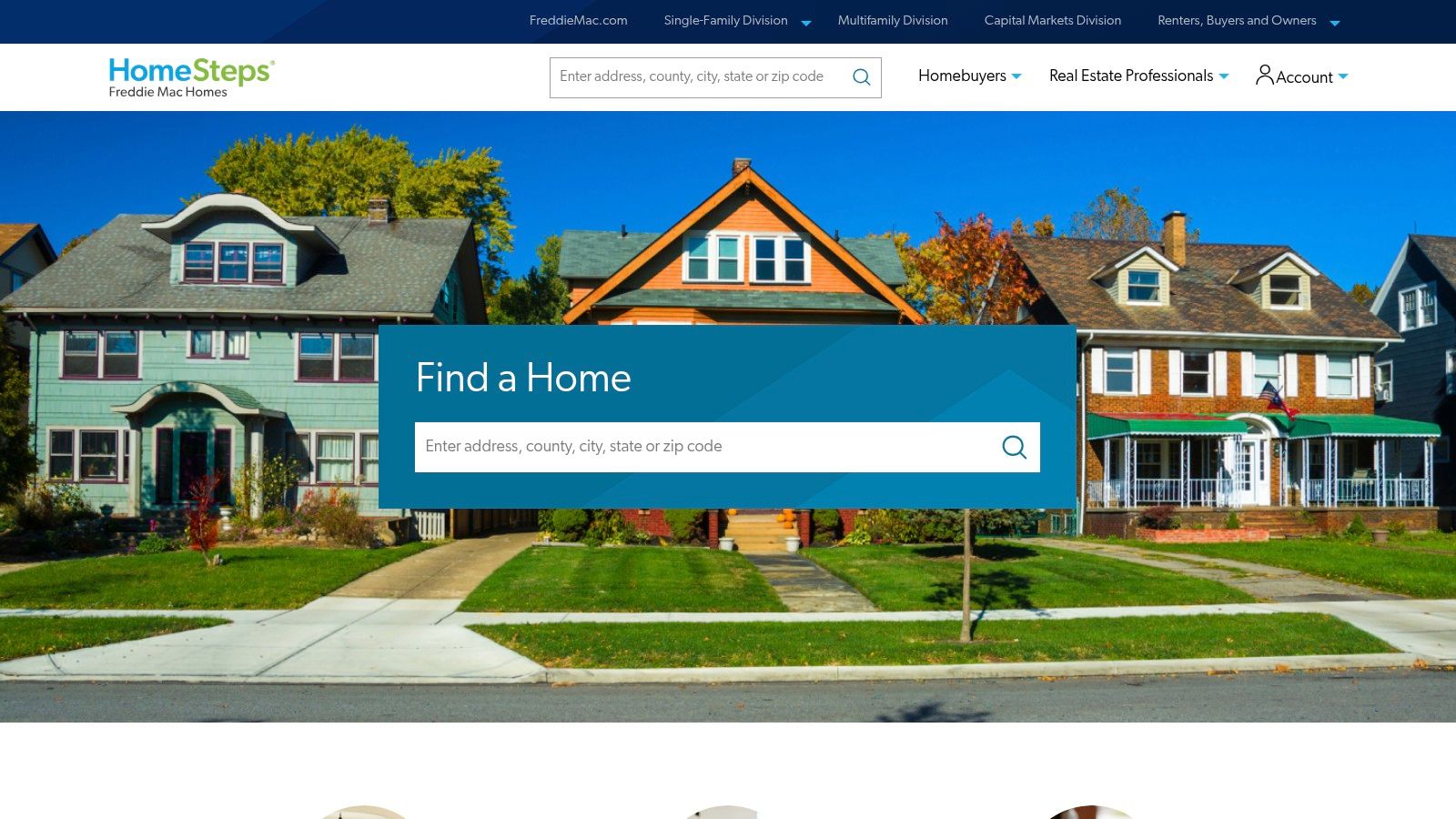
As the official REO sales portal for properties owned by Freddie Mac, HomeSteps provides investors with direct access to a specific segment of the distressed market. This platform is a primary source for locating single-family and small multifamily homes that have gone through foreclosure and are now held by this government-sponsored enterprise (GSE). Its defining feature is the "First Look Initiative," which gives owner-occupants and certain nonprofits an exclusive period to make offers, making it one of the more structured online platforms for distressed property investments after that window closes.
Key Considerations
Investors must be patient and strategic when using HomeSteps. The "First Look" period, typically lasting 30 days, means you cannot submit an offer until it expires. This delay requires you to track properties and be ready to act immediately once they become available to all bidders. Properties are sold as-is, and the ability to conduct thorough inspections can be limited, so it is important to factor potential unknown repair costs into your analysis.
- Pros: The platform offers a direct pipeline to GSE-owned inventory with clear rules and timelines for the First Look period. Occasionally, properties may have had some basic maintenance or trash-out services performed, and some listings come with buyer incentives that may still be available post-exclusivity.
- Cons: Competition can be high once a property becomes available to investors. The mandatory waiting period for the First Look Initiative to end can disrupt an investor's acquisition timeline, and the as-is nature of the sales means you assume all risk for the property's condition and any remaining occupants.
Website: https://www.homesteps.com
12. Crexi
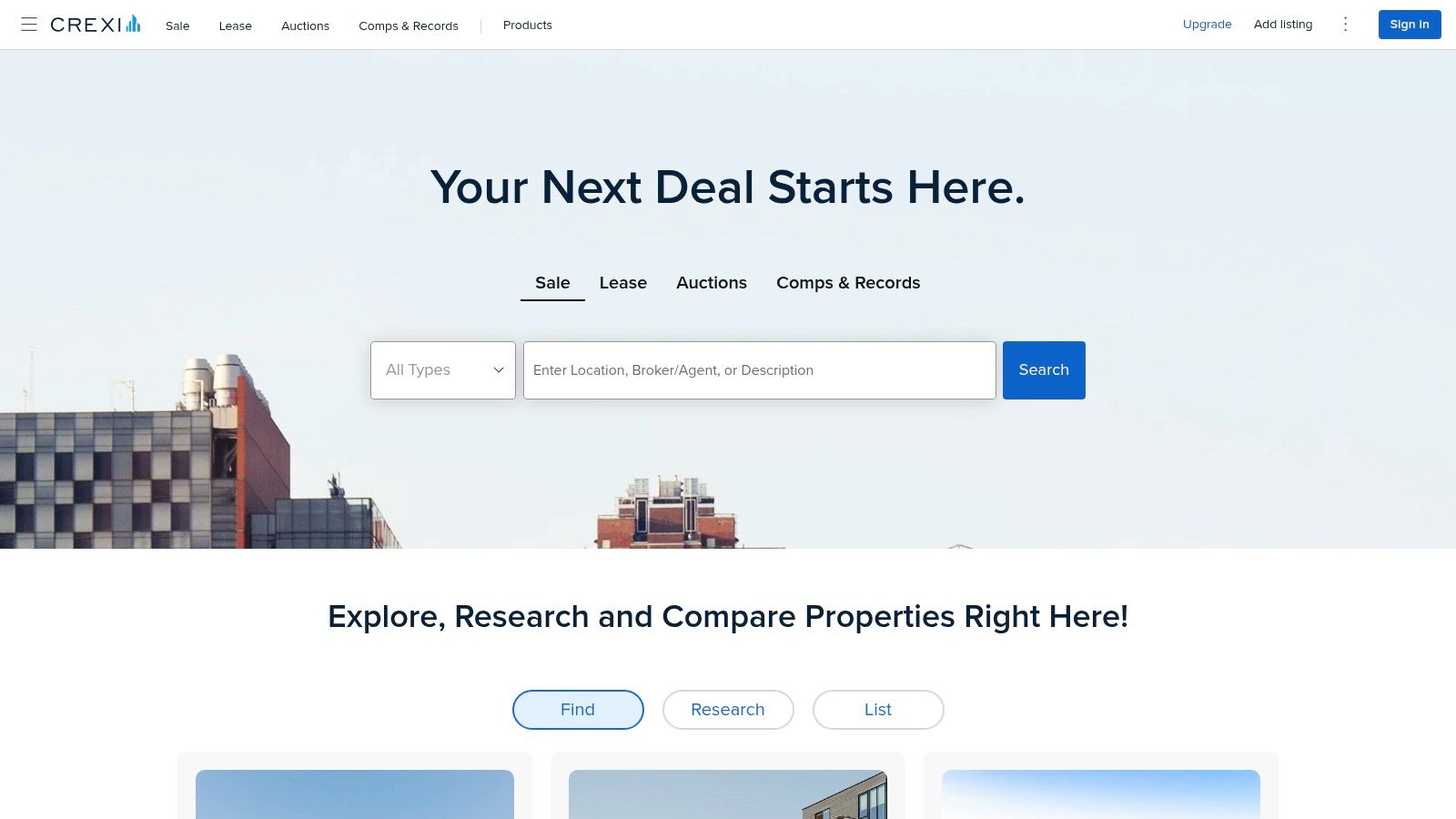
While many platforms focus on residential assets, Crexi is a dominant U.S. commercial real estate marketplace that provides a direct path to distressed commercial opportunities. It is a key resource for investors looking for multifamily, retail, land, or special-purpose properties. The platform stands out with its dedicated auction module and a specific "Distressed/Pre-Foreclosure" search filter, making it one of the better online platforms for distressed property investments in the commercial sector. Listings often link directly to secure data rooms managed by brokers.
Key Considerations
Accessing full due diligence materials, such as rent rolls or financial statements, usually requires creating a free account and electronically signing a confidentiality agreement. Commercial assets can also involve more complex sale structures. Investors might encounter sales of Uniform Commercial Code (UCC) interests or membership stakes rather than a direct deed transfer, which requires specialized legal review before bidding.
- Pros: The platform offers strong coverage of distressed commercial and multifamily inventory, which is often hard to find on residential-focused sites. The built-in data room functionality and direct broker contact information simplify the due diligence process.
- Cons: The contents of deal rooms can vary greatly depending on the listing broker, sometimes lacking critical information. Some collateral sales involve intricate legal structures that may be unfamiliar to investors who have only dealt with traditional real estate transactions.
Website: https://www.crexi.com
Top 12 Distressed Property Platforms Comparison
| Platform | Core features | ✨ Unique selling points | ★ Quality | 💰 Pricing / value | 👥 Target audience |
|---|---|---|---|---|---|
| Investor Deal Exchange 🏆 | Smart Buy Boxes; built‑in ROI/Cap/Cash‑on‑Cash calculators; Deal Pipeline; 2,400+ listings, $85M+ volume | ✨ Precision matching + on‑listing underwriting; end‑to‑end deal workflow | ★★★★☆ | 💰 Free signup; premium tiers unclear | 👥 Active investors, multifamily syndicators, flippers, developers, brokers |
| Auction.com | Nationwide foreclosure & REO auctions; event calendar; bidder wallet | ✨ Largest national auction inventory; structured post‑auction process | ★★★★☆ | 💰 Buyer’s premium + EMD (asset‑specific) | 👥 Auction‑focused investors, flippers, cash buyers |
| Hubzu | Timed auctions + no‑time‑limit listings; seller incentives; account/POF rules | ✨ Mix of auction and marketed listings for flexible tactics | ★★★☆☆ | 💰 Fees/transaction charges vary by asset | 👥 Investors who want both auction & listed deals |
| Xome Auctions | Detailed event pages; EMD rules; buyer’s premium; prep checklists | ✨ Robust pre‑auction due‑diligence checklists & resources | ★★★★☆ | 💰 Buyer’s premium + EMD (asset‑specific) | 👥 REO/auction buyers who value prep materials |
| ServiceLink Auction | Servicer/lender inventory; searchable event calendar; buyer‑exclusive flags | ✨ Direct servicer pipeline with consistent REO flow | ★★★★ | 💰 Fees/terms vary by servicer/event | 👥 Investors targeting lender/servicer REOs |
| Williams & Williams | Live on‑site + online auctions; institutional & gov’t sales | ✨ Access to institutional/government seller events (HUD, GSEs) | ★★★★ | 💰 Buyer’s premium; varies by sale | 👥 Investors seeking institutional or multi‑property events |
| RealtyTrac | Foreclosure/pre‑foreclosure/REO datasets; national coverage; subscriptions | ✨ Early lead generation & distress verification before auctions/MLS | ★★★☆☆ | 💰 Subscription model (trial available) | 👥 Lead‑gen investors, mailers, wholesalers |
| Foreclosure.com | Aggregated pre‑foreclosure/auction/REO/tax lien listings; mobile app | ✨ Broad distress‑type coverage in one app for monitoring | ★★★☆☆ | 💰 7‑day preview then monthly subscription | 👥 Early‑stage researchers, agents, lead builders |
| HUD Home Store (HUD Homes) | Official HUD REO listings; bidding windows; broker submission required | ✨ Direct government source with standardized processes | ★★★★ | 💰 No subscription; bids via HUD‑registered brokers | 👥 Investors targeting HUD REOs (post owner‑occupant window) |
| Fannie Mae HomePath | Fannie‑owned REOs; online offer workflow; standardized disclosures | ✨ GSE REO pipeline with consistent documentation | ★★★★ | 💰 No subscription; First Look owner‑occupant rules apply | 👥 SFR / 1–4 unit investors after First Look |
| Freddie Mac HomeSteps | Freddie‑owned REOs; First Look markers; buyer guidance | ✨ GSE inventory with transparent First Look rules | ★★★★ | 💰 No subscription; First Look exclusivity | 👥 Investors targeting Freddie REOs post exclusivity |
| Crexi | Commercial listings + auctions; Distressed filter; data rooms | ✨ Strong commercial/multifamily distressed coverage and deal rooms | ★★★★ | 💰 Account may unlock full analytics; listing/auction fees | 👥 Commercial & multifamily investors, brokers |
From Browsing to Buying: How to Build Your Distressed Deal Pipeline
You now have a map to the many digital storefronts where distressed properties are sold. The answer to "Where can I find online platforms for distressed property investments?" is not a single website but a collection of specialized tools, each with its own purpose. We've explored everything from the high-volume national auction sites like Auction.com and Hubzu to the granular, data-rich foreclosure portals like RealtyTrac. We’ve also covered government-run marketplaces like the HUD Home Store.
The challenge is no longer a lack of information; it's an overflow of it. Without a system, you risk spending all your time searching and no time analyzing or making offers. The true mark of a successful investor is not just knowing where to look, but how to look efficiently and build a repeatable process for finding and closing deals.
Moving from Passive Searching to Active System-Building
The next step is to integrate these resources into a coherent deal-finding machine. A strategic approach might look something like this:
- Establish a Baseline: Start by creating accounts on one or two platforms that align with your primary strategy. A fix-and-flipper might focus on a national auction site for REOs, while a wholesaler might prioritize a pre-foreclosure data service to find motivated sellers directly.
- Set Your Filters: On every platform you use, immediately set up your search criteria. Define your geographic farm area, property type (SFR, small multifamily), price range, and any keywords like "fixer" or "TLC." This is your first line of defense against irrelevant listings.
- Schedule Your Search Time: Dedicate specific blocks of time each day or week to review new listings. Consistency is key. Treat deal sourcing like any other critical business appointment.
How to Select the Right Platform Mix for Your Strategy
Not every investor needs to be on every platform. The right combination depends entirely on your business model, experience level, and the type of assets you target.
For Beginners: Your most valuable resource is time. Focus on platforms that do the initial filtering for you. A curated marketplace or a direct-to-investor platform can provide a cleaner, more manageable deal flow than a massive, unfiltered auction site.
For Experienced Investors: Your business thrives on volume and speed. You need a mix of tools: pre-foreclosure data for proactive outreach, auction sites for bank-owned inventory, and a powerful network to quickly dispose of deals. Efficiency is paramount.
The Power of a Purpose-Built Investor Network
While sifting through thousands of REOs on a national site can occasionally yield a gem, the process is inefficient. This is where an investor-centric marketplace and networking platform provides a distinct advantage. Instead of you hunting for deals, the deals can come to you, pre-vetted to match your exact needs.
On a platform like ours, you can define your specific investment criteria—what many investors call a "buy box." The system then works for you, alerting you only when a property matches your goals, whether that’s a 2-bedroom bungalow in a specific zip code or a small multifamily building with value-add potential.
This approach saves hundreds of hours of manual work and ensures you're among the first to see opportunities that fit your business. By combining this targeted deal flow with built-in analysis tools and a network of other real estate professionals, you can build a more efficient, scalable, and ultimately more profitable investment operation. The goal is to spend less time searching and more time closing.
Create your free investor profile to get matched with deals that fit your criteria. Investor Deal Exchange is a marketplace and network built by investors, for investors, connecting you with off-market properties and wholesale deals that match your specific investment goals. Get started at Investor Deal Exchange today.