
Finding your next deal can feel like searching for a needle in a haystack. An investment properties marketplace is designed to solve that problem. It's a specialized online platform built exclusively for buying and selling real estate deals, connecting wholesalers, flippers, and serious buy-and-hold investors without the noise of the retail market. Unlike consumer sites, these platforms are engineered from the ground up to speed up deal flow with the exact data and tools investors actually need.
What an Investment Properties Marketplace Is and Why It Matters
Imagine walking into a massive department store like Zillow when you need a specific, professional-grade tool. You’d have to sift through endless aisles of furniture, clothing, and home goods just to find what you’re looking for. That’s what it’s like for an investor on a standard real estate site—you’re wading through thousands of retail-priced, owner-occupied homes hoping to find one that even remotely pencils out. The data is all wrong, too, focusing on school districts and curb appeal instead of financial performance.
An investment properties marketplace is the complete opposite. It's a specialized supply house built for pros. Every single feature, from the search filters to the property data, is designed for one purpose: to help you find, analyze, and lock down cash-flowing assets more efficiently. These platforms cut through all the noise, giving you a direct line to the kinds of deals serious investors spend all their time hunting for.
A Laser Focus on Investor-Centric Deals
The real difference is the inventory. While consumer sites are jam-packed with homes listed at full market rate, an investment properties marketplace is all about deals with built-in equity or cash flow potential from day one.
You’ll find a completely different class of properties here, such as:
- Off-Market Properties: These are the deals you won't find on the MLS. They’re often sourced directly from motivated sellers or wholesalers, which means you get access to inventory with far less competition.
- Value-Add Opportunities: We're talking about properties that need some work to reach their full potential, like a distressed duplex or a small apartment building with below-market rents.
- Wholesale Deals: These are contracts on properties being sold at a deep discount, ready for another investor to step in, take over the contract, and close the deal.
- Tenanted Rentals: Perfect for buy-and-hold investors, these are turnkey properties that are already occupied and generating income from the moment you take ownership.
Data That Actually Drives Decisions
The single biggest advantage is the data. Instead of just seeing bed/bath counts and square footage, you get the hardcore financial metrics you need to analyze a deal in seconds.
A good marketplace puts key performance indicators (KPIs) front and center. This lets you qualify or kill a deal in minutes, not hours, which massively increases the number of opportunities you can vet each week.
You'll see essential data points that just don't exist on retail sites, including:
- Cap Rate (Capitalization Rate): A quick measure of a property’s profitability, calculated by dividing the Net Operating Income by the property’s price.
- Net Operating Income (NOI): This is the property's total income minus all its operating expenses. It shows you the pure profit potential before you even factor in your loan.
- Cash-on-Cash Return: A critical metric for any investor. It shows you the annual pre-tax cash flow you’ll get back relative to the total amount of cash you put into the deal.
Having this kind of performance data right at your fingertips completely changes your workflow. You stop searching for needles in a haystack and start efficiently comparing multiple viable opportunities. In a competitive market, that's a serious edge.
Core Features That Power Faster Deal Flow
A basic property listing is one thing, but a true investment marketplace is defined by its specialized toolset. These features are built to compress the time between finding a deal and knowing if it's the right one, giving you a serious edge. Forget juggling spreadsheets and playing phone tag—the right platform brings the entire process under one roof.
This diagram shows how modern marketplaces centralize your deal sourcing compared to the old-school, scattered approach.
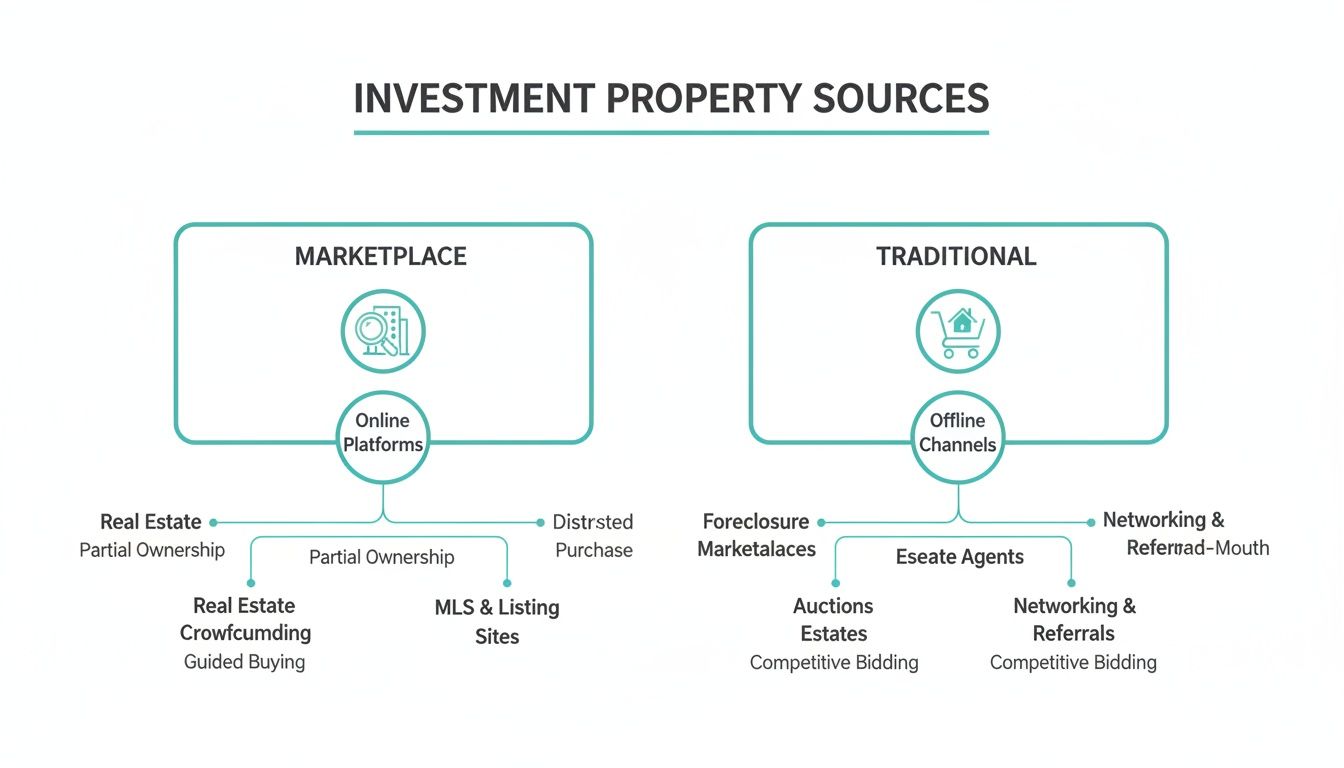
The big shift here is moving away from manual, time-sucking searches and toward a targeted, automated system that brings qualified deals straight to you.
Your Personal Deal Scout: The Smart Buy Box
The most powerful feature of a modern marketplace is the Smart Buy Box. This isn't just a set of basic filters; it's a living profile of your exact investment strategy that works for you 24/7. On our platform, you can define your ideal deal once, and the system takes over, creating a personalized deal-sourcing engine that never sleeps.
You can typically lock in criteria like:
- Asset Type: Single-family, multifamily, land, or commercial.
- Financial Metrics: Your non-negotiable cash-on-cash return, cap rate, or NOI.
- Geographic Focus: Specific states, counties, or down to the zip code.
- Property Details: Price range, unit count, and square footage.
This tool acts as your personal scout, cutting through the noise and alerting you the second a property that fits your strategy hits the market. It’s the difference between hunting for deals and having deals hunt for you.
On-the-Fly Underwriting Calculators
In real estate, speed kills the competition. The time it takes to dump data into an external spreadsheet can be the difference between locking up a deal and watching someone else get it. The best marketplaces solve this with built-in underwriting tools.
These calculators are baked right into each listing, letting you instantly project key returns without ever leaving the page. With just a few clicks, you can analyze a property's potential and make a data-driven call in minutes, not hours.
The whole point of integrated analysis is to get from "that looks interesting" to a confident "yes" or "no" as fast as humanly possible. This lets you vet dozens of properties in the time it used to take to analyze just one.
Integrated Deal Pipelines and Communication
Finding a great deal is just step one. A top-tier investment properties marketplace also helps you manage the entire acquisition from start to finish. An integrated deal pipeline lets you save promising opportunities, track their status, and keep your workflow organized from initial look to closing day.
This centralized system keeps all your potential deals in one place so your next steps are always crystal clear.
On top of that, direct communication channels are a must. They kill the frustrating game of phone tag by letting you message sellers, wholesalers, or brokers right on the platform. This speeds up negotiations and due diligence, ensuring you get critical questions answered without delay. To see how it all works, you can browse active deals and test how quickly you can run the numbers yourself.
Your Step-by-Step Workflow for Finding and Analyzing Deals
Knowing the features of an investment properties marketplace is one thing. Actually using them to build a repeatable system for sourcing deals? That's the real game-changer. This is your playbook for turning the platform’s tools into a powerful acquisition engine.
Once you have a structured process, you can find and vet opportunities with far more speed and confidence. This workflow turns theory into action, giving you a clear system for moving from an initial search to a serious offer.

Step 1: Build Your Investor Profile and Buy Box
First things first: set up your investor profile and meticulously define your Smart Buy Box. This is the foundation of your entire deal-finding process. By plugging in your exact criteria—from location and property type to your required cap rate and cash-on-cash return—you turn the platform into your own personal deal scout.
This simple setup automates the most grueling part of investing. Instead of manually sifting through hundreds of irrelevant listings, you'll start getting automated alerts for properties that perfectly match your strategy. This step alone can save you hours every single week.
Step 2: Master the Search and Filter Functions
While your Buy Box works in the background, you also need to learn how to actively hunt for opportunities using the platform’s advanced search filters. This is where you can test out new markets or look for specific types of deals that might not trigger an alert, like value-add properties with specific zoning.
- For Beginners: Start with broader searches in your target market. Get a feel for the inventory levels and what things are actually selling for.
- For Experienced Investors: Use hyper-specific filters to uncover hidden gems. You can search for properties with a certain number of units or those explicitly listed as off-market. You can learn more about finding these deals in our guide to sourcing off-market properties.
Step 3: Perform a Rapid Initial Analysis
Once you spot a promising property, the goal is to qualify or disqualify it in minutes, not hours. This is where those built-in underwriting calculators become your best friend. Use them to run quick projections and sanity-check the numbers the seller provided.
The objective here isn’t a full-blown due diligence report. It’s a rapid-fire assessment to see if the deal is even worth a deeper look. If the numbers don't work at a glance, you move on. No time wasted.
Step 4: Organize Your Deal Pipeline
As you find properties that pass your initial screening, add them to your deal pipeline right inside the marketplace. Think of this tool as your command center for tracking every single opportunity.
Organize your pipeline by status—like “Under Review,” “Contacted Seller,” or “Offer Made”—to keep a crystal-clear view of your workflow. This prevents good leads from falling through the cracks and makes sure you follow up methodically. A well-managed pipeline is the hallmark of a disciplined, serious investor.
Gaining a Strategic Advantage in a Competitive Market
In real estate investing, the quality of your deal flow is everything. It's the engine that drives your success. An investment properties marketplace does way more than just help you find deals—it hands you a serious strategic advantage by creating a focused, efficient, and more trustworthy environment to operate in.
This isn't just about convenience. It's about gaining a critical edge in a game where speed and accuracy are the difference between a great deal and a missed opportunity.
For buyers, the biggest win is curated deal flow. Instead of wasting countless hours sifting through retail listings on the MLS, you get a concentrated stream of properties that already meet a baseline for investor viability. It cuts through the noise from unmotivated sellers and overpriced duds, letting you make faster, more confident decisions on opportunities that actually pencil out.
A More Efficient Ecosystem for All
This specialized environment is a two-way street, and it creates a ton of value for sellers and wholesalers, too. When they list a property on an investor-focused platform, they get immediate exposure to a network of pre-vetted, active investors who are ready to pull the trigger.
This means they can skip expensive marketing campaigns or the process of building a buyer's list from scratch. On our platform, a wholesaler can upload a deal and reach pre-qualified investors whose buy-box criteria match the property instantly.
Sellers get a huge leg up from:
- Direct access to serious, capitalized buyers.
- Faster disposition cycles because investors can analyze and act quickly.
- Higher quality offers from people who actually understand creative deal structures and financing.
This symbiotic relationship creates a marketplace where good deals find good operators, all without the friction and headaches of the traditional open market.
Building Your Network for Long-Term Success
Beyond just closing your next deal, these platforms are incredible networking tools. They’re where you build the long-term relationships that sustain a career in this business—from wholesalers who consistently bring you solid off-market finds to other investors you can partner with on bigger projects.
A strong real estate investor network is one of the most valuable assets you can possibly build, and a good marketplace is the perfect place to cultivate it.
As the market heats up, this advantage only gets bigger. Global real estate investment volumes are bouncing back, with some projections showing activity could climb to US$952 billion in 2025. In an environment like that, a specialized investment properties marketplace is your key to staying ahead of the competition.
Choosing the Right Platform for Your Investment Strategy
Let's be clear: not all investment property marketplaces are created equal. As these online platforms have popped up everywhere, they've fractured into niches serving everyone from fix-and-flippers to commercial syndicators. Choosing the right one is a huge deal. The wrong tool will just waste your time feeding you irrelevant deals, but the right one can feel like a force multiplier for your entire strategy.
To make a smart choice, you have to look past the flashy marketing and figure out which platforms actually align with your specific investment goals. A simple framework will help you cut through the noise and find a tool that genuinely helps you grow your portfolio.

Match the Platform to Your Asset Class
The first and most important filter is the asset class. A platform built for sourcing massive commercial buildings is going to be pretty useless for a single-family rental investor, and vice-versa. It sounds obvious, but many people waste time on a platform that was never designed for them.
Ask yourself if the platform is truly engineered for your niche:
- Residential: Is it laser-focused on single-family homes, small multifamily (2-4 units), or a mix of both?
- Multifamily: Is the platform built for investors chasing larger apartment complexes and putting together syndication deals?
- Land & Development: Are the tools and data geared toward land acquisition, lot splits, and new construction projects?
- Commercial: Does it serve retail, office, or industrial property investors?
Picking a platform that speaks your language ensures the deal flow and data are relevant right out of the box.
Evaluate Data Quality and Network Vetting
A marketplace is only as good as the numbers it gives you and the people it attracts. You have to scrutinize whether the platform offers reliable, investor-centric metrics. Are cap rates, NOI, and cash-on-cash returns front and center? And more importantly, are they based on verified numbers or just wishful seller estimates? High-quality data saves you from the painful experience of chasing a deal that completely falls apart during due diligence.
The quality of the network is just as important. A great platform vets its users, making sure you’re connecting with serious, active investors and verified dealmakers—not just a sea of tire-kickers.
The goal is to find an ecosystem where trust is high and time-wasting is low. A curated network of proven operators accelerates deals and fosters valuable long-term partnerships.
Today’s market really drives this point home. Multifamily and residential properties are top performers right now, largely due to a massive housing shortage. With U.S. multifamily construction starts projected to be 74% below their 2021 peak by mid-2025, a tight supply will continue to support rents and values. Platforms that excel at filtering for these assets, like Investor Deal Exchange, give investors a direct leg up in finding these opportunities. You can read the full research on the global real estate market outlook to get a better sense of the landscape.
Got Questions About Investor Marketplaces? We've Got Answers.
Jumping into an investment properties marketplace can feel a little different, even if you’ve been buying rentals the old-fashioned way for years. Let's clear up some of the most common questions investors have when they first start poking around these platforms.
How Is an Investor Marketplace Different From the MLS?
This is a big one. The Multiple Listing Service (MLS) is built for real estate agents selling homes to people who plan to live in them. An investor marketplace is a totally different beast, built from the ground up for people who buy assets, not just houses.
Here’s where they part ways:
- You Get Access to Off-Market Deals: These marketplaces are often loaded with properties you'll never see on the MLS. Think wholesale contracts, tired landlord portfolios, and direct-from-seller listings that haven't hit the open market. This is your shot at deals without a crowd of retail buyers getting in the way.
- The Data Is All About the Numbers: The MLS talks about school districts and granite countertops. An investor platform cuts right to the chase with metrics like cap rate, NOI, and cash-on-cash return. All the information is geared toward making a sound financial decision, not picking out paint colors.
- You Can Actually Talk to the Seller: On the MLS, every conversation has to go through an agent, which can feel like a slow game of telephone. An investment properties marketplace gives you direct messaging, letting you talk straight to sellers and wholesalers. It speeds up everything from negotiations to due diligence.
Are These Marketplaces Good for Beginners?
Absolutely. In fact, a good marketplace can be one of the best ways for a new investor to get their bearings and avoid costly rookie mistakes. Instead of being tossed into the chaos of the retail market, you get a curated environment with built-in tools that force you to learn good habits.
The integrated underwriting calculators are a huge benefit for newcomers. They provide a structured way to analyze deals, helping you learn the key metrics and develop the discipline of running the numbers on every potential opportunity.
Think of it as a set of guardrails. The platform guides you to focus on the financial performance of a property from day one, which is the most important skill you can build. You'll learn a professional deal analysis process much faster than you ever could on your own.
Are the Deals on These Platforms Exclusive?
You'll typically find a mix. Many platforms feature exclusive off-market deals you won't find anywhere else, but they might also include some properties that are listed elsewhere. The real value isn't just about 100% exclusivity—it's about the entire ecosystem the platform creates.
Even for a property listed on another site, the context here is completely different. It's presented with investor-focused data, paired with analysis tools, and put in front of a community of serious, often pre-vetted buyers. This makes the whole transaction more efficient. Sellers often come to these platforms specifically because they want to reach a qualified investor audience and skip the slow, uncertain process of the retail market.
What Is the Single Most Important Feature to Look For?
While a lot of features are nice to have, the one-two punch of customizable filtering (like a Smart Buy Box) and integrated analysis tools delivers the biggest impact on your time and results. These two features work together to turn your deal sourcing from a manual slog into an automated, efficient system.
A powerful filter is like having a scout working for you 24/7, flagging only the deals that actually fit your criteria so you can stop wasting hours digging through junk. Once a deal hits your inbox, the on-page calculators let you qualify or kill it in minutes. This is what separates a simple listing site from a true marketplace—it gives you the power to vet more deals with more accuracy, which directly leads to closing more of the right properties.
Ready to stop hunting for deals and start having them find you? An investment properties marketplace like Investor Deal Exchange gives you the specific tools you need to find, analyze, and close deals faster.
Create your free investor profile to get matched with deals that fit your criteria.