
For many investors, the high cost and hands-on management of direct property ownership can feel like an insurmountable barrier. If you're looking to build a real estate portfolio without large down payments, complex financing, or landlord duties, fractional ownership platforms offer a clear solution. These platforms allow both new and experienced investors to buy shares in income-producing properties with just a few clicks, breaking down entire properties into smaller, more affordable pieces.
But with a growing number of options, how do you decide where to invest? If you find yourself asking, "What are the leading platforms for fractional real estate ownership?" this guide provides the answer. We will perform an in-depth review of the top seven platforms, including Fundrise, Arrived, and Ark7, giving you the information needed to make a confident decision.
This article breaks down exactly what each platform offers, including:
- Investment Focus: What types of properties can you invest in (e.g., rental homes, commercial real estate, debt)?
- Minimum Investment: How much capital do you need to get started?
- Fee Structures: A transparent look at management, acquisition, and other potential costs.
- Investor Profile: Who is the platform best suited for, from beginners to seasoned pros?
Each review will contain screenshots and direct links so you can see the platform for yourself. Our goal is to equip you with a detailed comparison, helping you select the service that best aligns with your financial goals, risk tolerance, and investment strategy. You will walk away knowing how to start building a diversified real estate portfolio without the traditional headaches.
1. Fundrise: For Broad Diversification with Low Minimums
Fundrise has carved out a significant space in the fractional real estate ownership market by making professionally managed real estate portfolios accessible to everyone. Unlike platforms where you pick individual properties, Fundrise operates on a fund model. Investors buy shares in private real estate investment trusts (eREITs) or eFunds, which then acquire and manage dozens or even hundreds of properties.
This approach is ideal for investors who prioritize diversification and a hands-off experience over asset-level control. For just a $10 initial investment, you can gain exposure to a wide array of real estate assets, from residential apartment buildings and single-family rentals to industrial logistics centers. This structure positions Fundrise as one of the leading platforms for fractional real estate ownership for beginners.
Key Features and Investor Profile
Fundrise stands out for its simplicity and accessibility, making it a strong choice for both new and experienced investors.
- Low Minimum Investment: The standard $10 minimum removes the high barrier to entry typical of private real estate.
- Automated Investing: Users can set up auto-invest plans and let the platform allocate their capital across various funds based on a chosen strategy (e.g., Supplemental Income, Balanced Investing, Long-Term Growth).
- Diversified Portfolios: Your investment is spread across numerous assets and geographic locations, which helps mitigate the risk associated with a single property's underperformance.
- Transparent Fees: Fundrise charges a straightforward 0.15% annual advisory fee plus a 0.85% annual asset management fee, totaling 1.0%. This clarity helps in accurately projecting net returns.
For beginners: Use Fundrise to build a foundational real estate portfolio with minimal capital and effort. For experienced investors: Use it to passively diversify into a sector like Sunbelt multifamily or industrial real estate without needing to source and underwrite deals yourself.
Pros and Cons of the Fundrise Model
| Pros | Cons |
|---|---|
| Extremely low entry point makes it accessible to nearly any investor. | No control over individual asset selection; returns are based on overall fund performance. |
| Broad diversification across many properties and markets reduces specific risk. | Limited liquidity; redemptions are processed quarterly and can be paused during market stress. |
| Simple, "set-it-and-forget-it" platform with automated dividend reinvestment. | Fees are charged regardless of performance, though this is standard for most fund structures. |
How to Use Fundrise Effectively
To get started, you simply create an account, link a bank account, and choose an investment plan. Fundrise’s user interface is clean and provides a consolidated dashboard showing your portfolio's value, dividend income, and asset allocation. While you can't analyze individual deals, you can review the performance and strategy of each fund. Understanding the potential returns involves more than just looking at rent; it requires a basic grasp of key metrics like net operating income (NOI) and appreciation, which is where learning how to calculate a property's capitalization rate can provide valuable context for evaluating overall portfolio health.
Website: https://fundrise.com
2. Arrived: For Picking Individual Rental Homes
Arrived brings a property-level focus to the fractional ownership space, allowing investors to buy shares in specific single-family rentals and vacation homes. Unlike fund-based platforms, Arrived lets you build a custom portfolio by selecting individual properties, each structured as an SEC-qualified offering. This model is perfect for investors who want more control over their asset selection without the direct burdens of being a landlord.
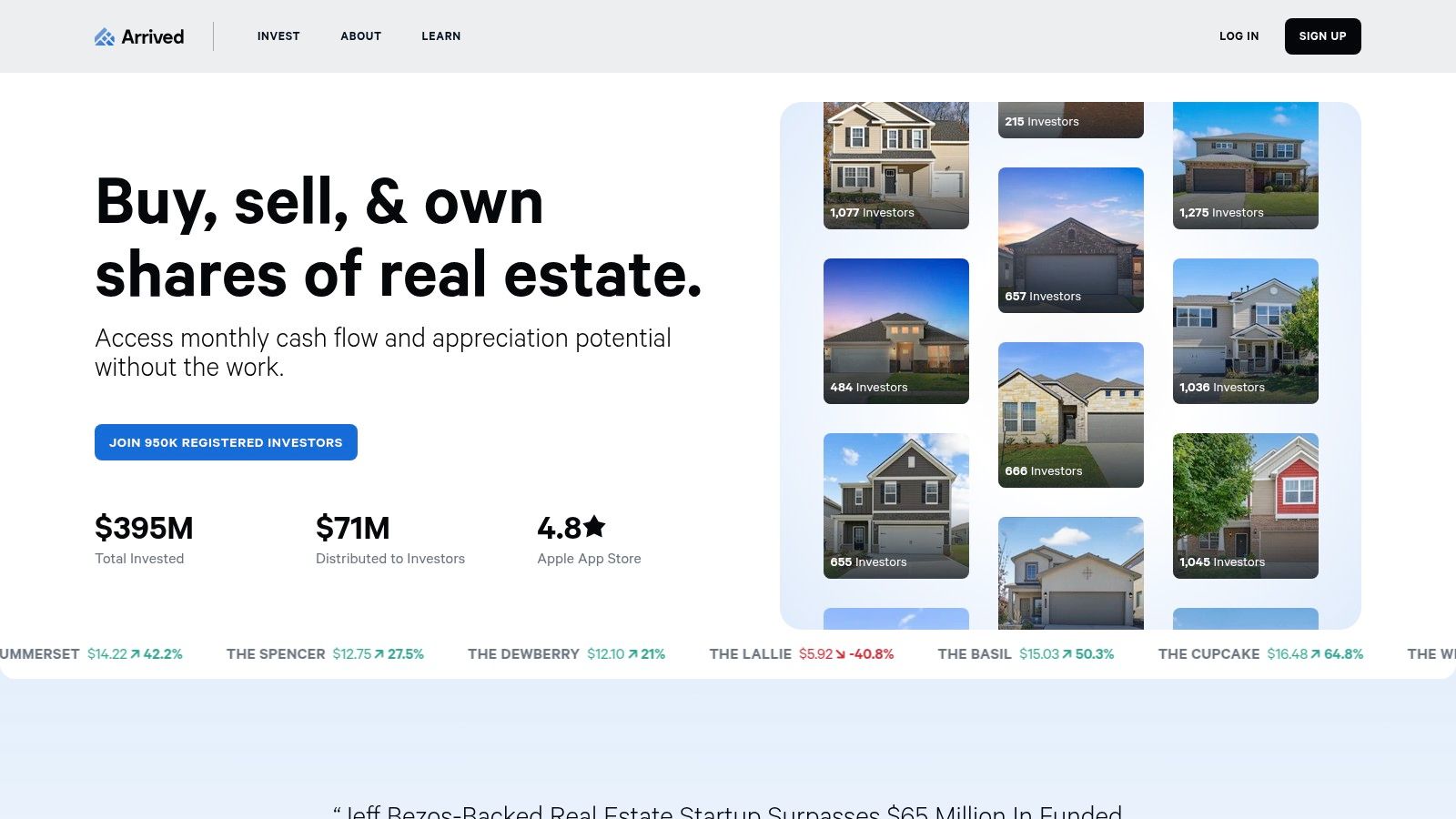
With a minimum investment of just $100 per property, you can start building a portfolio of rental homes across different markets. Arrived handles all the operational work, from tenant acquisition and property management to maintenance and accounting, while providing detailed financial disclosures for each home. This combination makes it one of the leading platforms for fractional real estate ownership if you want to be a hands-off owner of specific properties.
Key Features and Investor Profile
Arrived is designed for investors who want the benefits of direct property ownership combined with the simplicity of a managed platform.
- Property-Level Investing: You choose which specific homes to invest in, with access to detailed data like purchase price, projected rent, and operating expenses.
- Low Minimum Investment: The $100 minimum per property makes it easy to diversify across multiple homes and markets even with modest capital.
- SEC-Qualified Offerings: Each property is structured as a series LLC and qualified with the SEC under Regulation A, offering a transparent and regulated investment vehicle.
- Secondary Market: Arrived offers a secondary marketplace that opens during scheduled trading windows, providing a potential path to liquidity for investors who need to sell their shares.
For beginners: Use Arrived to learn how to analyze individual rental properties by reviewing the provided financials and market data. For experienced investors: Use the platform to gain exposure to new rental markets like vacation destinations without having to establish a local management team.
Pros and Cons of the Arrived Model
| Pros | Cons |
|---|---|
| Ability to choose individual properties and build a customized portfolio. | Secondary market trading is limited to specific windows and can have execution fees (up to 2.5%). |
| Low $100 entry point per property allows for easy diversification. | Property-level expenses and AUM fees reduce the net yield passed on to investors. |
| Liquidity option through a scheduled secondary market provides an exit path. | Dividends are paid quarterly, which may be less frequent than some income investors prefer. |
How to Use Arrived Effectively
Getting started involves creating an account, browsing available properties, and selecting the ones you want to invest in. For each property, Arrived provides a comprehensive page with photos, financial projections, and key documents. Once a property is fully funded and operational, you start earning a share of the rental income and any potential appreciation. While the platform simplifies ownership, understanding the different types of real estate financing options for a complete guide can give you better insight into how Arrived structures its deals and what drives returns.
Website: https://arrived.com
3. Ark7: For Direct Property Ownership with Low Share Prices
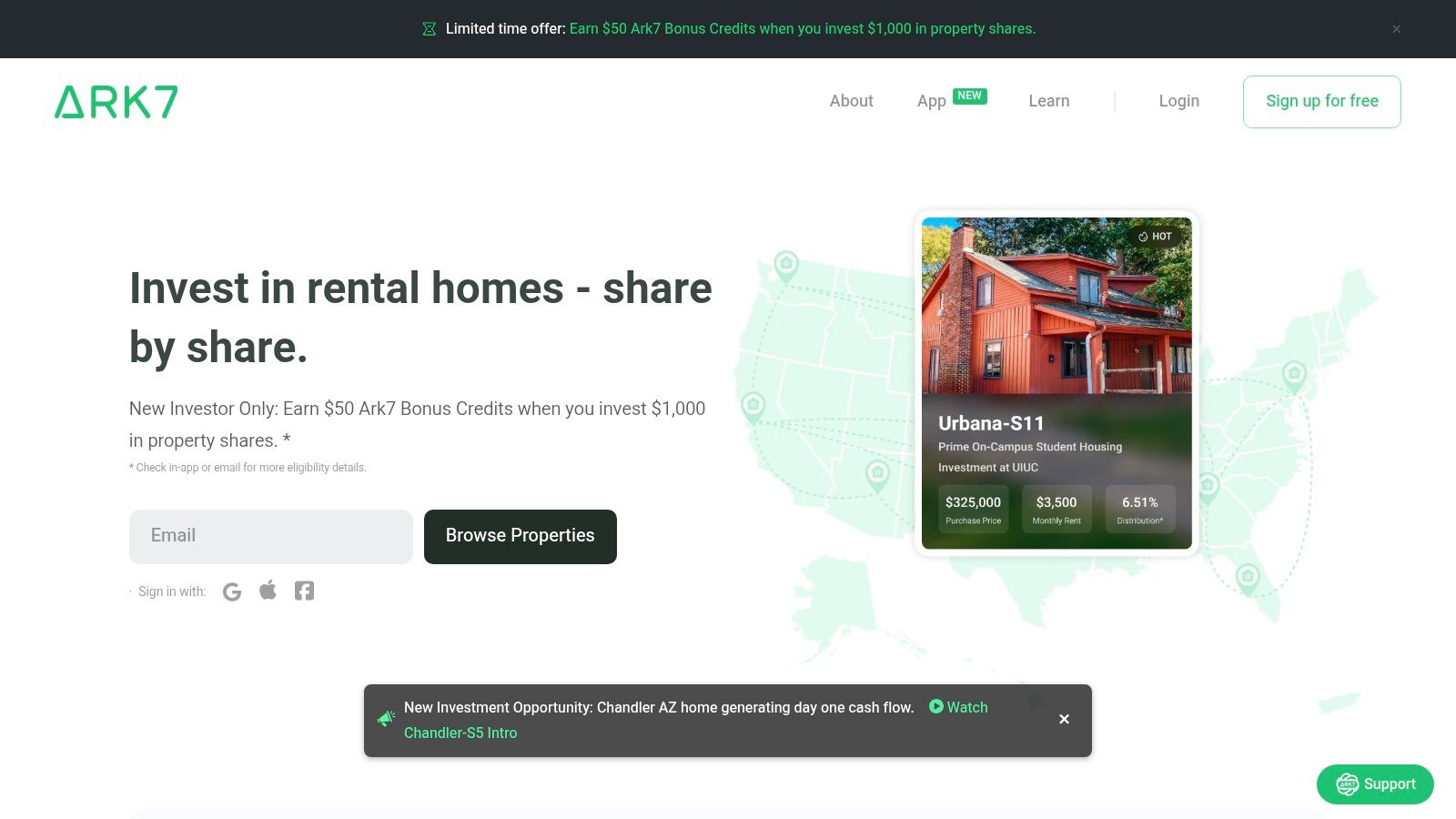
Ark7 provides a direct path to fractional real estate ownership by allowing investors to buy shares of individual rental properties. Unlike a fund model, this platform lets you build a custom portfolio of single-family homes and small multifamily assets you select yourself. Each property is held in its own series LLC, legally separating it from others and giving investors clear, direct ownership.
This approach is perfect for investors who want asset-level control and tangible monthly income without the high capital requirements of buying a whole property. With share prices often starting around $20, you can easily diversify your investment across multiple properties in different markets. Ark7's model makes it one of the leading platforms for fractional real estate ownership for those who want to hand-pick their rental assets.
Key Features and Investor Profile
Ark7 stands out by combining the granularity of direct property selection with the accessibility of low-cost fractional shares.
- Low Per-Share Minimums: With shares often priced between $20 and $100, investors can start small and build a diversified portfolio one share at a time.
- Direct Asset Selection: You browse and choose specific properties, giving you control over location, property type, and target yield.
- Monthly Cash Distributions: Ark7 collects rent, pays expenses, and distributes the net income to shareholders on a monthly basis, providing a steady passive income stream.
- Secondary Marketplace: After a required holding period (typically one year), investors can list their shares for sale on Ark7’s secondary market, which is operated by a registered broker-dealer, offering a path to liquidity.
For beginners: Use Ark7 to learn the ropes by purchasing a few shares in different properties, experiencing direct ownership and monthly cash flow. For experienced investors: Use it to strategically add exposure to specific rental markets, like Austin or Seattle, without the operational burden of direct management.
Pros and Cons of the Ark7 Model
| Pros | Cons |
|---|---|
| Very low entry point allows for easy diversification across many hand-picked properties. | Fees can impact returns; includes a one-time sourcing fee and ongoing property management fees deducted from gross rent. |
| Direct ownership of specific properties provides clear transparency and control. | Liquidity is not guaranteed; selling shares depends on finding a buyer on the secondary market. |
| Regular monthly cash flow from rental income is ideal for income-focused investors. | Risk is concentrated at the property level; a vacancy or major repair can directly affect a single asset’s returns. |
How to Use Ark7 Effectively
Getting started involves signing up, browsing the available properties, and purchasing shares in the ones that align with your goals. Ark7 provides detailed information for each property, including financials, location analysis, and expected returns. Once you invest, your dashboard tracks your total portfolio value and monthly dividend payments. Effective property selection requires understanding the costs involved; while Ark7 handles day-to-day operations, knowing the fundamentals detailed in this ultimate guide to property management can help you better evaluate the net income potential of each offering.
Website: https://ark7.com
4. Lofty: For Liquid, Tokenized Real Estate Investing
Lofty introduces a modern approach to fractional real estate ownership by tokenizing U.S. rental properties, making them tradable on a blockchain-powered marketplace. Instead of buying shares in a fund or a single-purpose LLC directly, investors purchase digital tokens that represent their ownership stake in the LLC that holds title to the property. This structure is built for liquidity and accessibility.

This platform appeals to investors who are comfortable with digital assets and want the ability to trade their real estate holdings with near-instant settlement. With minimum investments often starting around $50, Lofty significantly lowers the barrier to entry for owning specific, individual rental properties. Its frequent income distribution mechanics and active secondary marketplace make it one of the leading platforms for fractional real estate ownership for those seeking control and flexibility.
Key Features and Investor Profile
Lofty’s combination of real estate and blockchain technology creates a distinct experience suited for the tech-forward investor.
- Low Minimum Investment: Tokens can be purchased for as little as $50, allowing for precise capital allocation and easy portfolio diversification across multiple properties.
- Active Secondary Marketplace: Lofty offers a 24/7 marketplace where investors can list their tokens for sale or buy from others, providing a level of liquidity that is rare in private real estate.
- Frequent Income Distribution: Rental income is collected and can be distributed to token holders frequently, often on a daily basis, directly to their Lofty account.
- Direct Property Selection: Unlike a fund, investors choose specific single-family or small multifamily properties to invest in based on detailed financial data and property information.
For beginners: A crypto-savvy investor might use Lofty to diversify their digital asset portfolio into tangible, income-producing real estate without leaving a similar ecosystem. For experienced investors: A traditional real estate investor could use the platform to test ownership in new geographic markets with minimal capital and an easy exit option.
Pros and Cons of the Lofty Model
| Pros | Cons |
|---|---|
| High liquidity with an always-on secondary market for trading tokens. | Transaction fees of around 3.5% on marketplace trades and potential crypto conversion fees. |
| Very low entry point (around $50) allows for granular portfolio construction. | Tokenized structure is new; tax and custody implications are still evolving and may be complex. |
| Frequent rental income distributions provide a consistent cash flow experience. | Secondary sales pay out in USDC stablecoin, requiring conversion to cash, which may incur extra steps. |
| Full transparency into individual property performance and financials. | Marketplace liquidity depends on user activity; selling tokens requires a buyer to be available. |
How to Use Lofty Effectively
Getting started on Lofty involves creating an account, funding it via ACH, wire, or by depositing USDC stablecoin, and then browsing the marketplace for properties. Each listing includes detailed information, such as financial pro-formas, inspection reports, and rental history. You can buy tokens for new offerings or bid on tokens listed by other investors on the secondary market. To use the platform well, investors should become familiar with the trading interface and understand the order book dynamics. The daily rental income accumulates in your account, which you can then withdraw or reinvest.
Website: https://www.lofty.ai
5. Groundfloor: For Short-Term Debt Investing with Low Minimums
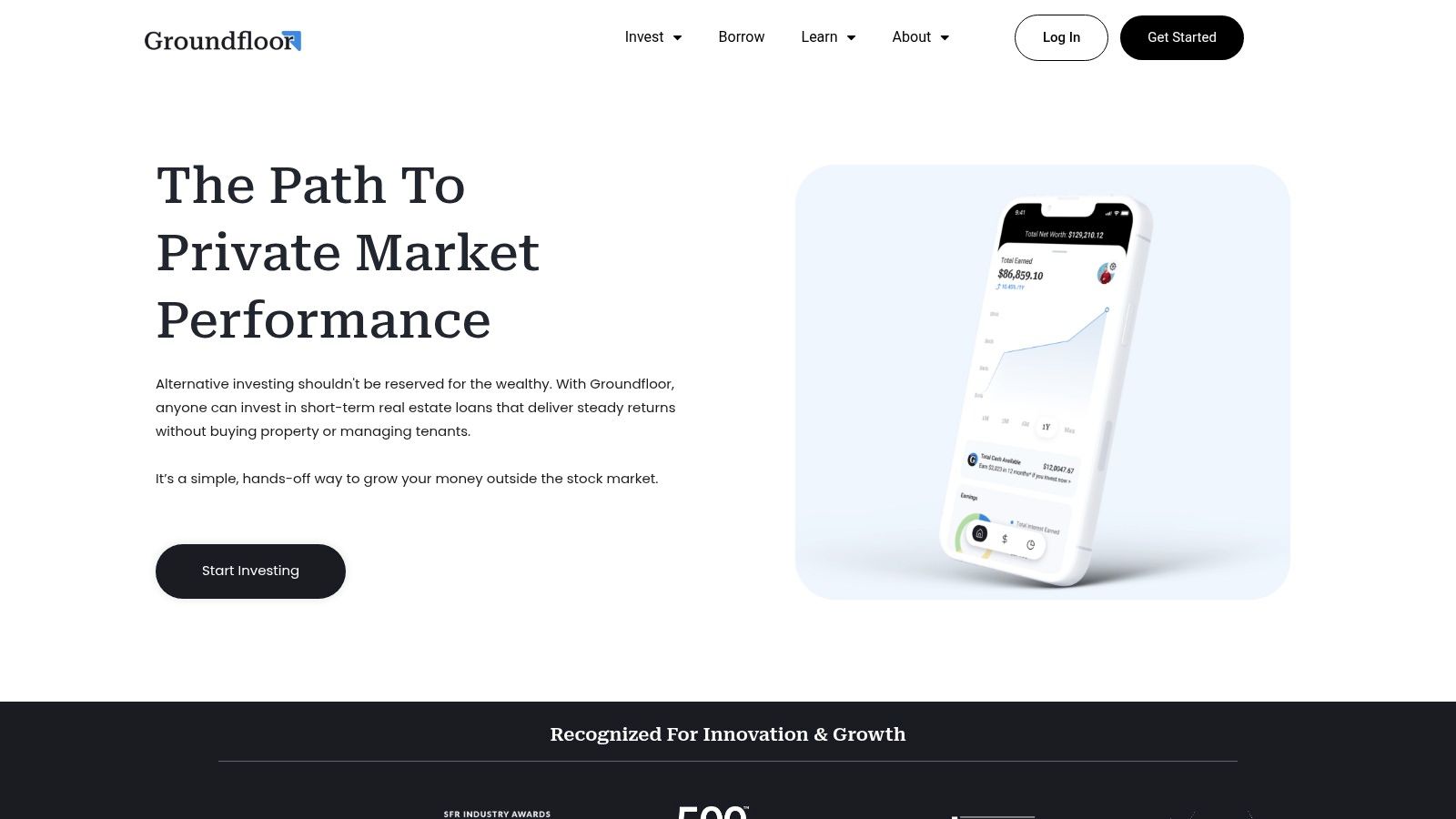
Groundfloor offers a distinct entry point into fractional real estate by focusing on the debt side of the equation rather than equity. It operates as a real estate lending marketplace where investors can fund short-term, high-yield loans issued to property flippers and developers. Instead of buying a piece of a property, you are essentially acting as the lender, providing capital for renovation and bridge loans that are secured by a first lien on the real estate.
This model is designed for investors who want predictable, fixed-income returns over shorter time horizons, typically 6 to 12 months. With a minimum investment of just $10 per loan, Groundfloor makes it possible for anyone, including non-accredited investors, to build a diversified portfolio of real estate debt. This focus on secured debt makes it one of the leading platforms for fractional real estate ownership for those seeking to complement long-term equity holdings.
Key Features and Investor Profile
Groundfloor’s platform stands out by giving investors direct access to real estate-backed loans, a category once reserved for private lenders and institutions.
- Ultra-Low Minimum Investment: The $10 minimum allows for granular diversification across dozens or even hundreds of individual loans, reducing the impact of any single default.
- Short Loan Durations: Most loans have terms of 12 months or less, offering faster capital turnover compared to multi-year equity investments.
- Direct Loan Selection: Investors can browse available loans, review borrower details, property analysis, and the loan's risk grade (A-G), and then choose which specific projects to fund.
- Transparent Data: Each loan offering includes comprehensive information on the borrower's experience, the project scope, and the after-repair value (ARV)—the estimated value of a property after all renovations are complete.
For beginners: Use Groundfloor to learn the mechanics of real estate lending with very little capital at risk. For experienced investors: Use it to generate regular cash flow or to strategically deploy capital into short-term debt instruments while waiting for longer-term equity opportunities to arise.
Pros and Cons of the Groundfloor Model
| Pros | Cons |
|---|---|
| $10 minimum enables extreme diversification across hundreds of loans. | Upside is capped at the loan's interest rate; you do not share in property appreciation. |
| Short durations (often under 12 months) provide quicker return of capital. | Subject to borrower default risk; while secured by the property, repayment is not guaranteed. |
| No investor-side fees on individual loan investments. | Returns are dependent on the performance and repayment habits of individual property developers. |
| High degree of control over which specific loans to invest in. | Foreclosure and recovery processes can extend loan timelines and impact final returns. |
How to Use Groundfloor Effectively
Getting started involves creating an account and funding it. From there, you can browse the marketplace of available loans. Each loan is graded from A to G based on risk, with corresponding interest rates. A more conservative strategy would be to focus on A-C graded loans, while a more aggressive investor might add D-G graded loans for their higher potential yield. The key to success on Groundfloor is diversification. Spreading a larger sum across 50-100 loans is a much sounder strategy than putting it all into a few.
Website: https://www.groundfloor.com
6. Concreit: For App-Based Simplicity and Income Focus
Concreit has entered the fractional real estate ownership space with a modern, mobile-first approach designed for investors who value simplicity and passive income. It offers access to a private real estate fund through an intuitive app, allowing users to invest with very small amounts of capital. The platform's core focus is on generating consistent income distributions for its investors.
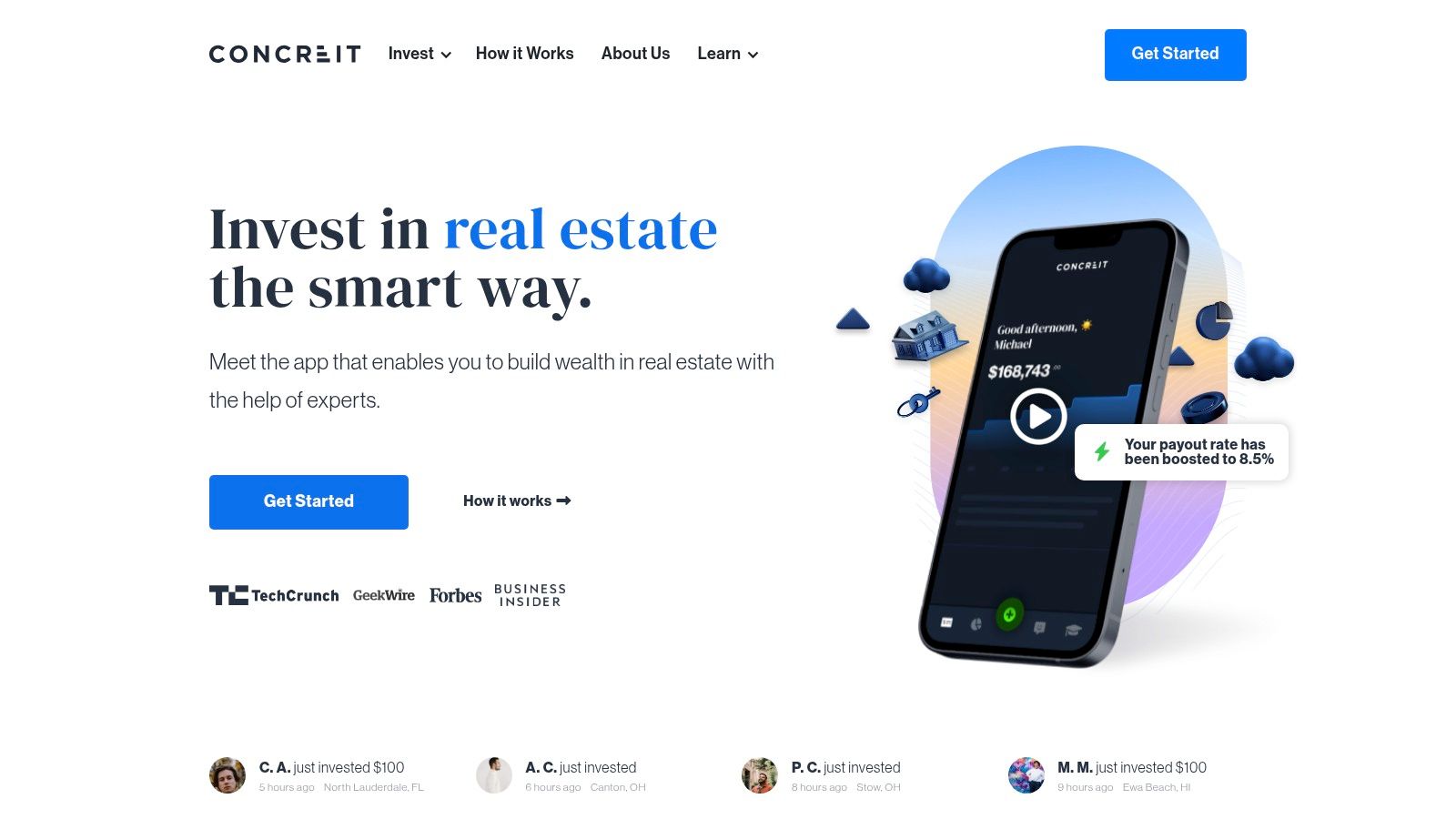
Unlike platforms centered on individual property selection, Concreit operates a fund model where capital is pooled to invest in a portfolio of income-producing assets. A key distinction is its emphasis on frequent distributions, often paid out weekly, which appeals to those seeking a more regular cash flow stream. This design makes Concreit one of the leading platforms for fractional real estate ownership for individuals who prefer a "set-it-and-forget-it" strategy managed entirely through their smartphone.
Key Features and Investor Profile
Concreit's main draw is its extreme accessibility and straightforward income-generating mission, making it a good fit for investors new to real estate.
- Very Low Minimum Investment: With account minimums often as low as $1, Concreit effectively removes the financial barrier to private real estate.
- Frequent Distributions: The potential for weekly distributions provides a tangible and regular sense of return on investment, which can be highly motivating.
- App-First Experience: The entire investment process, from onboarding to tracking performance, is managed through a clean and user-friendly mobile app.
- Transparent Disclosures: As an SEC-registered adviser, Concreit provides clear access to its offering documents, detailing fees and fund strategies online.
For beginners: Use Concreit to start building an income-focused real estate allocation with pocket change. For experienced investors: Use it to park a small amount of cash in a liquid, income-producing vehicle as an alternative to a high-yield savings account, while prioritizing hands-off management.
Pros and Cons of the Concreit Model
| Pros | Cons |
|---|---|
| Extremely low barrier to entry makes it ideal for testing real estate. | No control over individual property selection; performance is tied to the overall fund. |
| Frequent distribution potential offers a more regular income stream. | Flat monthly fees on small accounts can significantly impact net returns for very small balances. |
| Simple, "set-it-and-forget-it" design through a dedicated mobile app. | Limited liquidity; withdrawal requests are subject to fund cash availability and may have waiting periods. |
How to Use Concreit Effectively
Getting started with Concreit involves downloading the app, creating an account, linking a financial source, and making an initial investment. The platform is designed for passive participation; once you invest, the fund managers handle all property acquisition and management. The app's dashboard clearly shows your balance and income earned. While you cannot analyze individual properties, understanding the fund’s strategy is key. The platform's transparent disclosures are a valuable resource for grasping how your money is being put to work to generate returns.
Website: https://www.concreit.com
7. Streitwise: For Income-Focused Commercial Real Estate Investors
Streitwise has established itself as a distinct option among the leading platforms for fractional real estate ownership by focusing exclusively on dividend-producing commercial properties. It operates a non-traded private Real Estate Investment Trust (REIT) that is open to both accredited and non-accredited investors. This structure allows individuals to buy shares in a portfolio of institutional-quality assets, such as office buildings and mixed-use retail centers.
The platform's primary goal is to generate consistent quarterly dividend income for its shareholders. Streitwise differentiates itself with a straightforward, investor-friendly fee model and a direct-sponsorship approach, where the company's principals invest alongside their clients. This focus on income and alignment of interests makes it an appealing choice for investors prioritizing passive cash flow over speculative appreciation.
Key Features and Investor Profile
Streitwise is designed for simplicity and targets investors who want diversified commercial real estate exposure without the complexity of picking individual deals.
- Income-Focused REIT: The portfolio consists of commercial properties managed with the objective of producing steady cash flow and distributing it to investors as dividends.
- Simple Fee Structure: The platform charges a flat 2.0% annual management fee. It does not charge acquisition fees, disposition fees, or carried interest (promote), making its cost structure transparent and easy to understand.
- Open to All Investors: Both accredited and non-accredited investors can participate, with a minimum investment of approximately $5,000 (subject to change).
- Direct-to-Investor Model: As the sponsor, Streitwise manages the assets directly, providing investors with quarterly reports and direct access to their investor relations team.
For beginners: An investor nearing retirement might use Streitwise to add a stable, income-generating commercial real estate component to their portfolio. For experienced investors: A younger investor could use it to diversify away from residential-only investments and gain exposure to a different asset class with a single investment.
Pros and Cons of the Streitwise Model
| Pros | Cons |
|---|---|
| Simple and transparent fees with no complex sponsor promotes. | No control over individual asset selection; returns are tied to the REIT's overall performance. |
| Access for non-accredited investors to a portfolio of commercial real estate. | Limited liquidity with a one-year lockout and quarterly redemption windows subject to restrictions. |
| Historically strong dividend distributions targeting passive income investors. | Concentrated risk in the commercial office sector, which can face unique market headwinds. |
How to Use Streitwise Effectively
Getting started with Streitwise involves creating an account, verifying your identity, and making an initial investment to purchase shares in its REIT. The platform's dashboard provides a clear overview of your holdings and dividend payment history. To use the platform well, investors should review the SEC filings and offering circulars available on the website to fully understand the REIT's strategy and risks. Because Streitwise focuses on commercial properties, understanding metrics beyond basic rent is key. A foundational knowledge of commercial lease structures and how to evaluate a property’s net operating income will help you better interpret the REIT’s quarterly performance reports.
Website: https://streitwise.com
Top 7 Fractional Real Estate Platforms Comparison
| Platform | Implementation complexity 🔄 | Resource requirements 💡 | Expected outcomes ⭐ / 📊 | Liquidity & speed ⚡ | Ideal use cases | Key advantages 💡 |
|---|---|---|---|---|---|---|
| Fundrise | Low — online onboarding, fund‑level product | Very low minimums (≈$10); fund management handled by platform | Balanced income + appreciation; diversified fund returns (fees apply) ⭐⭐ | Periodic redemptions; not instant liquidity | Passive, diversified real‑estate allocation | Very low entry, broad diversification, transparent fees |
| Arrived | Moderate — per‑property selection and Reg A offerings | Low per property (~$100); review property disclosures | Property‑level rent/dividends + appreciation potential ⭐⭐ | Secondary market during scheduled windows (execution fees possible) ⚡ | Investors wanting to pick specific SFR/vacation rentals | Pick individual properties, property‑level transparency |
| Ark7 | Low‑Moderate — buy per‑property shares, monthly distributions | Very low per‑share minimums (~$20); sourcing & mgmt fees apply | Monthly cash flow + appreciation potential; fees reduce gross yield ⭐⭐ | ATS trading after required hold period; liquidity varies ⚡ | Small‑ticket diversification and monthly income seekers | Low entry, monthly distributions, clear fees |
| Lofty | Higher — tokenized structures and crypto rails | Low token minimums ($50); token/conversion fees (3.5%) and USDC payouts | Frequent income mechanics; tradable tokens with tokenization nuances ⭐⭐ | Always‑on token marketplace with near‑instant settlement (conversion steps/fees) ⚡⚡ | Crypto‑comfortable investors seeking fast trading and low minimums | Near‑instant trading, low entry, educational support on tokenization |
| Groundfloor | Low — lending marketplace, pick loans or portfolios | Ultra‑low minimums (≈$10); evaluate borrower credit | Contracted interest returns (secured loans); limited upside vs. equity ⭐ | Short loan durations (months); liquidity tied to loan repayment ⚡ | Fixed‑income‑style real‑estate exposure and short‑term allocations | Ultra‑low min, short durations, transparent borrower data |
| Concreit | Low — app‑first managed fund, set‑and‑forget | Very low account minimums ($1–$100); flat fees may impact tiny accounts | Income‑focused with frequent (often weekly) distributions ⭐ | Fund‑level liquidity per offering terms; app convenience | Simple income allocation and testing small allocations | Frequent distributions, app UX, clear regulatory disclosures |
| Streitwise | Low — non‑traded private REIT structure | Accessible to non‑accredited; REIT minimums vary by offering | Net dividend income from commercial real estate; REIT‑style diversification ⭐⭐ | Periodic redemption programs subject to terms; not immediate | Investors seeking commercial REIT exposure with simple fees | Simple fee design, transparent sponsor structure, REIT diversification |
From Fractional Shares to Whole Deals: Your Next Step in Real Estate
The journey into real estate investing no longer requires a six-figure down payment or a bank loan. As we've explored, the leading platforms for fractional real estate ownership have opened the doors for investors at all levels, providing a direct path to building a diversified property portfolio piece by piece. From the simple, automated REITs offered by Fundrise to the single-family home shares on Arrived, the options are as varied as the investment strategies they serve.
You now have a clear understanding of how these platforms operate, their fee structures, and the types of investors they best suit. Whether you're drawn to the short-term debt investments on Groundfloor or the blockchain-backed tokens of Lofty, your primary decision rests on aligning a platform's model with your personal financial goals, risk tolerance, and desired level of involvement.
Key Takeaways for Choosing Your Platform
Making the right choice involves more than just picking the platform with the lowest minimum investment. As you weigh your options, keep these core principles at the forefront:
- Strategy First, Platform Second: First, decide if you want passive income (REITs), appreciation potential (single-family rentals), or short-term returns (debt). Then, find the platform that specializes in that asset class. For example, an investor focused on steady dividends might prefer Streitwise's commercial REIT, while someone wanting to bet on specific housing markets would lean toward Arrived.
- Understand the Fee Impact: Fees are a direct drag on your returns. A 1% annual management fee might seem small, but over a decade, it significantly erodes your gains. Compare the all-in costs, including asset management fees, acquisition fees, and any carried interest. Platforms like Groundfloor, which primarily charge the borrower, can offer a more transparent fee structure for the investor.
- Liquidity Is Not a Guarantee: While platforms like Lofty offer innovative solutions for cashing out, fractional real estate is fundamentally an illiquid asset. Never invest capital that you might need in the short term. Plan for the stated holding periods, typically three to seven years, and view any early liquidity options as a bonus, not a certainty.
Graduating from Fractional to Full Ownership
Fractional investing is an outstanding training ground. It teaches you market analysis, due diligence, and the mechanics of cash flow without the heavy lift of direct management. As your knowledge and capital grow, you may find yourself ready to take the next logical step: acquiring whole properties.
When you transition from buying shares to buying deeds, your primary challenge shifts from picking a platform to finding a reliable source of deals. This is the exact problem an investor marketplace and networking platform helps solve. Instead of sifting through the MLS, you can tap into a direct pipeline of off-market properties from wholesalers and other investors. On our marketplace, you can set a buy-box profile to get deals that match your exact criteria.
This progression is natural. You start by learning the ropes with fractional shares on platforms like the ones we've reviewed, and once you’re ready, you apply that knowledge to sourcing, analyzing, and closing your own deals. The skills you build today are the direct foundation for your success as a full-time operator tomorrow.
Create your free investor profile to get matched with deals that fit your criteria.