
Sourcing profitable residential deals in a crowded market is a constant challenge for investors. Whether you're a wholesaler hunting for motivated sellers or a buy-and-hold investor expanding a rental portfolio, your success depends on consistent, quality deal flow. While the MLS is a standard tool, its limitations often mean missing out on off-market opportunities and competing with traditional homebuyers, making it harder to find properties that meet your numbers.
Fortunately, specialized online platforms have emerged to solve this exact problem. These focused marketplaces connect sellers, wholesalers, and investors, offering a more efficient way to find properties that fit specific financial criteria. This article provides a practical roundup of the top real estate investor marketplaces for residential properties, designed to help you bypass the noise and zero in on viable opportunities.
1. Investor Deal Exchange
Investor Deal Exchange is a powerful, investor-first marketplace engineered to reduce noise and accelerate deal-making for serious buyers. It was designed by investors for investors, with a clear focus on delivering relevant opportunities directly into a user's workflow. The platform’s core mission is to replace the chaotic, time-consuming process of sifting through thousands of irrelevant listings with a direct, data-driven approach to deal sourcing.
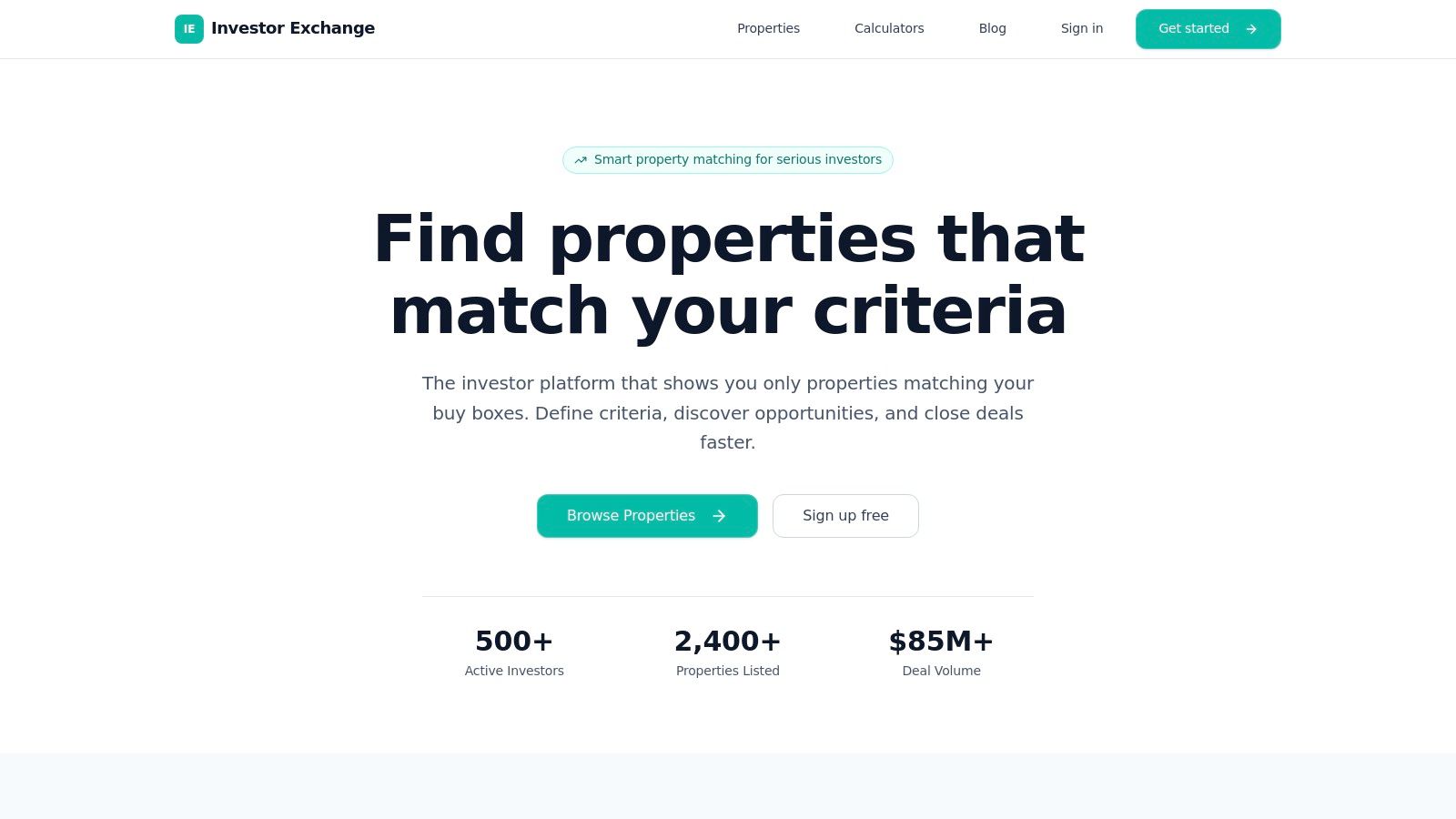
Unlike broad, consumer-focused portals, our platform operates on the principle that an investor's time is their most valuable asset. It achieves this efficiency through Smart Buy Boxes, a customizable filtering system that acts as your personal, automated deal-finding engine. This feature alone makes it a top contender among the best real estate investor marketplaces for residential properties, ensuring your deal feed contains only relevant opportunities.
Key Features & Workflow
Investor Deal Exchange combines deal sourcing, analysis, and networking into a single, cohesive system.
- Smart Buy Boxes: This is the platform's signature feature. Investors set precise criteria—your "buy box"—for the properties they want. Filters include standard metrics like price and location, but also investor-specific data points such as ROI, cap rate, and Net Operating Income (NOI). Once your Buy Box is set, the platform hides all listings that don’t match.
- Built-in Deal Calculators: Every property listing includes integrated calculators for Return on Investment (ROI), Capitalization Rate (Cap Rate), and Cash-on-Cash Return. This allows for quick, on-the-fly underwriting without needing to export data to an external spreadsheet. You can adjust inputs like purchase price or rent and instantly see how the numbers change.
- Integrated Deal Pipeline & Network: When you find a promising property, you can save it to your Deal Pipeline. This built-in feature lets you track opportunities from initial interest through closing. You can also message property owners or wholesalers directly within the platform, building relationships and keeping all communications organized in one place.
Ideal Investor Profile
The platform is purpose-built for active, data-driven real estate professionals. It's particularly effective for:
- Buy-and-Hold Investors: Buyers looking for single-family rentals (SFRs) or small multifamily can set tight geographic and financial criteria to find cash-flowing properties.
- Wholesalers & Flippers: Wholesalers can upload their deals to reach a pre-qualified audience of serious buyers, while flippers can quickly source properties that fit their renovation models.
- Multifamily Syndicators: The ability to filter by unit count, NOI, and cap rate is critical for syndicators who need to find assets that meet their fund's acquisition targets.
Strengths & Weaknesses
Strengths:
- Highly-Targeted Deal Matching: The Smart Buy Boxes are exceptional at filtering out noise and surfacing only properties that meet your exact investment criteria.
- Accelerated Underwriting: Built-in calculators on every listing permit instant analysis, which is a major time-saver.
- Integrated Networking: The platform helps with credibility (profiles, history, reviews) and allows you to build a network for repeat deals.
- Free to Get Started: You can create a free account to set up your Buy Box and begin seeing matched deals immediately, offering a no-risk entry point.
Weaknesses:
- Growing Inventory: As a focused network, its inventory is more curated and smaller than massive national portals. Deal availability may be limited in some secondary or tertiary markets.
- Opaque Pricing: Beyond the free account, details on premium tiers are not publicly disclosed, requiring direct contact for full cost information.
Pricing & Access
You can sign up for a free account to build your investor profile, set up your Smart Buy Box, and view matching properties. For information on premium features or any costs associated with posting deals, you must contact Investor Deal Exchange directly.
2. Roofstock
Roofstock is a leading online marketplace specifically for buying and selling single-family rental (SFR) properties. It stands out by packaging deals for investors, often with tenants already in place, making it a go-to platform for those seeking rent-ready assets. The platform’s core value is providing a more transparent and standardized process for acquiring income-producing real estate, especially for out-of-state investors who need reliable data and support services.
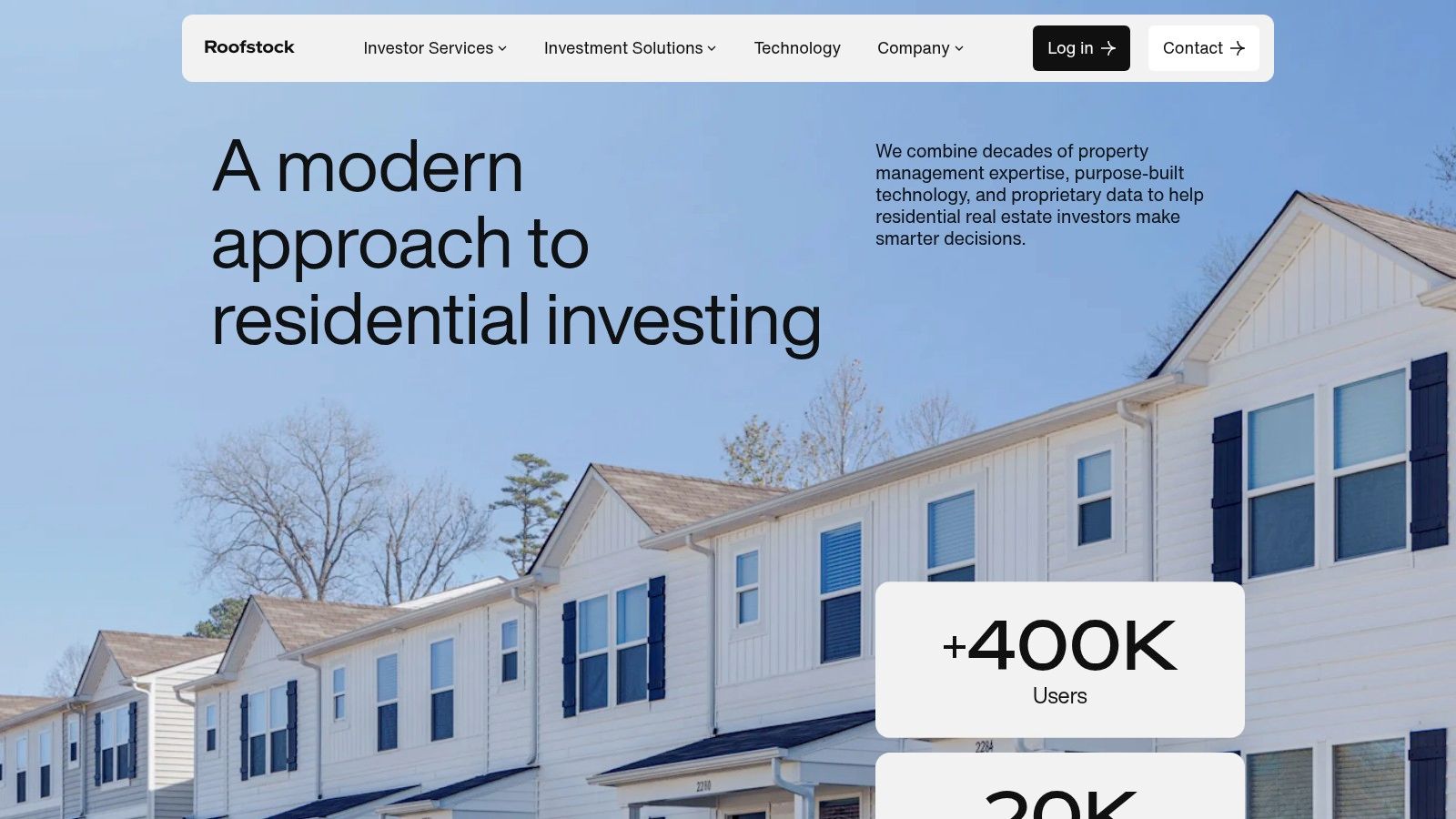
Unlike traditional listing sites, Roofstock properties come with a wealth of pre-vetted information. Each listing typically includes a property inspection report, title report, and a detailed financial pro forma with estimated returns, cash flow, and appreciation. This level of upfront due diligence helps investors evaluate opportunities from afar, reducing the friction and uncertainty often associated with remote investing.
Key Features and Ideal Investor Profile
Roofstock's feature set is built to support a remote transaction from discovery to closing.
- Property Certification: Properties undergo a vetting process that includes an inspection and analysis of the lease and payment history if tenant-occupied.
- Detailed Financials: Listings feature key metrics like gross yield, cap rate, and annualized return. A "Cloud-based Closing" process offers a streamlined, digital-first transaction experience.
- Optional Property Management: Roofstock connects buyers with vetted local property managers, making it a practical solution for hands-off ownership.
- 30-Day Money-Back Guarantee: On certain properties, Roofstock offers a guarantee, providing a safety net for new buyers (conditions apply).
This platform is particularly well-suited for:
- For Beginners: It's a great fit for newer investors seeking a guided entry into SFRs with turnkey-style properties.
- Busy Professionals who want to invest in real estate passively without active management.
- Out-of-State Investors looking to access more affordable or higher-yield markets nationwide.
Pricing and Access
Accessing and browsing listings on Roofstock is free. For buyers, the marketplace fee is 0.5% of the contract price or $500, whichever is greater, paid at closing. Sellers typically pay a 3% commission or $2,500, whichever is higher. These fees are part of your total acquisition cost and should be factored into your analysis.
Strengths and Weaknesses
Pros:
- Investor-Focused Data: Listings are packaged with the data investors need, not just what a traditional agent provides.
- Turnkey Process: The combination of vetted properties, optional management, and streamlined closing makes remote investing more accessible.
- National Inventory: Provides access to SFRs across dozens of U.S. markets.
Cons:
- Pro Forma Verification is Crucial: Buyers must perform their own due diligence. The platform’s pro forma estimates for rent, taxes, and expenses may not reflect real-world performance.
- Compressed Yields: High demand for properties in popular markets can drive up prices and compress returns.
Actionable Tip: When analyzing a Roofstock deal, create your own spreadsheet. Independently verify local rents using tools like Rentometer, get insurance quotes, and use a conservative CapEx budget (e.g., 1-1.5% of property value annually) instead of relying solely on the listed figures. Always "trust, but verify" every number.
3. New Western
New Western operates as a large, private source for off-market residential properties in the U.S. It targets active investors seeking value-add opportunities like fix-and-flips, BRRRR projects, and rental rehabilitations. Their model is built on speed and convenience, with licensed agents sourcing distressed properties and presenting them to a network of pre-vetted cash buyers. This approach creates a consistent pipeline of deals that are not available on the public market.
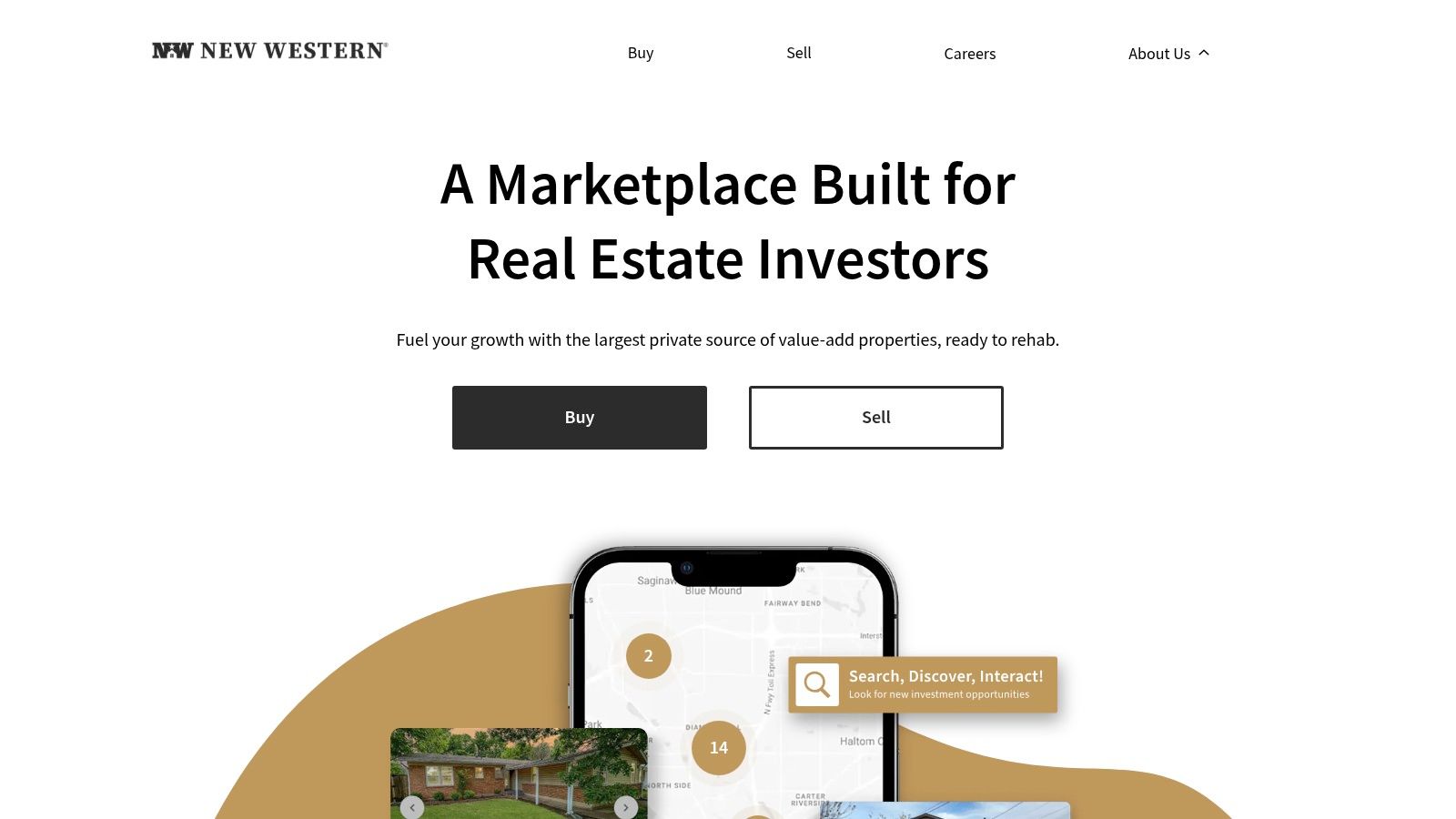
Unlike platforms focused on turnkey rentals, New Western is all about finding properties with built-in equity potential. The core service involves a local agent who understands an investor's specific criteria and proactively sends them matching properties. These deals often require a quick, "as-is" close, putting the responsibility for due diligence—including rehab cost estimation and After Repair Value (ARV) analysis—squarely on the buyer.
Key Features and Ideal Investor Profile
New Western’s system is designed to facilitate high-volume, quick-turnaround transactions for active real estate operators.
- Curated Off-Market Inventory: Provides access to a steady flow of single-family homes, small multifamily properties, and buildable lots that are not listed on the MLS.
- Local Agent Representation: Investors work with a dedicated agent who sources deals matching their strategy, from location and price to property type and condition.
- Speed-Focused Transactions: The process is built for speed, with investor-friendly contracts and an emphasis on fast, often cash, closings.
- National Network: Operates in numerous metropolitan areas across the U.S., giving investors access to a wide geographic footprint of value-add opportunities.
This platform is a strong fit for:
- Fix-and-Flip Investors who need a reliable source of distressed properties to fuel their business.
- BRRRR Investors: A strategy focused on Buy, Rehab, Rent, Refinance, Repeat, which requires properties with enough equity margin to make the numbers work.
- For Experienced Investors: Best for those comfortable performing their own underwriting and managing significant renovation projects.
Pricing and Access
There is no fee to join New Western’s network of investors. You sign up, define your investment criteria, and begin receiving deal alerts from a local agent. The company’s revenue is generated from the spread between what they pay the original seller and the final price the end-investor pays. This fee is built into the acquisition price, so investors must account for it in their analysis.
Strengths and Weaknesses
Pros:
- Consistent Deal Flow: Offers a steady pipeline of value-add opportunities, which is a major advantage for active flippers and BRRRR buyers.
- Broad Metro Presence: The frequent addition of new inventory across many major U.S. markets provides geographic diversification.
- Off-Market Access: Investors can acquire properties with less competition than on the open market.
Cons:
- Buyer Assumes All Risk: The investor is entirely responsible for verifying the ARV, rehab budget, and overall deal viability. The provided numbers are just estimates.
- Built-in Fees Impact Price: The included fee can make it harder to find deals with extremely deep discounts.
- Inventory Quality Varies: The quality and profitability of available deals can differ significantly by market, agent, and the current real estate cycle.
Actionable Tip: When a New Western agent sends you a deal, immediately begin your own independent underwriting. Use local contractor quotes to build a detailed Scope of Work (SOW) for the rehab budget. Pull your own sales comparables to determine a conservative ARV, and never rely solely on the agent’s pro forma. The best deals are often found by those who can accurately assess costs and value faster than the competition.
4. Auction.com
Auction.com is a major online marketplace specializing in distressed residential properties, primarily foreclosures and bank-owned (REO) assets. It serves as a direct pipeline for investors seeking properties at a potential discount, often requiring significant renovation. The platform has built its reputation on providing a large, nationwide inventory of distressed deals and the tools needed to participate in both online and in-person foreclosure auctions.
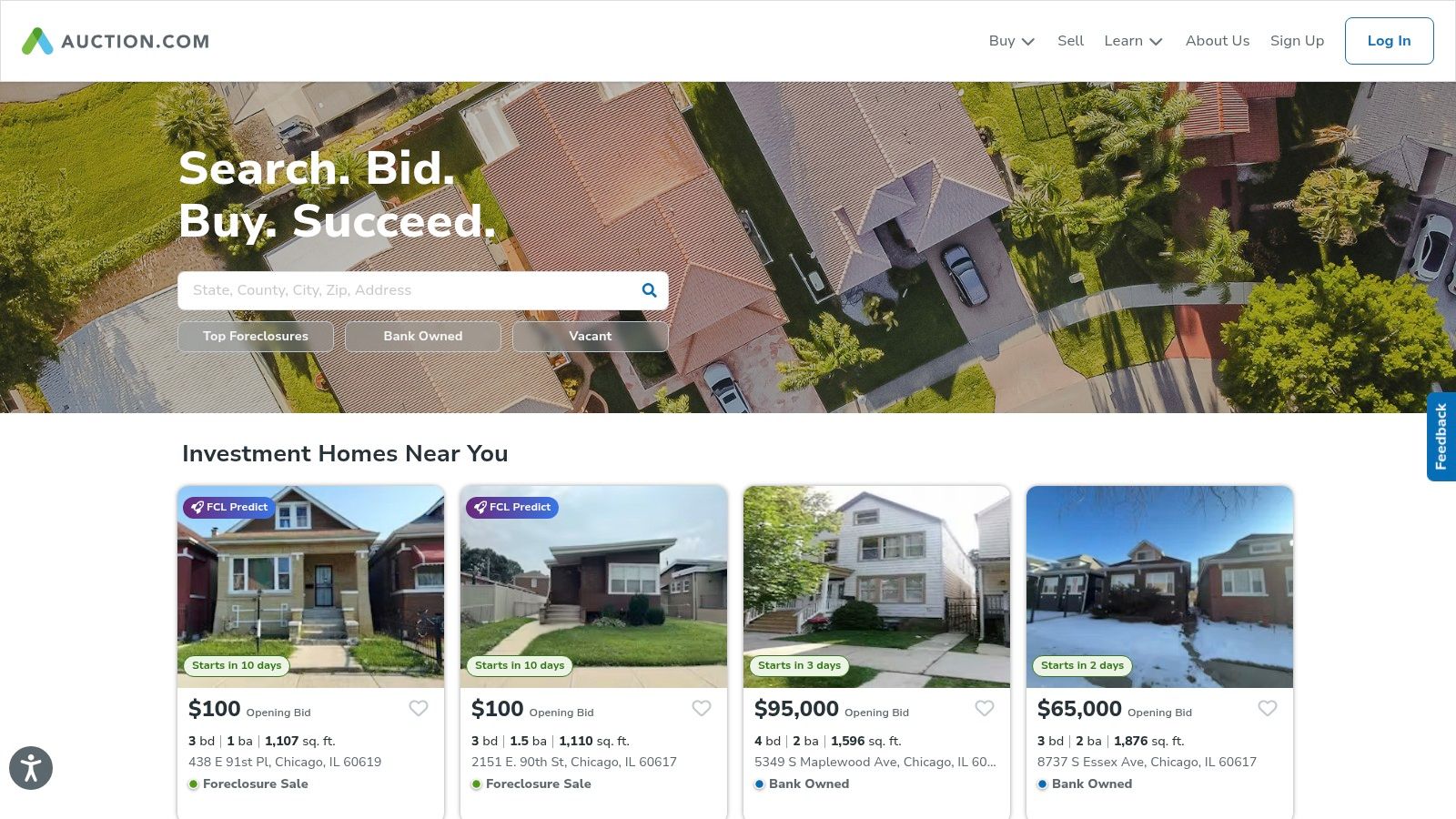
Unlike retail-focused platforms, Auction.com provides access to properties before they hit the open market. Listings are accompanied by foreclosure sale calendars, available due diligence documents (like title reports), and real-time bidding updates. This focus on the distressed asset life cycle makes it one of the top real estate investor marketplaces for residential properties for those with the expertise and capital to handle higher-risk, higher-reward projects.
Key Features and Ideal Investor Profile
Auction.com’s features are designed to facilitate the complex process of buying at auction.
- Distressed Property Inventory: Offers one of the largest national inventories of REO and foreclosure properties, searchable by location, auction type, and property status.
- Remote Bidding: In select states, the platform allows investors to bid remotely on foreclosure sales, expanding access beyond local courthouse steps.
- Due Diligence Materials: Property pages often include preliminary title information, occupancy status, and other documents to aid in initial research.
- Education Center: Provides extensive resources explaining auction types (credit bid vs. absolute), the foreclosure process, and the risks involved.
This platform is particularly well-suited for:
- Fix-and-Flippers looking for properties with significant value-add potential.
- Experienced Investors comfortable with the high-risk nature of auction buys, including title and occupancy issues.
- Wholesalers sourcing deeply discounted properties to assign to other investors.
Pricing and Access
Browsing properties and creating an account on Auction.com is free. The primary cost for buyers is the Buyer’s Premium, a fee added to the winning bid amount. This premium is commonly 5% of the winning bid or a minimum of $2,500, whichever is greater, but it can vary by property. This fee is a significant part of the total acquisition cost and must be factored into your analysis when you are learning how to calculate cap rate and other return metrics.
Strengths and Weaknesses
Pros:
- Below-Market Potential: Successful bids can result in acquiring properties for substantially less than market value.
- Unmatched Distressed Inventory: The platform provides direct access to a vast number of foreclosure and REO deals across the country.
- Transparent Bidding: Online auctions show bidding history, providing real-time market feedback.
Cons:
- High Risk Profile: Properties are sold "as-is, where-is," often with no inspection contingencies, and may have title clouds or existing occupants.
- Buyer's Premium: The additional fee significantly impacts the final purchase price and must be carefully included in your numbers.
- Auction Experience Recommended: The fast-paced, high-stakes nature of auctions is not ideal for inexperienced buyers.
Actionable Tip: Never bid on a property without first ordering a full title search from an independent title company. The preliminary documents on the site are a starting point, not a guarantee. Also, physically drive by the property (or hire someone to) to assess its exterior condition and check for signs of occupancy, as this will be your responsibility post-closing.
5. Hubzu
Hubzu is a well-known online auction marketplace specializing in distressed residential properties. It serves as a major channel for banks and servicers to liquidate real estate owned (REO) assets, short sales, and foreclosures directly to investors and the public. The platform's primary function is to create a transparent, competitive bidding environment, making it a frequent destination for investors hunting for assets with potential equity.
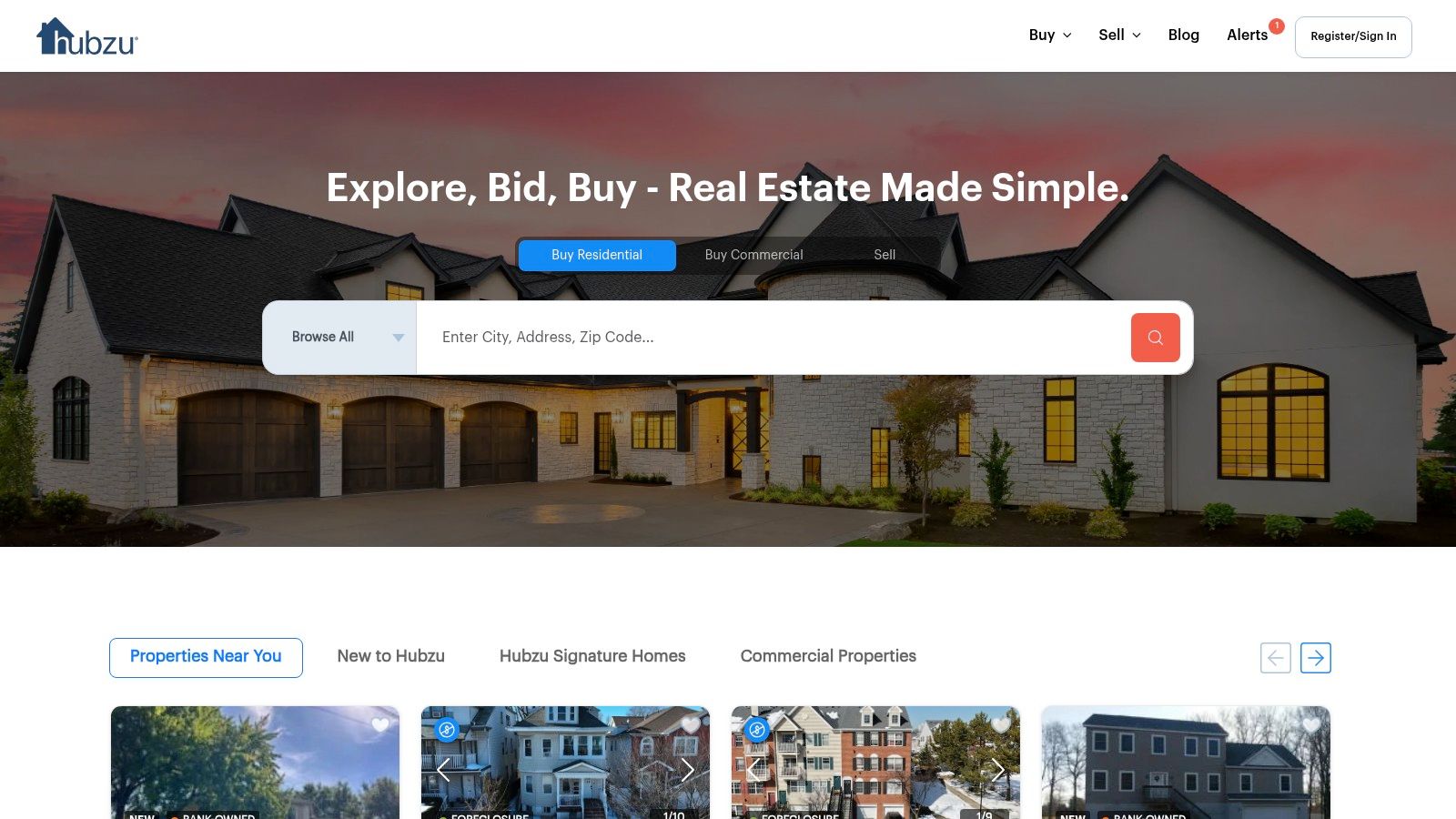
Unlike retail-focused sites, Hubzu’s inventory is almost entirely composed of properties in some stage of distress. This focus means investors get access to a consistent flow of opportunities that may not appear on the traditional MLS. The platform facilitates the auction process from start to finish with an online bidding workflow, accessible property documents, and clear timelines for auction events.
Key Features and Ideal Investor Profile
Hubzu's features are designed to systematize the acquisition of distressed assets through an auction format.
- Online Bidding Workflow: The platform provides a guided, step-by-step process for registering, placing bids, and tracking auction progress in real time.
- Mix of Distressed Assets: The inventory is rich with REOs and short sales, providing opportunities for fix-and-flip and BRRRR investors.
- Buyer Incentives: On select properties, Hubzu may offer cash incentives or reduced fees to attract buyers.
- Transparent Fee Structure: Each listing contains a "Terms & Conditions" page that clearly outlines the specific Buyer's Premium, technology fee, or other transaction costs.
This marketplace is an excellent fit for:
- Experienced Flippers and BRRRR Investors who are comfortable with distressed assets and have the resources for renovations.
- Cash Buyers or investors with ready financing, as auction timelines are often short and require quick closing.
- Deal-Hunters willing to navigate the complexities of auctions, including potential postponements and reserve prices.
Pricing and Access
Browsing Hubzu and viewing property details is free. The costs come into play upon winning an auction. A Buyer's Premium, a percentage of the winning bid, is added to the final purchase price. This premium varies by property, as does a technology or administrative fee. It is absolutely essential for bidders to review the specific terms on each listing to accurately calculate their total acquisition cost.
Strengths and Weaknesses
Pros:
- Consistent Distressed Inventory: Hubzu offers a steady volume of REO and short-sale listings direct from financial institutions.
- Straightforward Bidding Process: The online offer and bidding system is easy to understand and use.
- Potential for Incentives: Some listings feature reduced buyer premiums or other incentives that can improve deal economics.
Cons:
- Variable Fees: The Buyer's Premium and other fees change from one property to another, requiring careful checking on every single deal.
- Auction Uncertainty: Like any auction, deals can be postponed, canceled, or fail to meet the seller's undisclosed reserve price.
Actionable Tip: Before bidding on a Hubzu property, always locate and read the full "Terms & Conditions" document attached to the listing. Create a simple calculator in your deal analysis spreadsheet that adds the specific Buyer’s Premium and any other stated fees to your max bid. This ensures your final offer accurately reflects your all-in cost and protects your projected profit margin.
6. Xome Auctions
Xome Auctions operates as a nationwide online auction platform, focusing heavily on bank-owned (REO) and short-sale properties. It serves as a centralized catalog for distressed assets, attracting investors looking for deals below market value. The platform differentiates itself by integrating deep property records and value estimates directly into listings, providing a one-stop-shop for initial research.
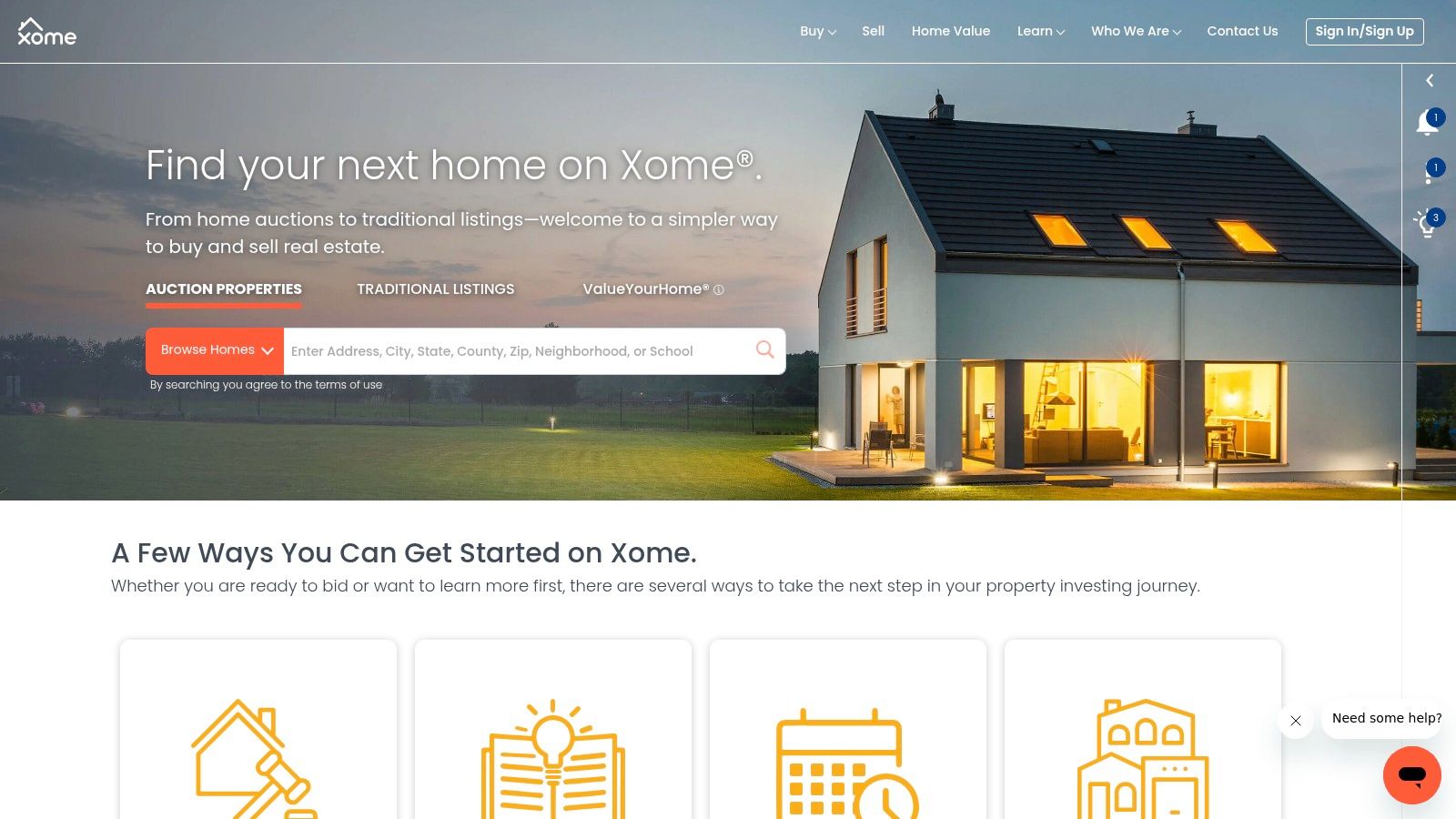
Unlike retail-focused sites, Xome is built for the pace of auction buying. It clearly outlines auction rules, state-specific disclosures, and buyer fee structures, which brings a necessary layer of transparency to a process that can often be opaque. This makes it one of the more accessible real estate investor marketplaces for residential properties for those newer to the auction world, while still providing the inventory that seasoned pros expect.
Key Features and Ideal Investor Profile
Xome’s feature set is designed to support the high-volume, quick-turnaround acquisitions typical of the auction environment.
- Centralized Auction Catalog: Provides a single interface to find bank-owned, short-sale, and even some traditional listings from across the country.
- Integrated Property Data: Listing pages include property details, tax history, and value estimates, helping to speed up the initial due diligence process.
- Standardized Buyer’s Premium: For most properties, the buyer's premium is clearly stated, removing guesswork about auction-related fees.
- Clear Disclosures: Important auction and licensing information is provided upfront, helping investors comply with local regulations.
This platform is particularly well-suited for:
- Fix-and-Flip Investors hunting for distressed properties with significant value-add potential.
- Experienced Auction Buyers who need a reliable source of REO and short-sale inventory.
- Wholesalers looking to acquire properties at a discount to then assign or resell to their buyers list.
Pricing and Access
Browsing listings and registering to bid on Xome is free. Successful bidders are responsible for paying a Buyer's Premium, which is the greater of 5% of the winning bid amount or $2,500 for most properties. This fee is paid in addition to the contract price at closing. As with any auction, bidders must be prepared with proof of funds and are often required to submit a deposit to participate.
Strengths and Weaknesses
Pros:
- Transparent Fee Structure: The standardized Buyer's Premium is clearly documented, helping investors accurately calculate their all-in cost.
- Good Source of Distressed Inventory: It’s a useful supplemental source for deals, especially when other distressed asset marketplaces have thin inventory.
- Investor-Friendly Interface: The site is built for transactional speed, complementing other tools in an investor's toolkit.
Cons:
- Auction Risks: Bidding comes with inherent risks, including limited property access for inspections, tight closing timelines, and the potential for last-minute auction postponements or cancellations.
- Experience Recommended: The fast-paced, high-stakes nature of auctions is better suited for investors who understand the process and its potential pitfalls.
Actionable Tip: On Xome, the "end time" for an auction is a soft close. If a bid is placed in the final minutes, the clock will extend. Do not wait until the last second to place your best offer. Determine your Maximum Allowable Offer (MAO) beforehand and be prepared to bid methodically as the auction nears its end, but avoid getting caught in a bidding war that pushes you past your number.
7. Sundae (Investor Marketplace)
Sundae operates a two-sided marketplace connecting homeowners with dated or damaged properties directly to a network of vetted investors. This model is built for flippers and value-add rental buyers looking for off-market, as-is homes without the friction and competition of the traditional MLS. The platform's main function is to source distressed properties from sellers and present them to investors through a competitive, transparent offer process.
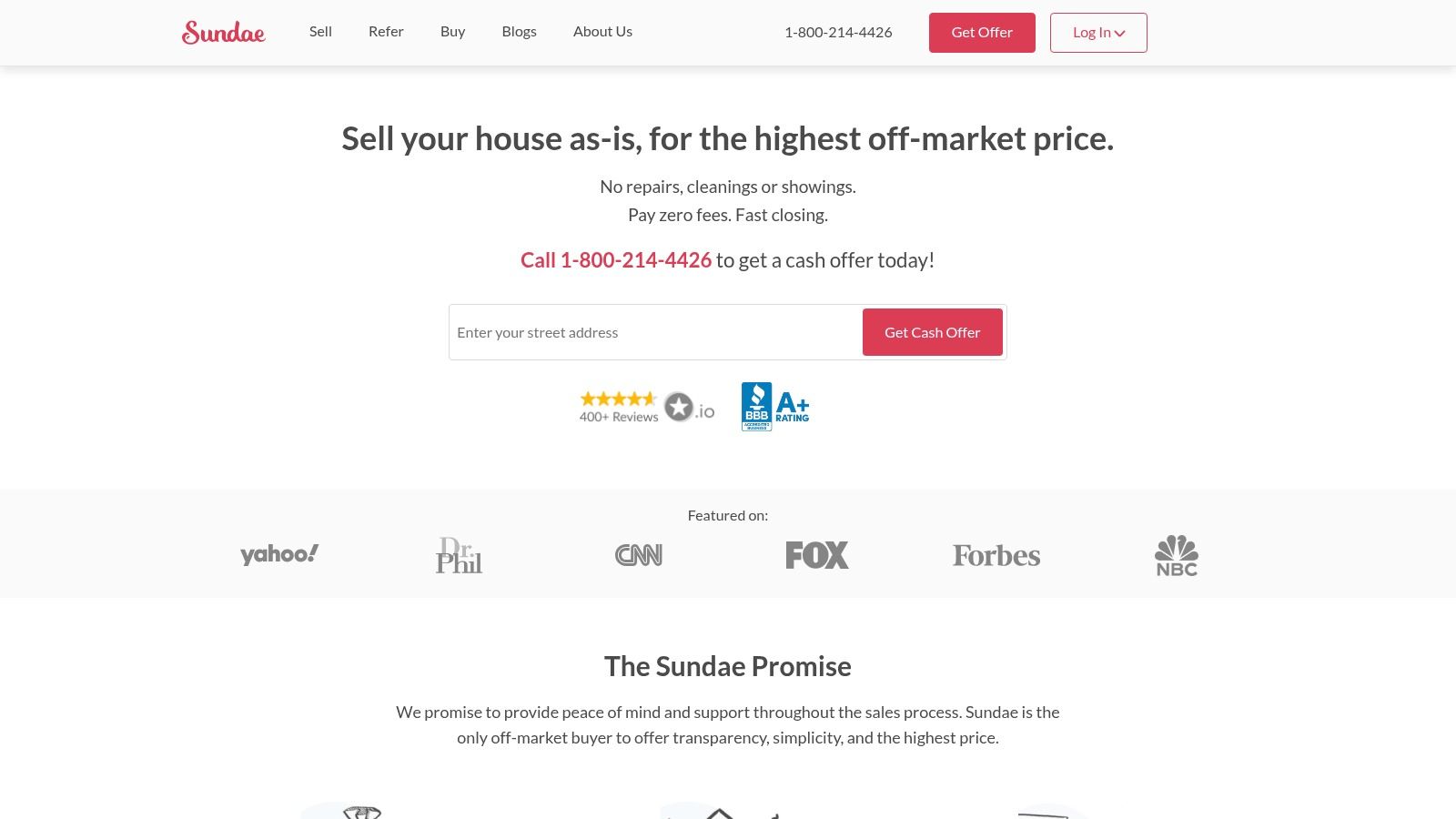
Unlike platforms focused on rent-ready assets, Sundae specializes in properties needing significant work. It provides investors with curated inventory that includes property information, disclosures, and inspection materials to help speed up underwriting. This direct-from-seller pipeline gives investors access to deals that often require immediate capital and renovation expertise, positioning Sundae as a key resource in the fix-and-flip and BRRRR (Buy, Rehab, Rent, Refinance, Repeat) niches.
Key Features and Ideal Investor Profile
Sundae’s features are designed to create a reliable deal funnel for investors who regularly acquire distressed assets.
- Curated As-Is Inventory: Investors get access to a pipeline of off-market properties, complete with upfront information to aid in quick decision-making.
- Competitive Offer Process: The platform runs a structured auction-style process, giving investors visibility into offer rankings and helping them make competitive bids.
- Tiered Investor Memberships: For frequent buyers, Sundae offers paid membership tiers that unlock benefits like AutoOffer capabilities and early access to deals.
- Optional Funding Programs: Sundae provides access to funding options to help investors close deals quickly, which is often a critical factor for sellers.
This platform is a strong fit for:
- Fix-and-Flippers looking for a consistent source of properties with significant rehab potential.
- BRRRR Investors who specialize in adding value to distressed homes to build their rental portfolios.
- Experienced Investors comfortable with underwriting heavy-rehab projects and managing construction.
Pricing and Access
Browsing basic property details on Sundae is typically free, but full participation requires membership. Investors can choose between different membership tiers, with paid levels offering advanced tools and greater access. Buyers are responsible for paying Sundae's platform fees as well as a buyer's premium or administrative fee on each transaction. These costs must be factored into the all-in acquisition cost and ARV (After Repair Value) calculations.
Strengths and Weaknesses
Pros:
- Direct-from-Seller Pipeline: Provides access to distressed properties that are not widely marketed.
- Tools for Serious Investors: Membership tiers and features like AutoOffer are built for investors who operate at scale.
- Transparent Bidding: The auction-like format can help surface actionable pricing and provides clarity on where an offer stands.
Cons:
- Layered Buyer Fees: The combination of platform fees and buyer premiums adds to the total cost and can compress potential profit margins.
- Heavy Due Diligence Required: Properties are sold as-is, often with significant issues. Investors must be experts at accurately scoping rehab costs and verifying comps.
Actionable Tip: On Sundae, your success hinges on your ability to accurately estimate repair costs. Always get a trusted contractor to walk a property with you or provide a detailed estimate from photos and inspection reports before submitting a final offer. Factor in a 15-20% contingency on your rehab budget to account for unforeseen issues common in distressed homes.
Choosing the Right Marketplace for Your Strategy
| Marketplace | Best For... | Key Advantage | Main Trade-Off |
|---|---|---|---|
| Investor Deal Exchange | Active investors, wholesalers | Precise deal matching with a "Smart Buy Box" | More focused, curated inventory vs. massive portals |
| Roofstock | Beginners, passive & out-of-state investors | Turnkey, rent-ready single-family rentals | Higher prices and compressed yields in popular markets |
| New Western | Fix-and-flippers, BRRRR investors | Consistent off-market, value-add deal flow | Buyer assumes all risk; built-in fees can be high |
| Auction.com | Experienced auction buyers | Massive national distressed property inventory | High risk (title, occupancy); buyer's premium |
| Hubzu | Deal hunters, REO buyers | Steady stream of bank-owned and short-sale deals | Variable fees and auction uncertainty (cancellations) |
| Xome Auctions | Auction buyers needing supplemental inventory | Transparent, standardized buyer's premium | Inherent auction risks (limited access, quick closes) |
| Sundae | High-volume flippers and BRRRR investors | Curated pipeline of direct-from-seller distressed homes | Multiple layers of buyer fees can impact margins |
How to Build Your Deal-Sourcing System
The most effective investors don't just pick one of the top real estate investor marketplaces for residential properties; they build a dynamic, multi-channel system for sourcing deals. This systematic approach allows you to match the right tool to the right objective. For instance, your deal-sourcing engine might combine the deep-discount potential of auction sites with the stability of turnkey rentals. This diversification protects you from market shifts and ensures a consistent flow of potential investments.
Here’s a practical framework for turning this list into an active deal pipeline:
- Define Your Buy Box with Precision: Before you log in, clarify your investment criteria. What is your target market, property type (SFR, small multifamily), price range, and desired return (e.g., cash-on-cash return)? A clear "buy box" allows you to set up highly specific alerts and filters on each platform.
- Assign Roles to Each Platform: Don't treat every marketplace the same. Assign a specific purpose to each one based on its strengths.
- Primary Sourcing: Choose one or two platforms that best align with your core strategy for daily review. For example, on our marketplace, you can set a detailed buy box to get matched with deals automatically.
- Opportunistic Sourcing: Use other platforms, like auction sites, for periodic checks on unique or deeply discounted opportunities.
- Market Intelligence: Monitor platforms even when you aren't actively buying. Watch what types of properties are selling and at what prices to get real-time data on market trends.
- Standardize Your Initial Vetting Process: Speed is critical. Create a simple checklist for your initial 5-minute review of any deal. This could include checking the After Repair Value (ARV) against a trusted source, calculating a rough ROI, and confirming the property meets your basic criteria.
For Beginners: Start by focusing on one or two platforms that match your initial strategy. Get comfortable with their workflow before expanding.
For Experienced Investors: Optimize your system by delegating the initial screening process based on your pre-defined buy box and checklists. This frees you up to focus on underwriting and negotiating the best deals.
The right technology doesn’t just find deals; it gives you the speed and insight to act confidently. By understanding the nuances of the top real estate investor marketplaces for residential properties we've covered, you can stop passively waiting for opportunities and start actively engineering a deal pipeline that fuels your portfolio's growth.
Create your free investor profile on Investor Deal Exchange to get matched with deals that fit your criteria.