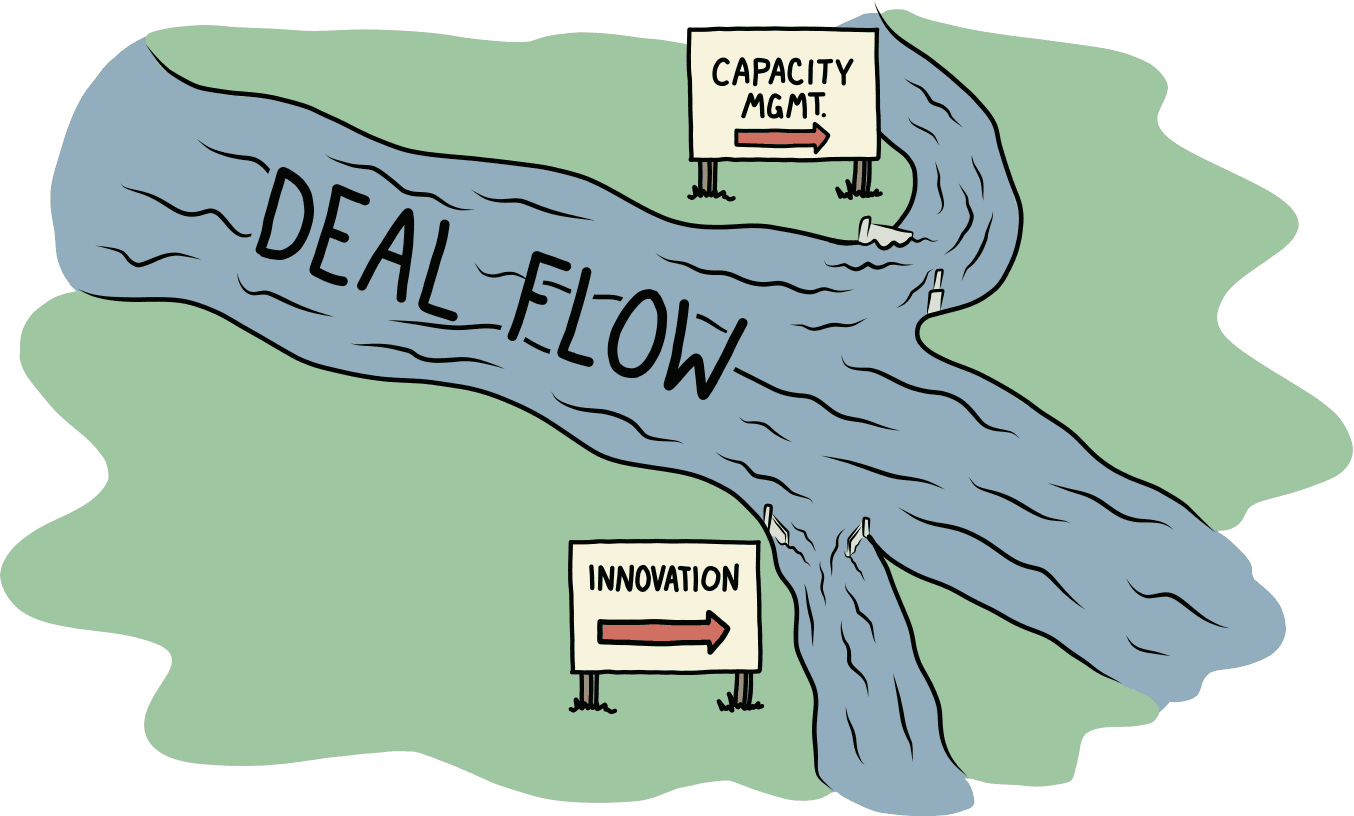
Most investors don't have a deal flow problem. They have a memory problem and a follow-up problem, and those two together look exactly like a deal flow problem.
You close a flip, take a breath, and then realize your pipeline is empty. So you start calling people again, posting in groups again, going to meetups again. Three months later, same thing. That cycle is expensive in time and attention, and it's avoidable.
This article walks through how to build a repeatable system for sourcing, qualifying, and closing deals, so the work you do this month still pays off next quarter.
Why One-Off Deals Keep You Starting From Zero
A one-off deal is self-contained. You find a property, you find a buyer or a lender, you close, and then everything you learned along the way evaporates. The buyer who said "send me anything in that zip code under 200k" becomes a name in your phone with no context attached.
Six months later that same buyer would have taken your deal in a week. But you don't remember what he buys, and you're not going to scroll back through four months of texts to find out. So you list it, wait, and take a lower number.
That's the real cost of working deal to deal. Not the one closing you missed. The compounding you never got.
What Real Estate Deal Flow Actually Means
Deal flow is the steady stream of opportunities coming across your desk, plus the people who can act on them. It's not luck and it's not volume for its own sake. Think of it as a process you can describe to someone else.
Break it into four stages and it stops feeling abstract:
- Sourcing: where opportunities come from, including agents, wholesalers, direct mail, driving for dollars, and referrals from other investors.
- Qualifying: deciding fast whether a deal fits your criteria or someone else's.
- Matching: connecting the deal to the right buyer, partner, or lender.
- Closing and recording: getting it done and capturing what you learned.
Most investors are decent at sourcing and closing. The system usually breaks in the middle two stages, because qualifying and matching both depend on knowing what other people want.
Step 1: Define Your Own Buy Box First
A buy box is the short list of criteria a property has to meet before you'll spend time on it. Location, property type, budget range, and condition. If you can't say yours out loud in under fifteen seconds, you're going to waste time on deals that were never a fit.
Vague sounds flexible. It isn't. "I'll look at anything with good numbers" tells another investor nothing, so they send you nothing.
Compare that to: "Single-family, three bed or better, east side of the county, 120k to 220k all-in, cosmetic rehab only, no structural, no occupied properties." That's a sentence someone can act on. When a wholesaler gets a property matching it at 9 p.m. on a Tuesday, you're who they think of.
Write it down where you'll actually use it
Your buy box should live somewhere you can send to people, not just in your head. Investors who ask for your criteria are offering to do free work for you. Make it easy to say yes.
Step 2: Record Every Investor's Buy Box Too
Here's where repeatable deal flow separates from hustle. A contact list is names. A network is names plus what each person buys.
After a meetup, a call, or an online group conversation, capture the things you'll actually need later:
- Markets and submarkets they work in
- Property types and unit counts
- Budget range and how they fund deals (cash, hard money, conventional)
- Condition tolerance: turnkey, light cosmetic, or full gut
- What they don't want, which is often more useful
- How fast they can close, and what they need to see first
Investor Deal Exchange exists for exactly this. You record each investor's buy box, including location, property type, budget, and condition, so your connections stay searchable instead of fading into your contacts app. The platform is built to help you remember what each investor actually buys.
Once twenty or thirty investors are in there with real criteria attached, something changes. You stop asking "who might want this?" and start searching for who already said they do.
Step 3: Keep Deal Communication in One Place
Think about where a single deal currently lives. Photos in your camera roll. The inspection PDF in email. Contractor bid in a text thread.
Seller's phone number sits on a sticky note. Partner conversation hides in a group chat with eleven other messages about something else.
Nothing's lost, exactly. It's just scattered enough that reconstructing the picture takes twenty minutes you don't have when a buyer asks a question.
Store a deal's photos, documents, and conversations together and link that information to the specific property. When someone asks about the roof on the Maple Street house, you pull it up once instead of searching three apps. That's the whole point: organizing deal communication that's currently scattered across texts, email, and apps.
Why this matters more as you scale
One deal at a time, you can hold it in your head. Four deals at once, you can't, and the cost of a dropped detail goes up. Systems feel like overhead at two deals and like oxygen at six.
Step 4: Build a Follow-Up Rhythm You'll Keep
Connections fade because nobody follows up, and nobody follows up because they don't know what to say. Fix the second problem and the first one solves itself.
Follow up with a reason. You have a reason the moment you know someone's buy box.
- Weekly: send any deal that matches a recorded buy box, even if it isn't yours.
- Monthly: reach out to a handful of investors whose criteria you haven't matched lately. Ask what's changed.
- Quarterly: review your list and update criteria. Buy boxes shift with rates, rehab costs, and whatever happened on their last project.
Sending someone a deal that fits their stated criteria is a favor, not a pitch. Do it a few times and you become the person they call first.
Step 5: Measure the System, Not Just Closings
Closings are a lagging indicator. By the time they drop off, the problem started months earlier. Watch the inputs instead.
Track whether new opportunities are reaching you without you chasing them. Count how many investors in your network have a complete, current buy box on file. Note how often a deal you couldn't use went to someone who could. Those answers tell you whether the machine is running before the revenue does.
No numbers to hit here. Just honest answers each month.
Common Mistakes That Break Real Estate Deal Flow
Collecting contacts without context is the big one. Fifty business cards and zero criteria is fifty strangers.
Treating each deal as a fresh start is the second. The relationships, the lender terms, the contractor you'd use again: all of it should carry forward.
Third is waiting until you need something to reach out. Investors notice. Build the relationship when you don't need it, and the ask lands differently later.
A Simple 30-Day Plan to Start
- Week one: write your buy box in one sentence. Send it to five people who send you deals.
- Week two: go through your phone and email. Record buy boxes for every active investor you can remember.
- Week three: pick your current deals and pull their photos, documents, and conversations into one place per property.
- Week four: match one deal to one investor from your list and send it. Then set your weekly and monthly follow-up rhythm.
None of this requires more deals, a bigger market, or more hours. It requires that the work you already do stops disappearing.
If your connections and deal conversations are spread across your phone, your inbox, and three group chats, that's the place to start. Investor Deal Exchange is designed for active investors who want their network to stay useful long after the first handshake. Create your free investor profile and get your investor connections in one place.
This article is for general information only and is not financial, tax or legal advice. Talk to a qualified professional about your situation.