
Nothing kills a real estate deal faster than transaction costs. High fees directly sabotage your net profit and tie up capital you could be using for renovations or your next acquisition. Choosing a platform isn't just about finding deals; it's a critical financial decision that impacts your bottom line from day one, and this guide will show you how to compare real estate investor marketplaces with low fees to protect your returns.
Why Low Fee Marketplaces Are Crucial for Investor ROI

For years, investors accepted high fees as part of the game. On a $300,000 property, a traditional broker commission could easily cost you $15,000 to $18,000. That’s cash walking out the door before you've hammered a single nail or collected the first rent check.
This old model puts a serious drag on your ability to scale. High fees mean less capital for your next down payment, which slows your portfolio's growth. For a flipper, it can be the single factor that turns a profitable exit into a breakeven headache. For a buy-and-hold investor, it crushes your cash-on-cash return from the very beginning.
The Modern Alternative to High Fees
Thankfully, that high-fee structure is no longer the only game in town. A new breed of marketplace has emerged, specifically built for investors who understand that every dollar counts. These platforms connect serious players—from wholesalers and flippers to buy-and-hold operators and multifamily syndicators.
On a modern marketplace platform, the focus is on efficient connections without the painful commissions that erode returns. For example, by connecting investors directly, a platform can facilitate deal flow without taking a large cut. You can see how these trends fit into the bigger picture by reviewing the latest U.S. real estate market outlook.
This shift to low-cost platforms has a massive impact, no matter where you are in your investing journey.
- For Beginners: Lowering the barrier to entry means you can get your first deal done with less capital. It makes the math work on smaller deals that a high-commission model would make unprofitable.
- For Experienced Investors: Minimizing transaction costs is one of the most powerful levers for optimizing portfolio-wide returns. The capital you save on fees can be immediately redeployed into value-add improvements or acquiring more assets, accelerating wealth creation.
The bottom line is this: every dollar you don't spend on fees is another dollar that goes directly toward your equity, cash flow, or your next deal. Choosing a marketplace with a low-fee structure is one of the most direct and powerful ways to improve your financial outcome on every single transaction.
What to Look for When Comparing Investor Marketplaces

Before you start comparing real estate investor marketplaces, you need a solid framework. The best platform isn't just the one with the most listings; it's the one that makes you more efficient and protects your returns. A professional’s analysis goes beyond flashy marketing to focus on what actually drives value in your day-to-day workflow.
This means looking past the surface and getting into the mechanics that impact your process and, ultimately, your bank account. We've broken it down into five critical pillars every serious investor should use for their evaluation.
Fee Structure and Your Bottom Line
The most obvious place to start is the fee model, but you have to dig deeper than the advertised price. The real question is how and when you pay.
- Commission-Based: This model, often 3-6% of the sale price, directly eats into your profit and equity on every deal. It's the most expensive route and can create a conflict of interest—the broker gets paid for the transaction, not necessarily for your long-term success.
- Subscription-Based: Here, you pay a predictable monthly or annual fee for full access. This model makes more sense for active investors because your costs stay fixed whether you close one deal or twenty.
A low-cost subscription model is often better for an active investor. Your expenses become predictable, and the deal's profit margin is yours to keep. That’s how you accelerate capital growth for the next acquisition.
Deal Quality and Filtering Power
A massive database of properties is worthless if you spend all your time digging through deals that don't fit your strategy. The quality of a marketplace is defined by its ability to filter out the noise and serve up opportunities that match your specific investment goals.
Look for a platform that lets you create a detailed "buy box"—a profile of your exact criteria. This should include location, price range, property type, and key financial metrics like minimum cash-on-cash return or cap rate. On our platform, for example, you can set your buy box to automatically surface matching deals, turning it into a proactive deal-sourcing machine instead of a passive list you have to scroll through.
Built-in Analysis and Underwriting Tools
In a competitive market, speed is everything. The time it takes to export data into your own spreadsheet is time you could lose to a faster investor. The best marketplaces integrate analysis tools directly into their listings.
This means you should instantly see key metrics like potential ROI, Net Operating Income (NOI), and the capitalization rate (a measure of a property's profitability). Having built-in calculators lets you do a quick, initial underwriting to decide in minutes—not hours—if a deal is worth a deeper dive. For a refresher, you can check out our guide on how to calculate cap rate.
Your Workflow and Communication Channels
Real estate investing is a process. A great platform supports the entire workflow, from finding a deal to getting it closed. Can you save deals, track their status, and talk directly to the seller or wholesaler?
Direct messaging is a game-changer. It cuts out middlemen, allowing you to ask critical questions and negotiate terms efficiently. This streamlined communication helps you build direct relationships with other pros—the foundation of a strong network that can bring you future off-market deals.
Network Credibility and Transparency
Finally, you have to trust the people you're working with. A simple transactional platform is one thing, but a true investor network gives you the tools to build credibility and see the credibility of others. Look for features like detailed investor profiles, transaction history, and peer reviews.
When a wholesaler lists a deal, can you see their track record? When you make an offer, can the seller see your profile and know you're a serious, qualified buyer? This kind of transparency builds trust, speeds up negotiations, and helps ensure you’re working with reputable players, not time-wasters.
Analyzing Marketplace Fee Structures and Your ROI
The math of real estate investing is simple: your net return is what’s left after every last expense gets paid. When you're buying deals, few expenses are as significant—or as controllable—as marketplace fees.
Getting a handle on how different platforms charge you is non-negotiable. These fee structures directly impact your profitability, how much cash you have left for renovations, and how quickly you can scale your portfolio. They aren't just a cost of doing business; they're a critical factor in your success.
Common Marketplace Fee Models
Let's break down the main ways these platforms make their money, because each model has a different effect on your bottom line.
The High-Commission Model: This is the old-school approach, still common on brokerage-run platforms. You pay a percentage of the final sale price—typically 3% to 6%—at closing. This model eats into your capital right at the start.
The Per-Listing or High-Subscription Model: Platforms like LoopNet or Crexi often use this structure. Wholesalers or sellers pay a fee to list a property, or users pay a hefty subscription for premium access. While it beats a commission, these costs can still pile up.
The Low-Subscription Model: This model is designed specifically for active investors. You pay a low, flat monthly or annual fee for unlimited access to deals, analysis tools, and direct communication. Your costs are fixed and predictable, no matter how many deals you analyze or close.
Fee structures can make or break a deal's profitability. It's why low-fee options are quickly becoming more popular than high-commission platforms. As you compare your options, it’s worth noting how broader real estate trends are pushing the industry toward more efficient, investor-friendly models.
How Fees Impact Your Net Profit
Let’s make this tangible with a real-world scenario. Imagine you're acquiring a small multifamily property for $500,000. Your plan is to put 25% down ($125,000) and use your remaining capital for initial renovations and reserves.
Now, let's see how your initial cash position changes based on the platform you use.
The fee isn't just a line item on a closing statement; it's capital that could have been working for you, generating a higher return. Slashing fees is one of the fastest ways to boost your ROI from day one.
ROI Impact Comparison of Marketplace Fee Structures on a $500,000 Deal
This table breaks down the direct financial impact of different fee models on a hypothetical $500,000 property acquisition. Notice how the fee structure immediately changes the amount of capital you have available for value-add improvements.
| Fee Model | Typical Fee | Fee Cost on $500k Deal | Remaining Capital for Investment/Reno | Impact on Cash-on-Cash Return |
|---|---|---|---|---|
| High-Commission Platform | 3% of sale price | $15,000 | $0 (Fee consumes initial capital) | Significantly reduced; less money for updates means lower potential rents and ARV. |
| Low-Subscription Marketplace | $50/month | $50 (for the month) | $14,950 (Capital saved) | Immediately higher; more funds available for renovations that force appreciation and boost rent. |
The numbers don't lie. Choosing the low-fee marketplace frees up nearly $15,000 in this scenario. That's enough to completely remodel a kitchen and two bathrooms, directly increasing the property's value and the rent you can charge. This, in turn, boosts your cash-on-cash return right out of the gate.
When you have the right tools, you can see this effect for yourself on any deal. You can run these numbers with our built-in investment calculators to project the long-term impact in minutes. For experienced investors closing multiple deals a year, these savings multiply fast, creating a powerful snowball effect on portfolio growth.
Comparing Top Real Estate Investor Marketplaces
We’ve laid out the framework for what makes a great investor marketplace. Now let's see how different platforms stack up. We'll look at three distinct models: old-school, high-fee platforms; pricey subscription services; and the new breed of low-fee marketplaces built for investors.
This is about how these platforms affect your workflow, the quality of deals you see, and, most importantly, your bottom line. A platform might have the most listings, but if you have to waste hours sifting through junk to find one decent deal, it’s not an efficient tool.
The Traditional High-Fee Platform
Think of this as the old guard of real estate—legacy brokerage networks and their digital offshoots. Their business model is built around charging a commission, usually a percentage of the final sale price.
- Fee Structure: A 3-6% commission on every deal gets carved right out of your profit or the capital you had earmarked for renovations. This is a major drag on returns.
- Deal Access: You're usually funneled through a broker who acts as a gatekeeper. This creates a bottleneck that slows down everything from getting basic questions answered to submitting an offer.
- Analysis Tools: On-platform tools are often an afterthought. You're expected to download a PDF, dump the numbers into your own spreadsheet, and hope you didn't miss anything. It's a clunky, inefficient process.
For a first-time investor, the hand-holding might sound appealing, but the high costs and slow pace make it difficult to build a portfolio. These platforms were designed for one-off transactions, not an investor's long-term growth.
The Mid-Tier Subscription Service
This category is dominated by giants like CoStar and its subsidiary, LoopNet. They ditched the pure commission model for hefty subscription fees or pay-per-listing plans. It was an improvement, but it created a new set of headaches for active investors.
The move toward low-fee marketplaces is a direct response to the cost and inefficiency of these older systems. A platform like CoStar can give you a mountain of data, but its lack of investor-specific filters means you can spend more time digging through irrelevant deals. You can read more about industry shifts in this detailed industry outlook.
These platforms are powerful, but they often feel like using a sledgehammer to crack a nut. They're built for a broad audience of real estate professionals, not just investors. As a result, their tools aren't always tailored for specific strategies like finding a BRRRR (Buy, Rehab, Rent, Refinance, Repeat) deal or a small multifamily property.
The Modern Investor-Centric Marketplace
This new breed of platform was built from the ground up with one person in mind: the investor. The entire experience is designed to fix the core problems of the older models, focusing on efficiency, low costs, and direct communication.
This chart shows exactly why that matters. It’s not just about saving a few bucks on fees; it's about what that extra capital can do for your returns.
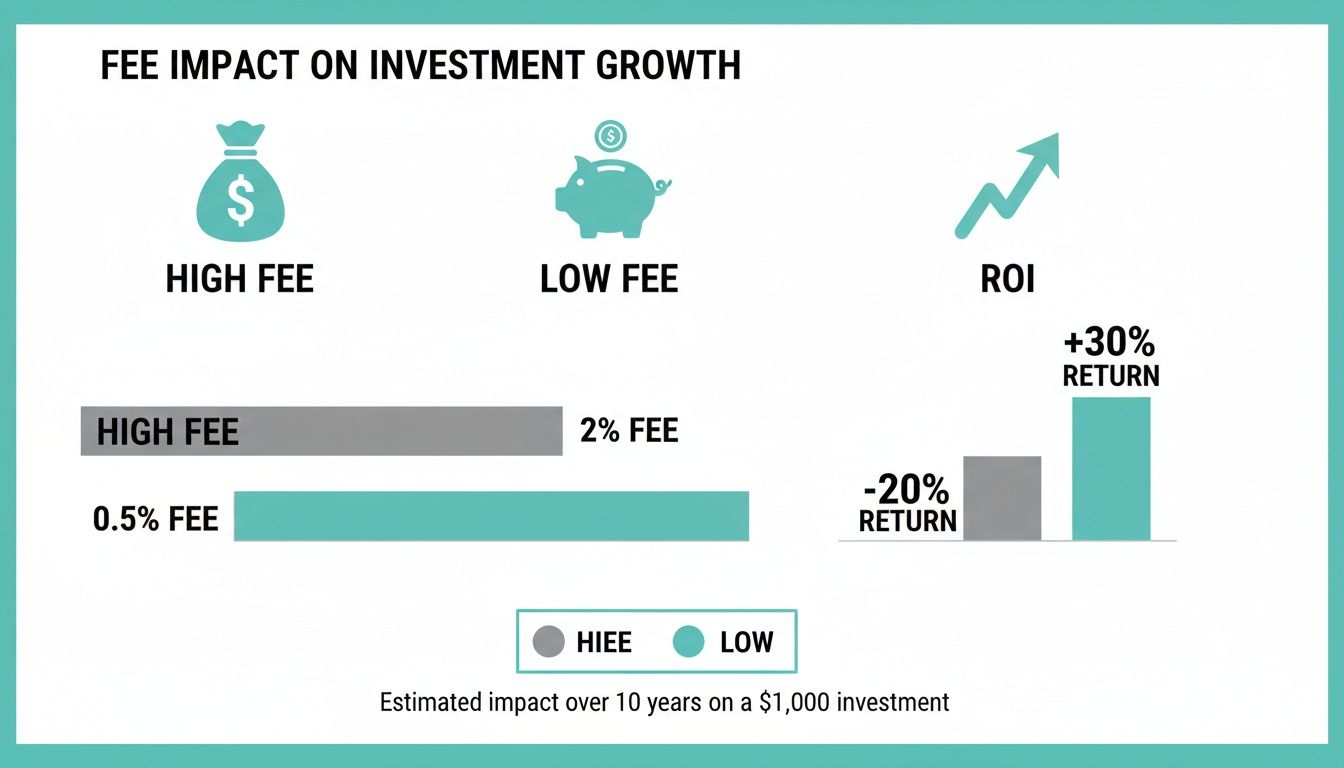
As you can see, lower fees mean more money left over for a value-add renovation, which can directly translate into a higher potential ROI on every single deal you do.
Here’s how these platforms create a better experience for both new and seasoned investors:
- Low-Fee Subscription: You pay a flat, predictable monthly fee for unlimited access. The platform's success is tied to yours—they only make money if you stick around because you're consistently finding good deals.
- Hyper-Targeted Filtering: Instead of scrolling endlessly, you set up a "Smart Buy Box" with your exact criteria. The platform then does the hunting for you, saving you countless hours.
- Integrated Analysis: Built-in calculators for ROI, cash-on-cash return, and NOI let you run your initial numbers in minutes. This means you can vet more deals and move faster when a great one pops up.
- Direct Communication: These platforms get the middleman out of the way, allowing you to message sellers and wholesalers directly. This speeds up due diligence and helps you build a network for future off-market opportunities.
On our marketplace, we've zeroed in on these core principles to give investors a straight line from finding a deal to funding it. If you're tired of wasting time and money with outdated platforms, you can explore active listings that match your criteria right now. This approach doesn't just save you money on fees; it gives you back your most valuable asset: your time.
Choosing the Right Marketplace for Your Strategy
Don't fall for the "one-size-fits-all" trap when picking a real estate marketplace. The best platform isn't about having the most listings; it's about matching its core function to your actual investment strategy. The right platform stops being a simple listing service and becomes a strategic partner that helps you execute your plan.
For the Fix-and-Flipper and Wholesaler
If you're a flipper or a wholesaler, your world revolves around speed and volume. You need a firehose of motivated seller leads and a deep, pre-vetted buyers list ready to go.
Here's what to prioritize:
- A large, active network: For wholesalers, a massive pool of cash buyers is everything. A platform that lets you post a wholesale deal to hundreds of investors already looking for that exact asset is a game-changer.
- Quick analysis tools: You need platforms with built-in After Repair Value (ARV) and ROI calculators that let you qualify a property in minutes.
- Direct communication: Time kills deals. The ability to message sellers and buyers directly cuts out the middlemen and the delays they cause, which is critical when you’re trying to lock down a property.
For the Buy-and-Hold and Multifamily Investor
Long-term investors, including small-scale multifamily syndicators, play a different game. Speed is still a factor, but the depth and accuracy of financial data are what really matter. Your decisions have consequences that last for years, so your analysis has to be rock-solid.
- For Beginners: Prioritize platforms with straightforward, built-in calculators to get a handle on the fundamentals of cash flow and cap rate.
- For Experienced Investors: Focus on platforms that provide raw financial data and let you connect directly with sellers or brokers to dig into the nitty-gritty of a deal.
These features are non-negotiable for this strategy:
- Detailed financial data: You need access to rent rolls, operating expenses, and Net Operating Income (NOI) to run your own underwriting.
- Advanced filtering: Your buy box is specific. You need the power to filter deals by unit count, cap rate, and even zoning to avoid drowning in irrelevant properties.
- Networking and credibility: In the multifamily world, relationships are currency. A platform with detailed investor profiles, deal history, and peer reviews helps you find credible partners for a syndication or joint venture (JV) deal.
Maximizing Your Success on a Low Fee Marketplace

Getting onto a low-fee marketplace is about more than just dodging transaction costs; it’s about plugging into a system built to make your deal pipeline faster and more profitable. To really get your money's worth, you have to be proactive.
Build a Compelling Investor Profile
Your profile is your digital handshake. It’s the first impression you make on sellers, wholesalers, and potential partners, telling them instantly if you’re a serious buyer. A well-built profile establishes credibility and starts attracting deals.
- Clearly define your strategy: Are you a flipper, a BRRRR investor, or a multifamily syndicator? Specificity is your friend.
- Showcase your experience: A quick mention of past projects or assets under management (AUM) shows you’ve closed deals before.
- Be professional: A clean headshot and a well-written bio go a long way. This isn't social media; it’s your business card.
Master the Smart Buy Box
This is one of the most powerful tools on any serious investor platform. Instead of burning hours sifting through properties that don't fit, a "Smart Buy Box" puts your deal flow on autopilot. It becomes your 24/7 acquisitions assistant.
A traditional search might dump 500 properties in your lap, but a dialed-in Smart Buy Box can show you the few properties that actually meet your specific cap rate, unit count, and location requirements. To master it, get granular with your criteria. The sharper your criteria, the better the leads.
Analyze Deals Efficiently with Built-In Tools
In a hot market, speed is everything. The best low-fee marketplaces give you built-in calculators for quick underwriting. When a deal lands in your inbox, you should be able to vet its potential in minutes.
Use the on-platform tools to run the numbers for ROI, cap rate, and potential cash flow on the fly. This lets you sift through dozens of opportunities in the time it used to take to build a single spreadsheet.
Network for Your Next Opportunity
Finally, remember that these platforms are also networks. Use the direct messaging features to build relationships with wholesalers who are posting deals and connect with other investors. This is how you can get access to off-market inventory.
Ask smart questions, give quick feedback, and prove you're a reliable buyer who can close. Proactive networking turns a one-off transaction into a long-term source of quality deal flow.
Frequently Asked Questions
When you start to compare real estate investor marketplaces with low fees, a few questions always seem to pop up. Let's get you some straight answers.
Are Low-Fee Marketplaces Just for Small-Time Deals?
Not at all. While it’s true that low fees make smaller deals much more profitable, the savings really start to stack up on bigger assets.
Whether you're looking at single-family rentals or chasing large multifamily complexes and commercial properties, the core benefit is the same. Saving a percentage point on a larger transaction adds a significant amount of cash right back to your bottom line.
How Can I Trust the Deals on a Low-Fee Platform?
Trust is built on transparency and direct access. On a good platform, a wholesaler's or seller's credibility is visible through their public profile, deal history, and peer reviews.
More importantly, direct messaging lets you get straight to the source. You can ask the tough questions and run your own due diligence without a middleman getting in the way. This allows you to vet the person on the other side of the deal.
Can I Actually Use a Marketplace to Find Partners?
Absolutely. This is one of the most powerful, and often overlooked, benefits of these platforms. They're not just deal boards; they're networking hubs.
You can connect with other verified investors, find potential joint venture (JV) partners, and even link up with capital providers. By building a solid profile and engaging with other members on the platform, you can source the right people for syndications or any other strategy that requires a team.
Ready to stop letting fees eat into your returns? Create your free investor profile to get matched with deals that fit your criteria.