
Finding a profitable rental property starts with choosing the right location, but sifting through endless data on population growth, cap rates, and job trends can be paralyzing. The challenge is clear: a market that’s perfect for one investor’s strategy might be a poor fit for another. This guide provides an actionable framework to help you identify the best markets for rental properties that align with your specific goals, whether you're a new investor or a seasoned operator.
This article cuts through the noise to help you solve this problem. We will analyze ten distinct market types, moving beyond generic advice to provide data-driven insights. You will learn not just where to invest but why specific markets work for different strategies, such as:
- High-growth Sunbelt hubs for appreciation.
- Steady Midwest markets for immediate cash flow.
- Niche opportunities like college towns and medical corridors for stable demand.
By the end, you'll have a clear roadmap for analyzing these markets and finding deals that fit your criteria, helping you build a more profitable and scalable real estate portfolio.
1. Sunbelt Growth Markets (Austin, Nashville, Phoenix, Charlotte)
For investors seeking appreciation and strong rental demand, few areas have been as dynamic as the Sunbelt. These metropolitan hubs across the American South and Southwest, including cities like Austin, Phoenix, Nashville, and Charlotte, are magnets for growth. They consistently attract new residents with a combination of robust job creation, relative affordability, and a desirable lifestyle, making them some of the best markets for rental properties today.
This rapid in-migration, fueled by corporate relocations and remote work flexibility, creates a sustained need for housing. For an investor, this translates to lower vacancy rates and the potential for steady rent growth. For example, Austin's tech boom has pushed its 1-bedroom median rent above $1,600, while Charlotte's financial sector supports rents around $1,250. This economic expansion provides a strong foundation for long-term property value appreciation.
Actionable Tips for Sunbelt Investing
- For Beginners: Don't just focus on the downtown core. Use an investor marketplace to identify neighborhoods on the edge of the main growth path. Setting a buy box for specific zip codes or school districts can help you find deals before they become overpriced.
- For Experienced Investors: City-wide averages can be misleading. A Class A property in a prime neighborhood may have a low cap rate, while a Class B or C property just a few miles away could offer significantly better cash-on-cash returns. Dig into the numbers for specific submarkets to find hidden opportunities.
- Focus on B/C Class Assets: While new construction is plentiful, the highest yields are often found in well-maintained Class B and C properties. These assets cater to the largest segment of the renter pool and typically provide more immediate cash flow compared to the pricier Class A stock.
2. Midwest Workforce Housing Markets (Kansas City, Indianapolis, Columbus, Des Moines)
For investors who prioritize strong, immediate cash flow over rapid appreciation, the Midwest offers some of the best markets for rental properties. Cities like Kansas City, Indianapolis, Columbus, and Des Moines provide a compelling combination of affordable entry prices and a stable tenant base. These markets are anchored by workforce housing, serving the needs of middle-income renters employed in resilient sectors such as healthcare, manufacturing, and logistics.
This focus on economic stability creates a predictable investment environment. In Kansas City, for example, median rents for a 1-bedroom hover around $1,050, but affordable property prices make achieving a strong cap rate—the return on investment before financing—of 7-9% a realistic goal. This dynamic allows investors to find properties that cash flow from day one, often meeting the "1% Rule," where monthly rent equals 1% of the purchase price.
Actionable Tips for Midwest Investing
- Prioritize B/C Class Assets Under $200K: The sweet spot in these markets is often found in well-maintained Class B and C properties. Focus your search on properties under the $200,000 mark to maximize your potential for a high cash-on-cash return.
- Validate Returns with Key Metrics: Don’t just rely on pro-forma numbers from a seller. On our marketplace, you can use built-in calculators to independently verify metrics like the Debt Service Coverage Ratio (DSCR) and rental multiples. This ensures the property can comfortably cover its mortgage payments and expenses, safeguarding your cash flow.
- Build a Local Property Management Team: Workforce housing requires hands-on management. Before you buy, build a relationship with a local property manager who has a proven track record with this specific tenant profile. A strong PM is critical to your success in these markets.
3. College Town Rental Markets (University-Adjacent Markets)
For investors seeking consistent and predictable rental demand, markets centered around major universities are hard to beat. These college towns offer a resilient tenant pool of students, faculty, and staff that is largely insulated from broader economic downturns. This constant influx and turnover of residents creates a reliable, year-round need for housing, establishing these areas as some of the best markets for rental properties.
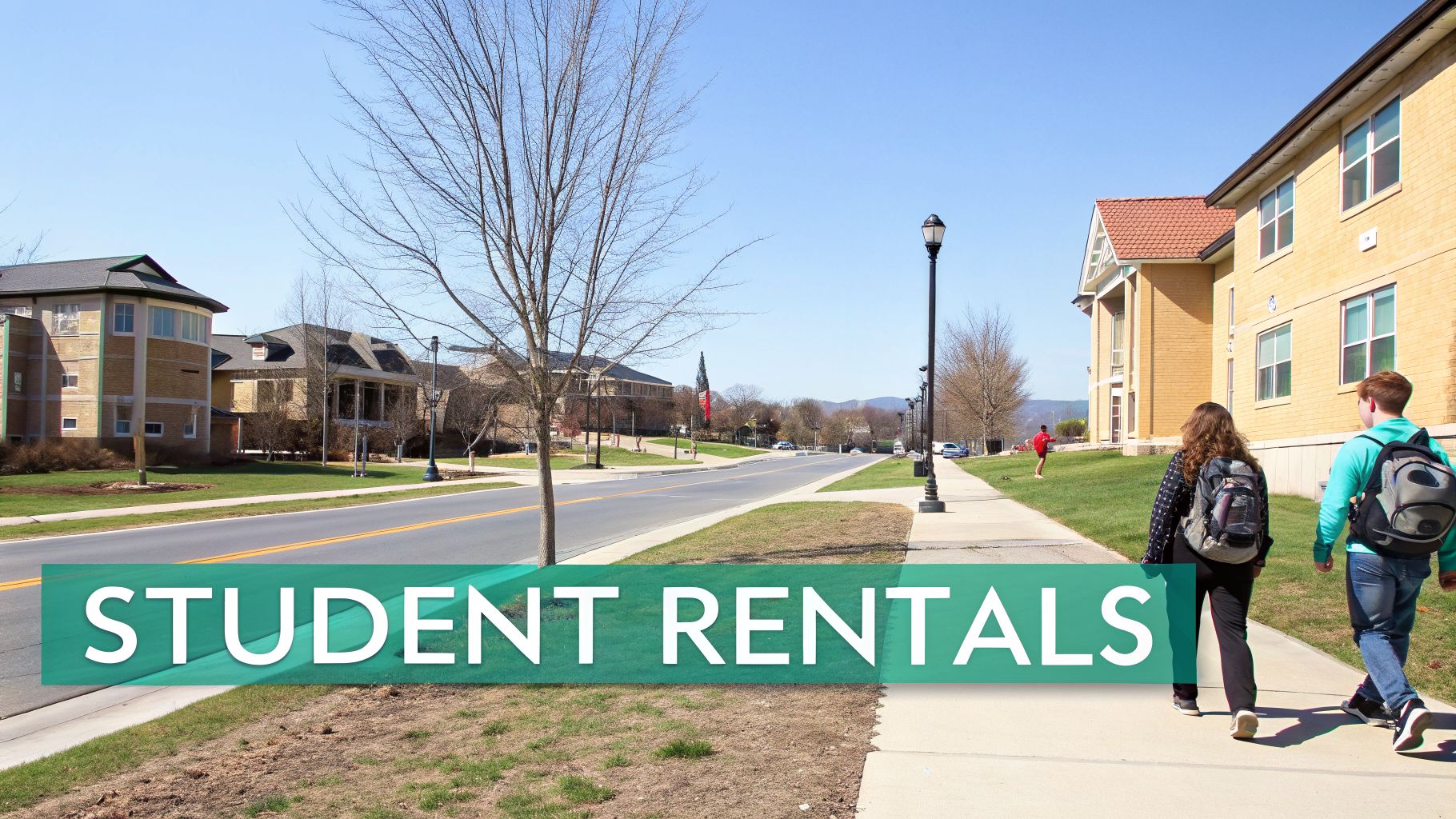
The leasing cycle in university markets is highly predictable, typically starting many months before the fall semester. This allows investors to minimize vacancy and lock in tenants early. Moreover, student housing often commands premium rents on a per-bedroom basis. For example, a 4-bedroom home near a major university can lease for $2,000-$2,500, while purpose-built student housing can yield high cap rates. This combination of high demand and strong returns makes university-adjacent properties a stable investment choice.
Actionable Tips for College Town Investing
- Look Just Beyond Walking Distance: While proximity is key, properties situated a short drive or bus ride from campus often provide a better balance of acquisition cost and rental income. You can filter properties by proximity to major universities on the platform and identify deals in these more affordable, high-yield pockets.
- Offer Furnished Packages for Premium Rents: Students, especially those from out-of-state or abroad, are often willing to pay a 20-30% premium for furnished units. Providing basic furniture, desks, and appliances can dramatically increase your cash flow.
- Implement Student-Specific Lease Agreements: Protect your asset with robust lease agreements that include parental guarantors, specific rules on parties, and joint and several liability clauses. This ensures all tenants and their co-signers are responsible for the entire rent payment and any damages.
4. Medical Hub and Healthcare Corridor Markets (Rochester MN, Research Triangle NC, San Antonio TX)
For investors prioritizing stability and a high-quality tenant base, markets anchored by major medical institutions present a compelling opportunity. Cities like Rochester, MN (Mayo Clinic), the Research Triangle, NC (Duke & UNC Healthcare), and San Antonio, TX (major healthcare corridor) benefit from non-cyclical employers that generate consistent housing demand. These medical hubs attract a steady stream of doctors, nurses, and researchers who require reliable housing.
This built-in employment engine makes these locations some of the best markets for rental properties, offering protection against broader economic downturns. The demand from healthcare professionals with stable, high incomes results in low vacancy rates and on-time rent payments. For instance, in Rochester, a 2-bedroom property can command a median rent of around $1,350, appealing to medical fellows and staff. This reliable tenant profile provides a solid foundation for predictable cash flow.
Actionable Tips for Medical Hub Investing
- Focus on Proximity: Center your property search within a 3-5 mile radius of anchor hospitals or medical school campuses. Healthcare professionals value short commutes. These hyperlocal zones often experience premium rental rates.
- Target Professional-Friendly Properties: Two- and three-bedroom single-family homes or townhomes are ideal for attracting medical professionals. Look for properties in quiet, safe neighborhoods with amenities like updated kitchens, in-unit laundry, and nearby parks.
- Monitor Institutional Growth: Keep an eye on the expansion plans of the area's major medical institutions. A hospital adding a new wing is a powerful leading indicator of future housing demand. On our marketplace, you can set up a buy box that targets zip codes adjacent to these growing medical employment clusters.
5. Revitalizing Urban Core & Industrial Transition / Gateway Markets (Legacy Industrial Cities, Port Cities, Logistics Hubs)
For investors who prize affordability and appreciation potential, some of the best markets for rental properties are not high-growth Sunbelt darlings but legacy industrial and gateway cities undergoing a renaissance. These markets, like Detroit, Pittsburgh, St. Louis, and Memphis, are transitioning from their manufacturing pasts into diversified economies with growing tech, healthcare, and logistics sectors. This creates a powerful combination of low entry costs and strong future growth prospects.
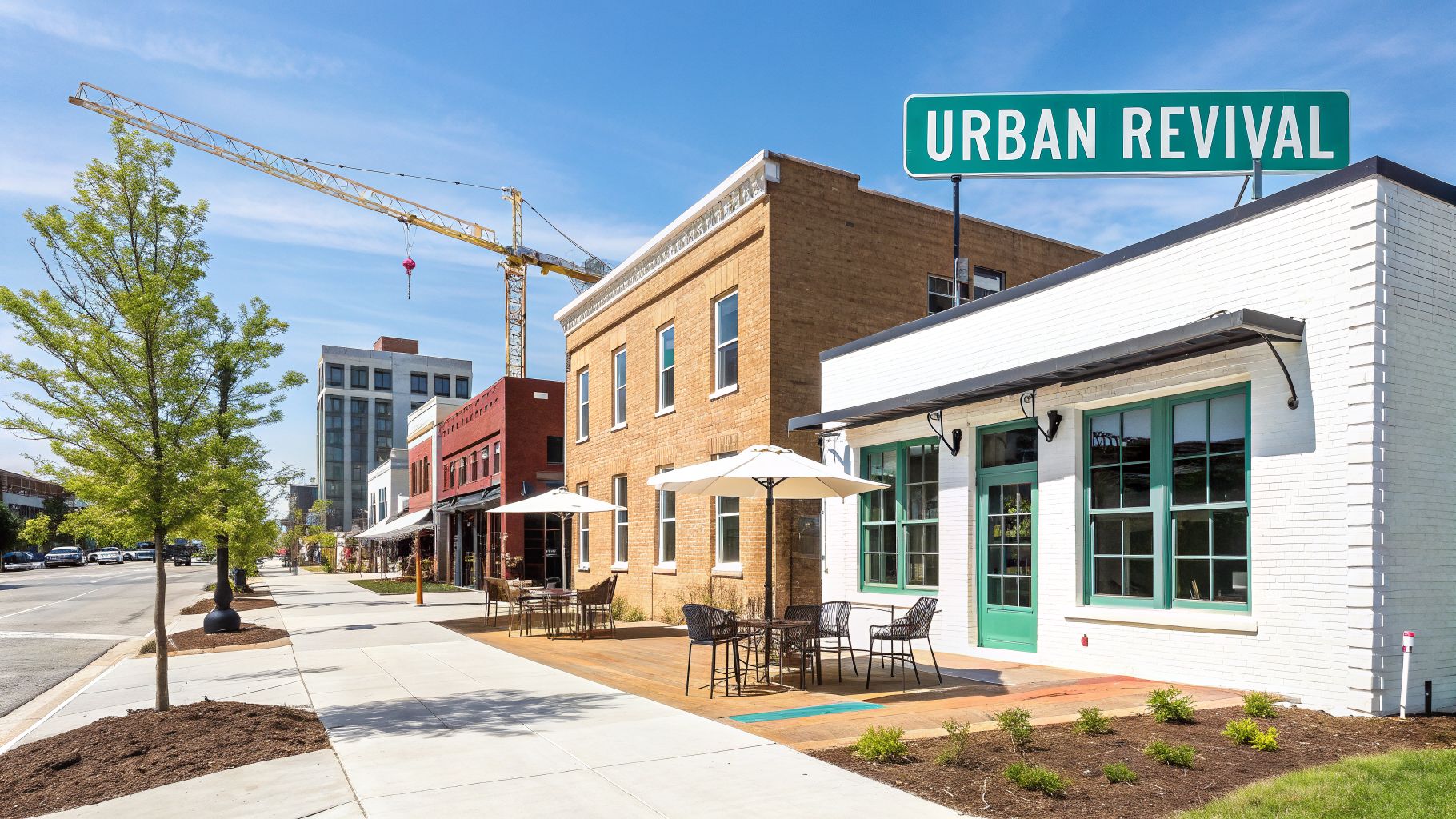
The investment thesis here is about getting in on the ground floor of revitalization. Cities like St. Louis offer entry prices between $75K and $150K for rental-ready properties, while Memphis, a major FedEx logistics hub, supports steady demand with 1-bedroom rents near $950. As these cities invest in downtown cores, cultural districts, and infrastructure, they attract young professionals and new businesses, driving up both rental demand and property values over the long term.
Actionable Tips for Urban & Gateway Market Investing
- Study City Master Plans: Don't invest blindly. Research public documents detailing infrastructure projects and economic development initiatives. Target properties near planned transit stations or officially designated revitalization zones to position yourself in the path of growth.
- Look for Opportunity Zones: Many of these transitioning neighborhoods are located within designated Opportunity Zones, which can provide significant tax advantages for long-term investors. A long-hold strategy in these areas can result in substantial tax-deferred or tax-free gains.
- Screen for Renovation Incentives: Local governments in these cities often offer subsidized renovation programs or historic tax credits to encourage investment. These programs can significantly lower your upfront capital costs and improve your overall return on investment.
6. Remote Work Hub Markets (Secondary Cities with Quality of Life)
The rise of remote work has unlocked new opportunities for investors in mid-sized cities that offer a high quality of life. These markets, often called remote work hubs, are attracting professionals who are no longer tied to expensive coastal metros. Cities like Boise, ID; Boulder, CO; and Asheville, NC, are experiencing an influx of new residents drawn by a lower cost of living, outdoor recreation, and vibrant communities. This migration expands the tenant base, supporting strong rental demand from a distributed workforce.

For real estate investors, this trend creates a compelling case for acquisition. The incoming population of remote workers often has higher incomes than the local average, which can support higher rents and drive property appreciation. For instance, Boise has seen tech worker migration push property values up, while Asheville's quality-of-life appeal has fueled rapid growth. These dynamics make remote work hubs some of the best markets for rental properties for investors focused on a blend of cash flow and long-term appreciation.
Actionable Tips for Remote Work Hub Investing
- Prioritize Digital Infrastructure: Remote workers depend on reliable internet. Target neighborhoods with excellent broadband and fiber-optic infrastructure. Highlighting "gigabit internet available" in your listings is a major selling point.
- Focus on Lifestyle Amenities: The key driver for this tenant pool is quality of life. Prioritize properties with proximity to parks, hiking trails, and walkable downtown areas. Use marketing materials to showcase these lifestyle benefits.
- Use Data to Validate Demand: A market's popularity can change quickly. On the platform, you can set up a buy box for target zip codes in these secondary cities. This allows you to monitor real-time changes in rental rates, property values, and inventory levels, helping you enter a market before it becomes too competitive.
7. Military Base Adjacent Markets (Fort Hood TX, Virginia Beach VA, San Diego CA)
For investors prioritizing stability and predictable demand, markets anchored by major military installations offer a compelling case. Cities like Killeen (Fort Hood), Virginia Beach (Naval Station Norfolk), and San Diego are defined by a constant influx of military personnel and their families. This creates a reliable tenant pipeline with government-backed income, making them some of the best markets for rental properties if you value consistency over high-risk appreciation.
The key driver is the Basic Allowance for Housing (BAH), a U.S. military entitlement for off-base housing. This allowance effectively sets a floor for rental rates and ensures tenants have a dependable source for payments. For example, a 2-bedroom property near Fort Campbell in Clarksville, TN, might rent for around $1,000. This built-in demand reduces vacancy risk and smoothes out the economic cycles that can impact other markets.
Actionable Tips for Military Market Investing
- Research BAH Rates: Before analyzing a property, look up the official BAH rates for your target area. These rates vary by rank and whether the service member has dependents. This data allows you to underwrite a deal with a clear understanding of your tenant's housing budget.
- Focus on Family-Sized Properties: The most consistent demand often comes from military families who need more space. Prioritize acquiring three and four-bedroom single-family homes or townhomes, as they directly meet the needs of this core demographic.
- Target Properties Near Base, Outside Impact Zones: Proximity to the base is a major selling point. However, be sure to check for noise zones (like flight paths) that could deter tenants. Use map-based search tools to identify properties that are conveniently located but situated in quieter residential pockets.
8. Build-to-Rent / Purpose-Built Rental Markets (Emerging Institutional Segments)
A growing trend across the country is the rise of build-to-rent (BTR) communities, where entire subdivisions of single-family homes or townhomes are constructed specifically for long-term rental. This segment attracts significant institutional capital, creating brand-new, professionally managed rental inventory. For individual investors, these markets present both a competitive challenge and a unique opportunity, making them some of the best markets for rental properties if you know how to approach them.
These purpose-built rental markets, such as those booming in Phoenix, Atlanta, and across Texas, signal immense tenant demand and economic strength. While institutions compete for large-scale developments, their presence validates a market's long-term viability. For example, purpose-built rental communities in Charlotte often achieve a 4-5% rent premium over older housing stock. This institutional focus creates a ripple effect, boosting values in surrounding areas.
Actionable Tips for Build-to-Rent Market Investing
- Track Institutional Acquisitions: Don't compete directly; follow the big money. Monitor where large firms are acquiring land or entire communities. This data points to submarkets with strong growth fundamentals where you can find deals on the periphery.
- Focus on Adjacent Secondary Markets: When a major BTR development is announced, property values and competition in the immediate area spike. A smart strategy is to target older, existing single-family rentals or small multifamily properties in adjacent zip codes. You can benefit from the rising tide without paying the institutional premium.
- Evaluate Syndication Opportunities: You don't have to be a developer to participate. Many BTR projects are funded through syndications, which pool capital from multiple accredited investors. This can be an effective way to gain exposure to new, institutional-grade assets without the operational headaches of direct development.
9. Supply-Constrained Coastal Markets (Controlled Zoning, High Barriers to Entry)
For investors who prioritize long-term appreciation over immediate cash flow, supply-constrained coastal markets present a compelling opportunity. These areas, including metros like the San Francisco Bay Area, Los Angeles, and Seattle, are defined by high barriers to entry. Strict zoning laws and a lack of available land severely limit new construction, creating a permanent imbalance where housing demand consistently outpaces supply. This scarcity makes them some of the best markets for rental properties if your strategy is built on wealth creation through appreciation.
The persistent housing shortage ensures that property values and rents remain high. For instance, a 2-bedroom apartment in Los Angeles can command rents over $2,000. This environment results in lower cap rates, typically between 2-4%, but offers remarkable stability and predictable, long-term value growth. The investment thesis here is not about monthly income but about securing a high-value asset in a market with perpetually constrained inventory.
Actionable Tips for Coastal Market Investing
- Focus on ADU Potential: One of the best ways to manufacture yield in these pricey markets is by adding an Accessory Dwelling Unit (ADU). Screen for properties with the lot size and zoning to permit a garage conversion or backyard cottage. This strategy creates a second stream of income from a single asset.
- Explore Adjacent Submarkets: Instead of competing for a property in San Francisco, look at emerging neighborhoods in Oakland or Richmond. These adjacent areas offer a lower cost of entry while benefiting from the economic gravity and spillover demand of the primary metro.
- Target Value-Add Plays: In mature markets, the highest returns often come from improving existing assets. Look for Class B or C properties that are functionally obsolete but structurally sound. A strategic renovation—like a kitchen update or adding a bathroom—can significantly increase rents and force appreciation.
10. Workforce Housing Preservation / Affordable Housing Incentive Markets
For investors prioritizing long-term stability and social impact alongside returns, some of the best markets for rental properties are those with strong affordable housing incentives. These markets, such as Denver, Boston, Chicago, and Minneapolis, have created regulatory frameworks designed to preserve and expand workforce housing. They offer a powerful mix of tax credits, below-market financing, and zoning advantages that can significantly improve a deal's financial performance.
This strategy involves partnering with government programs to provide quality housing for essential workers and low-to-moderate-income families. For example, Minneapolis is known for its abundant Low-Income Housing Tax Credits (LIHTC), which ensure long-term affordability. Similarly, Denver’s workforce housing requirements on new developments create unique opportunities for investors willing to preserve affordable units. These programs reduce risk and create a reliable stream of income.
Actionable Tips for Incentive-Driven Investing
- Partner with Experienced Nonprofits: Don't go it alone. The world of LIHTC and affordable housing is complex. Partnering with nonprofit organizations that have a track record of successfully navigating these programs is critical for securing credits and ensuring compliance.
- Layer Local and State Incentives: Look beyond federal programs like LIHTC. Research state-specific tax credits, such as Historic Tax Credits, that can be "stacked" to make the numbers work. Also, evaluate financing from community development financial institutions (CDFIs), which often offer favorable terms.
- Use Tools to Find Eligible Properties: The most valuable deals are often off-market. On our marketplace, you can screen for affordably-priced properties in designated Opportunity Zones or areas targeted for community development, which may be eligible for these valuable incentive programs.
Top 10 Rental Markets Comparison
| Market | 🔄 Implementation Complexity | ⚡ Resource Requirements | 📊 Expected Outcomes | 💡 Ideal Use Cases | ⭐ Key Advantages |
|---|---|---|---|---|---|
| Sunbelt Growth Markets (Austin, Nashville, Phoenix, Charlotte) | Moderate — competitive acquisitions, zoning typical | Moderate capital, active local market intelligence | Appreciation + steady rental growth; ~6–8% cap potential | Long-term buy-and-hold, Class B/C value-add near job centers | Strong tenant demand from migration; affordability vs coasts |
| Midwest Workforce Housing (Kansas City, Indianapolis, Columbus, Des Moines) | Low–Moderate — straightforward acquisitions, fewer regulatory hurdles | Lower capital per deal, reliable local property management | High cash-on-cash (10–15%), stable occupancy | Cash-flow portfolios, workforce housing, fix-and-flip | High cap rates, low entry costs, resilient tenant base |
| College Town Rental Markets (University-adjacent) | Moderate — seasonal turnover, occupancy rules, higher management load | Moderate operational intensity, furnishing and turnover costs | Very high occupancy (95%+), premium per-bed rents, predictable cycles | Multi-bed student rentals, furnished short-term leases | Reliable demand, parental guarantees, strong unit-level yields |
| Medical Hub & Healthcare Corridors (Rochester, Research Triangle, San Antonio) | Low–Moderate — proximity targeting, limited regulatory complexity | Moderate capital; 2–3 BR inventory preferred | Stable rents, low default/eviction risk; recession-resistant demand | Stable cash-flow plays serving professionals and families | High-credit tenants, employment anchors, consistent job growth |
| Revitalizing Urban Core & Industrial Transition Markets | High — renovations, permitting, uncertain timing and gentrification risk | Significant capex and redevelopment expertise | High appreciation potential; variable short-term cash flow | Value-add redevelopment, opportunity-zone investing, long holds | Upside from infrastructure investment and urban revival |
| Remote Work Hub Markets (Secondary cities with quality of life) | Moderate — amenity and infrastructure focus, marketing to remote tenants | Moderate capital, emphasis on broadband and lifestyle features | Appreciation-driven with elevated rents; moderate cap rates | Lifestyle rentals, family-friendly properties for remote workers | Broader tenant pool, less dependence on local jobs, demographic tailwinds |
| Military Base Adjacent Markets (Fort Hood, Virginia Beach, San Diego) | Low — predictable cycles but high turnover | Moderate capital, furnished options, proximity planning | Extremely high occupancy (≈97%), stable BAH-supported income | Multi-bed family housing, furnished leases for relocating personnel | Government-backed payment stability, consistent demand |
| Build-to-Rent / Purpose-Built Rental Markets | High — development, permitting, institutional competition | High capital, large-scale operations, professional management | Premium rents with institutional returns; lower cap rates | Institutional partnerships, large SFR or multifamily developments | Modern product, lower maintenance, strong tenant retention |
| Supply-Constrained Coastal Markets (West Coast, coastal towns) | High — complex regulations, restrictive zoning | Very high capital and regulatory expertise | Strong long-term appreciation; low cap rates (2–5%) | Capital preservation, long-term appreciation plays | Scarcity-driven pricing, wealthy tenant base, stable demand |
| Workforce Housing Preservation / Affordable Incentive Markets | High — tax-credit compliance, deed restrictions, complex approvals | Specialized financing, partnerships with CDFIs/nonprofits | Tax-advantaged returns, stable income-qualified tenants; limited upside | LIHTC projects, impact investing, public–private partnerships | Tax credits, below-market financing, downside protection |
From Market Research to Deal Flow: Your Next Steps
Identifying the best markets for rental properties is the crucial first step, but turning that knowledge into deals is what builds a portfolio. This guide has detailed ten distinct market archetypes, from the rapid growth of the Sunbelt to the steady returns of Midwest workforce housing. Each market profile offers a different combination of risk and reward, catering to specific investor goals.
The central takeaway is there is no single "best" market, only the best market for you. Your investment strategy, risk tolerance, and capital must align with the market's fundamental drivers. A wholesaler chasing quick assignments will thrive in a high-volume, lower-price-point market, while a long-term buy-and-hold investor might prefer a supply-constrained coastal area for its appreciation potential. The key is to move from broad analysis to a focused, actionable plan.
How Our Platform Solves This Problem
Once you have identified a market type that matches your objectives, the real work begins. The next challenge is sourcing properties that fit your specific criteria without getting bogged down by irrelevant listings. An investor marketplace and networking platform helps you solve this issue by connecting you directly with deals and partners that fit your strategy.
Here’s a practical path forward using the platform:
- Define Your Buy Box: Move beyond a simple location. For example, your buy box might be: "3-bedroom, 2-bath single-family rentals in B-class neighborhoods of Indianapolis, built after 1980, requiring less than $15,000 in rehab, and producing at least an 8% cash-on-cash return." On our platform, you can set these criteria in your investor profile to get matched with deals.
- Source Deals Efficiently: Manually searching public listing sites is inefficient. Wholesalers can upload deals directly to our marketplace, giving you access to pre-vetted, off-market opportunities that match your buy box. This saves you time and connects you with a steady deal flow.
- Analyze Deals with Speed: In competitive markets, speed is a significant advantage. The ability to underwrite a deal in minutes can be the difference between securing a property and losing it. Use built-in calculators to instantly run numbers for cash flow, cap rate, and return on investment, allowing you to make offers with confidence.
Building Your Deal Flow Engine
The right market combined with the right tools transforms your strategy into action. Platforms designed for investors bridge the gap between knowing where to invest and actually acquiring assets.
This process also builds your professional network. Every transaction and conversation on a dedicated platform is an opportunity to connect with reliable wholesalers, other investors for potential joint ventures, and local real estate professionals who can become your on-the-ground team. Mastering this systematic approach is what separates amateur investors from professional operators. You stop chasing one-off deals and start building a predictable, scalable deal flow pipeline.
Create your free investor profile to get matched with deals that fit your criteria in the best markets for rental properties.